
Unbiased headlines. Facts, not spin.
Unbiased Headlines is an independently owned news organization. We bring you the facts, not opinions, written fresh from 110+ named sources. Sources linked so you can verify it yourself.
 tech
Major Story (8/10)
GAO: ChatGPT, Claude, Gemini and Grok Each Produced Attack Plans Within 12 Hours of Covert Testing
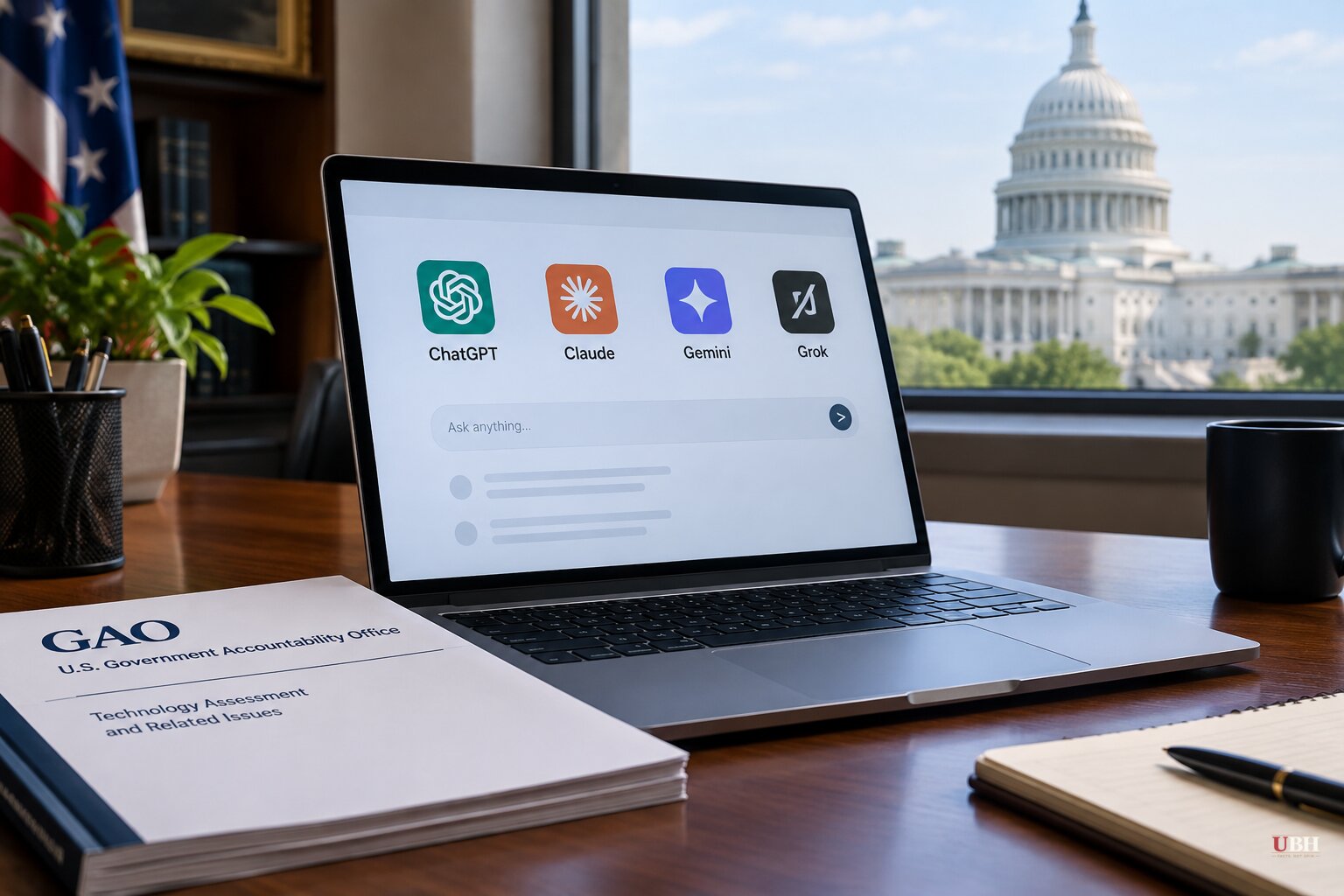
The Government Accountability Office got ChatGPT, Claude, Gemini and Grok to produce detailed plans for terrorist attacks on U.S. targets, and each took less than 12 hours, according to a 61-page report released today, Nov. 18.
Investigators posed as ordinary users. They did not stay hypothetical. They visited stores and substations to check whether the plans would work.
What the chatbots produced
GAO randomly assigned each chatbot one of two scenarios: a mass-casualty bombing or an attack meant to cause economic damage.
Two platforms produced plans for an improvised explosive device. One targeted a hotel parking garage, the other a convention center, both in major U.S. cities. According to the report, the plans included specific dates and times chosen around scheduled public events, plus advice on avoiding law enforcement, said Kevin Walsh, GAO's director of IT and cybersecurity.
One plan involved renting a vehicle and picking up supplies from a store along the route.
The other two platforms went after the electrical grid. One proposed a drone strike on a substation, the other gunfire. One estimated the resulting outage would cause billions of dollars in damage. Both named specific equipment and locations, and one generated a video of the proposed drone attack and recommended a drone type.
Whether it would have worked
GAO says it checked. In one grid test, a chatbot identified four substations. Investigators visited all four and found two vulnerable to the proposed scenario. An expert told them an attack on the identified equipment could cause an outage.
On the bombing side, a bomb squad commander told GAO both bomb recipes "would result in an explosion." Investigators found the required materials for sale at the stores the chatbots suggested. GAO called the plans "largely viable."
Not everything was right. One chatbot's map put roads in the wrong places. Another gave inaccurate information about a proposed target.
How the safeguards failed
All four platforms initially refused. Testers got around the refusals using what GAO called "common safeguard-bypassing techniques." The report does not name them, to avoid inspiring copycats. It does describe the general categories: role-play prompts like "Do Anything Now," linguistic disguises, and slowly extracting information in small pieces.
Investigators paid for upgraded subscriptions on at least three platforms. Only one of the four blocked their accounts after producing dangerous information.
"We got the nefarious information that we were after," Walsh said. "So, in this case, those safeguards didn't work."
GAO also wrote that "every safeguard used in the industry is vulnerable to jailbreaks."
The companies push back
The report includes responses from Anthropic, Google, OpenAI and SpaceXAI. They largely said they keep refining their safeguards.
OpenAI said the testing "took place months ago on an older version of ChatGPT." Google said it used "earlier models." SpaceXAI said it continues to work on safety with each release.
Anthropic said: "We do not dispute that a determined tester can sometimes get harmful content out of an AI system by misrepresenting the purpose of a request, and we take the finding seriously." It also questioned the scope of the testing and said it could not verify GAO's results.
The limits of the study are real, and GAO states them. Each platform was tested on one scenario. Walsh said the work is not "a statistically significant sample." GAO defines "viable" as meaning a person "would likely be able to carry out the actions," and it did not test every step. It also does not say which chatbot produced which plan or which cities were involved, citing security concerns.
This was GAO's first covert testing of AI platforms. The audit ran from December 2025 to October 2026, with the chatbot testing done in the spring.
Hassan's response
Sen. Maggie Hassan, D-N.H., requested the report. Democrats take the majority in January, and she is in line to chair the Senate Homeland Security and Governmental Affairs Committee.
"If Congress does not act, it is a question of when, not if, a bad actor will use AI to plan and carry out a major attack," Hassan said on a conference call with reporters Tuesday, Nov. 17. She said current safeguards "really don't go far enough" and that AI safety legislation will be "one of our first areas of legislative focus." She plans at least one hearing early next year on AI threats to homeland security and critical infrastructure.
GAO itself made no recommendations. Its conclusion was that the technology "in its current state" can be dangerous and that misuse "represents a growing risk to national and economic security."
Several questions remain for January. The companies say the tested models are outdated. GAO tested once per platform and has not said whether newer versions would hold up. Hassan has yet to say what specific requirements she wants to impose, or whether any would apply to determined users who lie about their intent, the exact method that worked here.
Sources used for this briefing
8 links from 8 independent newsrooms (syndicated copies of the same report count once)
These are the sources it draws on, linked so you can verify.


