
Unbiased headlines. Facts, not spin.
Unbiased Headlines is an independently owned news organization. We bring you the facts, not opinions, written fresh from 110+ named sources. Sources linked so you can verify it yourself.
 tech
Major Story (8/10)
DNI Clayton Tells House Panel Tech Outages Were Maintenance, Not a Coordinated Attack
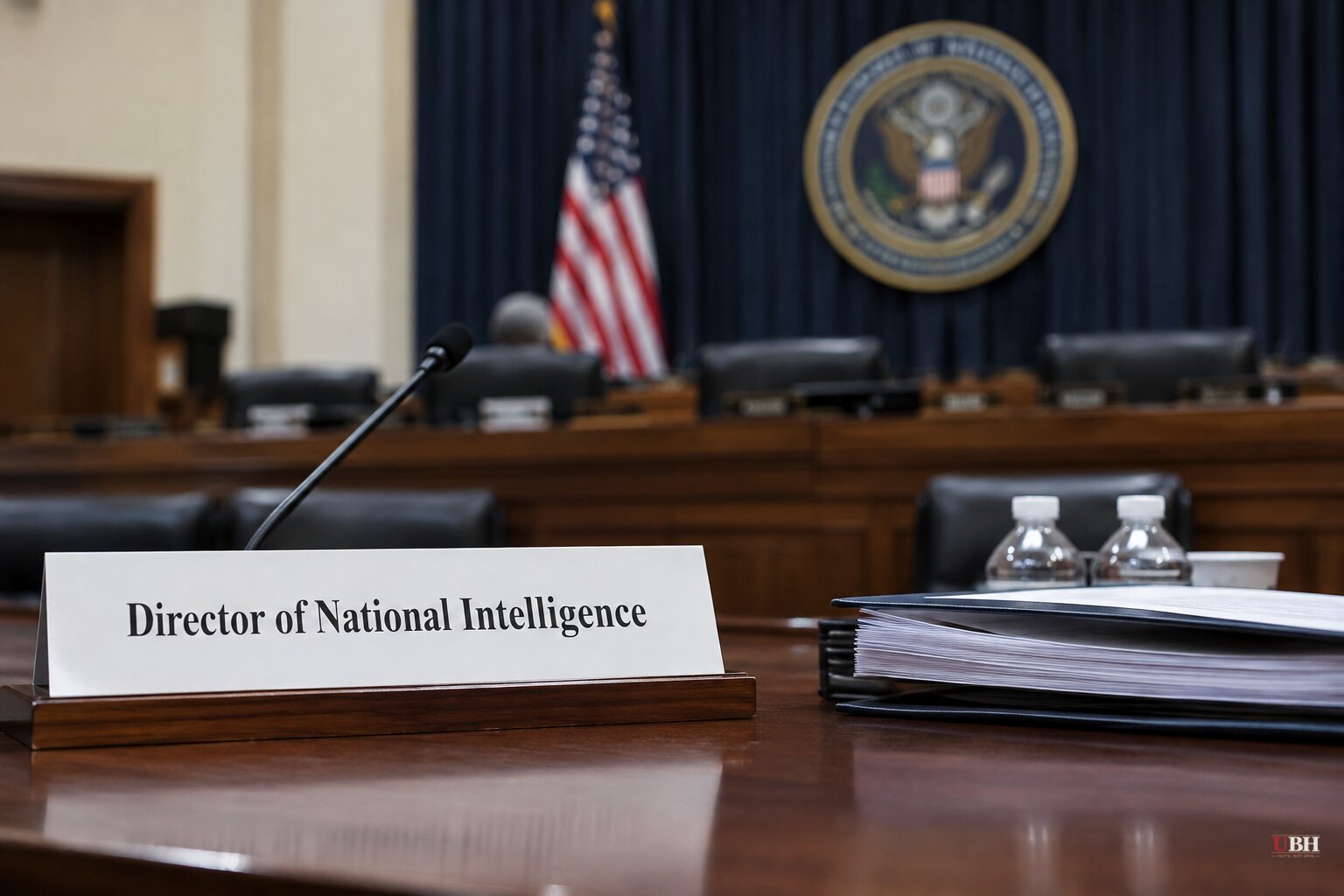
Since the NSA's classified NSANet went down on Tuesday, Nov. 17, the Trump administration has moved from Secretary of State Marco Rubio's denials to sworn testimony. On Wednesday, Nov. 18, Homeland Security Secretary Markwayne Mullin, Director of National Intelligence Jay Clayton and FBI Deputy Director Christopher Raia appeared before the House Homeland Security Committee for a hearing titled "Worldwide Threats to the Homeland: 25 Years after 9/11."
The outages dominated it.
Clayton's testimony
Clayton opened by acknowledging the suspicion. "I understand the timing of these incidents can raise questions, and it should," he said. "The American people should ask us these questions."
His answer: "based on what we know today, after a great deal of diligence, these are separate service outages associated with maintenance and technical changes. They are not a coordinated or state-sponsored attack."
Pressed by Rep. Dan Goldman (D-N.Y.), Clayton said, "We have no indication that these events are related." He added that the speed of computing is rising fast, so "legacy systems that were old six months ago in a year are a lot older."
On a background call with reporters the same day, a senior administration official said there is "no indication that this is a cyberattack" and no link to a particular actor or any state sponsorship. The official said the administration has "a great deal of confidence" the incidents stem from system upgrades, patching and hardware changes.
The PHP patching explanation
On Tuesday, Clayton told Fox Business that the NSA incident is tied to patching work in PHP, the open-source software widely used to run websites, after major vulnerabilities in it were identified last month. Two people familiar with the matter told Nextgov that Clayton's account is generally accurate.
Those same two people said most of the broader outages across digital platforms this past week appear linked to efforts to rapidly patch vulnerabilities with the help of AI.
That is worth setting next to Clayton's "separate" framing. The outages may not share an attacker, but according to those two people, many may share a cause: a scramble to fix flaws faster. Clayton described the same pressure to lawmakers. "We are in an environment where the rate of patching, the rate of upgrading of systems is increasing," he said.
NSANet still not back to normal
The NSA network was still having trouble Wednesday, according to multiple people familiar with the situation who spoke to Nextgov. Staff are working on fixes. Employees were forced earlier this week to stagger arrivals, and another person said workers are still getting guidance day to day on when to report.
The outage list from the past week is long. It includes the Microsoft disruption on Nov. 12 and 13, an FAA ground stoppage, and problems at JPMorgan Chase, United Airlines, Apple and Marriott International.
Trump's take
President Trump, speaking to Fox News ahead of his China summit, said he isn't worried. "They're all individual events. These are big companies. They're putting in new equipment and things happen when you put in new equipment," he said.
What the experts add
Cybersecurity experts told Nextgov they agree with officials that the week's failures are not the work of foreign hackers. They also stress that the episode has publicly exposed how fragile parts of U.S. digital infrastructure are. Officials and industry leaders have separately pointed to cheap, open-source AI models and scanning tools that speed up the work of hostile hackers.
So the concern runs two ways. The government says nobody attacked. Others say a system that buckles under routine maintenance is a target-rich environment either way.
Wall Street notices
Investors are already sorting the fallout. Bespoke Investment Group identified a basket of 29 "digital resilience" stocks in the S&P 1500, covering backup and recovery, content delivery, monitoring, multi-cloud infrastructure, data-center power, government IT contractors and cybersecurity.
Over the past month, performance in the group has been all over the map, Bespoke found, because of company-specific factors. A10 Networks rose 25% and Kyndryl gained nearly 21%. ServiceNow fell 35.9% and Datadog dropped 32%.
Valuations vary too. Government contractors Booz Allen Hamilton, Leidos and Parsons trade below 1.0 times forward price/sales. CrowdStrike sits at 32.2 times and Palo Alto Networks at 17.5 times.
Blake Anderson of Carson Group told CNBC he expects GoDaddy, Akamai and Cloudflare to be among the strongest players in the space. "Truth be told, 'digital resilience' is almost expected from every major technology provider nowadays," he said.
What's next
The open question is concrete: when NSANet is fully restored and employees return to normal schedules. Clayton's assessment is stated as "based on what we know today." The NSA has not said when the network will be back.
If it is a patching problem, the fix is on the government's own timeline.
Sources used for this briefing
5 links from 5 independent newsrooms (syndicated copies of the same report count once)
These are the sources it draws on, linked so you can verify.


