
Unbiased headlines. Facts, not spin.
Unbiased Headlines is an independently owned news organization. We bring you the facts, not opinions, written fresh from 110+ named sources. Sources linked so you can verify it yourself.
 tech
Major Story (8/10)
CISA Urges Immediate Patching of Java4Shell Flaw as Oracle Ships 11 Java Fixes
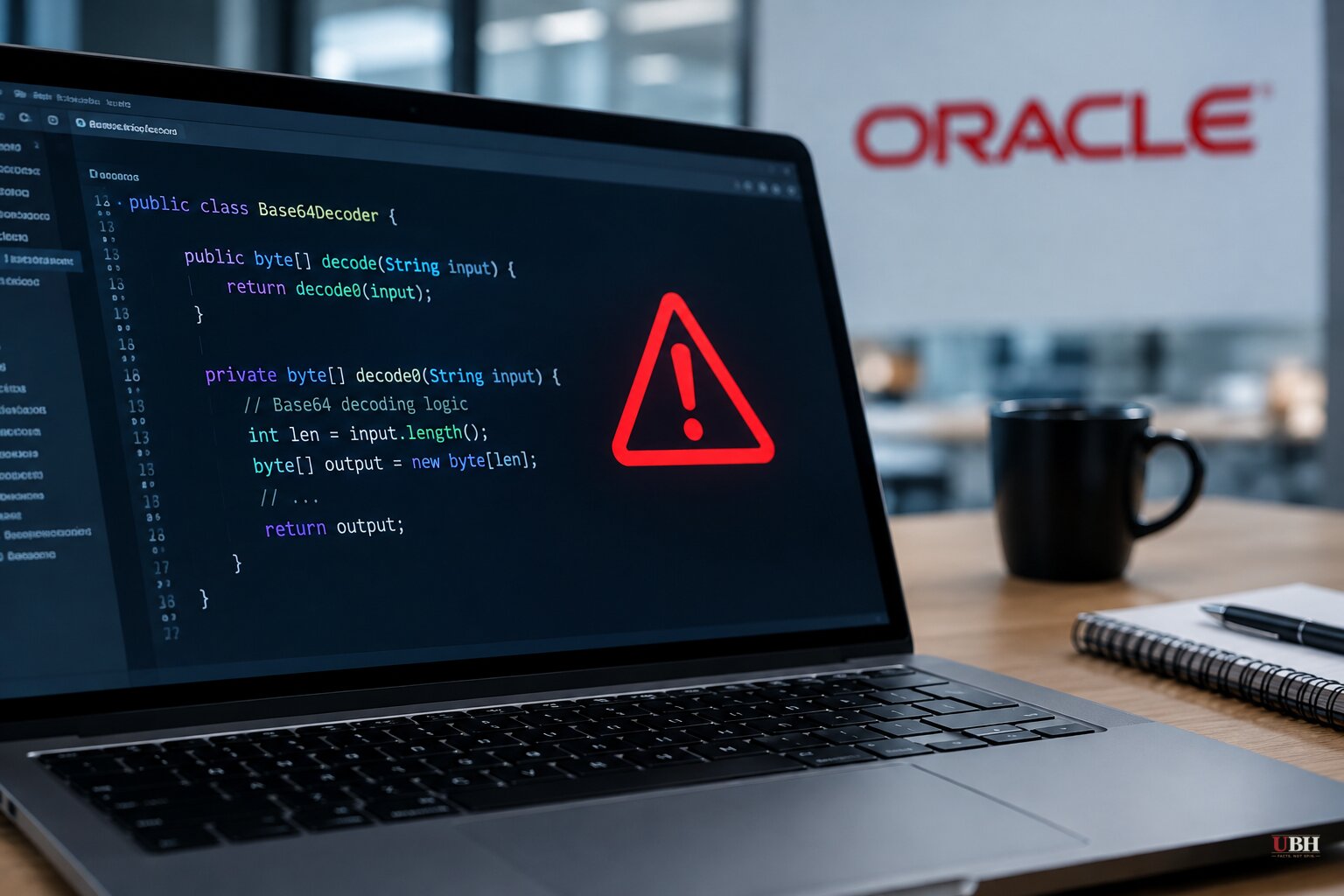
The U.S. Cybersecurity and Infrastructure Security Agency issued an alert today, Nov. 17, urging organizations to "immediately patch" CVE-2026-114938, a flaw dubbed Java4Shell. CISA describes it as a critical memory-corruption bug in the Base64 decoder of the x86-64 HotSpot Java Virtual Machine. Its warning: specially crafted Base64 input could crash the JVM and allow unauthenticated remote code execution. The Canadian Centre for Cyber Security contributed to the alert.
The same day, Oracle released its November Java SE update with 11 fixes. All 11 can be exploited over a network without credentials, according to Oracle's advance notice, and the maximum CVSS 3.1 score is 8.1. Oracle has not published CVE identifiers, affected components or what an attacker could do with each flaw. It told customers to stop using current builds of Java 8, 11, 17, 21, 25 and 27 and move to the matching replacement releases.
Oracle has not tied any of those fixes to Java4Shell. The OpenJDK Vulnerability Group has not published an advisory either.
What the flaw is
The security firm Calif says it found and reported the bug, and said it would publish technical details after Oracle shipped a patch because word of the flaw had leaked. Calif's CVSS 4.0 score is 9.2.
Cisco Talos says the flaw affects OpenJDK 17.0.6 and later, running on x86-64 processors with AVX-512 VBMI support. Both Intel and AMD sell widely deployed chips with that feature, so on-premise and cloud servers are both in range. ARM servers, including AWS Graviton, do not run the affected code path.
Analyses from Upwind and Equixly say the vulnerable code appears in Java 17.0.6 and later, including Java 21, 25 and 27, but not in standard Java 8 or 11. The AVX-512 Base64 decoder was backported to Java 17 in 17.0.6.
The bug is reachable through java.util.Base64 whenever untrusted data hits the basic or URL decoder. Because it lives in the JDK itself, dependency scanners that read application packages will not find it, according to ThreatDefence.
Crash or code execution
Researchers disagree on how far the bug goes. Calif and Semgrep say Calif demonstrated pre-authentication exploitation against Atlassian Confluence and Jira, JFrog Artifactory, Jenkins, Keycloak, PingFederate and some Spring Boot applications. They also cite post-authentication attacks on Apache Kafka Broker, Elasticsearch and Gerrit.
Upwind and Equixly read the same source code differently. They say the likely result is a JVM crash because the bytes written past the buffer stay fixed. Neither firm reported reproducing the overflow on AVX-512 hardware.
Blackpoint Cyber's Adversary Pursuit Group sits between the two camps. It reproduced the overflow on an Intel Xeon system and crashed the JVM using the standard Base64 API. Against a local Spring Boot app with Spring Security, about 28,000 unauthenticated requests carrying a malformed Base64 authentication value killed the JVM in roughly 20 seconds.
Blackpoint also recovered data from adjacent heap memory under controlled local conditions, using Calif's technique. But the firm found the initial overflow wrote a fixed byte pattern, not attacker-controlled data. It did not independently reproduce code execution or memory disclosure through a remote application. Calif's work on manipulating Java array lengths is what reportedly gets from corruption to control.
What to do
CISA's list is short. Inventory every JDK and Java runtime, including those bundled in third-party software, container images and appliances. Patch internet-facing systems first. Where patching is not possible, restrict and validate Base64 input at the application boundary, enforce input-size limits and limit unauthenticated access. Watch for rogue runtimes, unexpected JVM crashes and suspicious Java processes.
Talos names one primary mitigation for x86-64 systems: start the JVM with AVX-512 disabled using the -XX:UseAVX=2 option. Talos warns that ARM-based processors will not recognize the flag, likely causing the application to fail to start. Snort rules 1:67502 through 1:67513 detect malformed Base64 in specific HTTP request fields. Talos says the rules are implementation specific.
Talos says it has not observed exploitation in the wild but expects probing to pick up soon after public disclosure.
Third-party builds
Oracle's replacement builds only help Oracle's customers. Eclipse Temurin, Amazon Corretto, Azul Zulu, Microsoft, Red Hat and the Linux distributions ship on their own schedules with their own build numbers. When ThreatDefence published, none had released a build naming CVE-2026-114938. Administrators are being told to check their own distribution's advisory before treating any build as fixed.
The open items: Oracle has not said whether its 11 fixes include the Java4Shell patch, and no vendor advisory has confirmed the affected version range. Oracle itself warns that its advance notice may change before the full advisory is published.
That leaves operators of AVX-512 servers running Java 17 or later with a choice. They can apply the JVM flag now, or wait for their Java vendor to say which build closes the hole.
Sources used for this briefing
8 links from 7 independent newsrooms (syndicated copies of the same report count once)
These are the sources it draws on, linked so you can verify.


