
Unbiased headlines. Facts, not spin.
Unbiased Headlines is an independently owned news organization. We bring you the facts, not opinions, written fresh from 110+ named sources. Sources linked so you can verify it yourself.
 tech
Major Story (8/10)
California DMV Bars Waymo From State Freeways, Citing 'Imminent Hazard' After Construction Zone and CHP Incidents
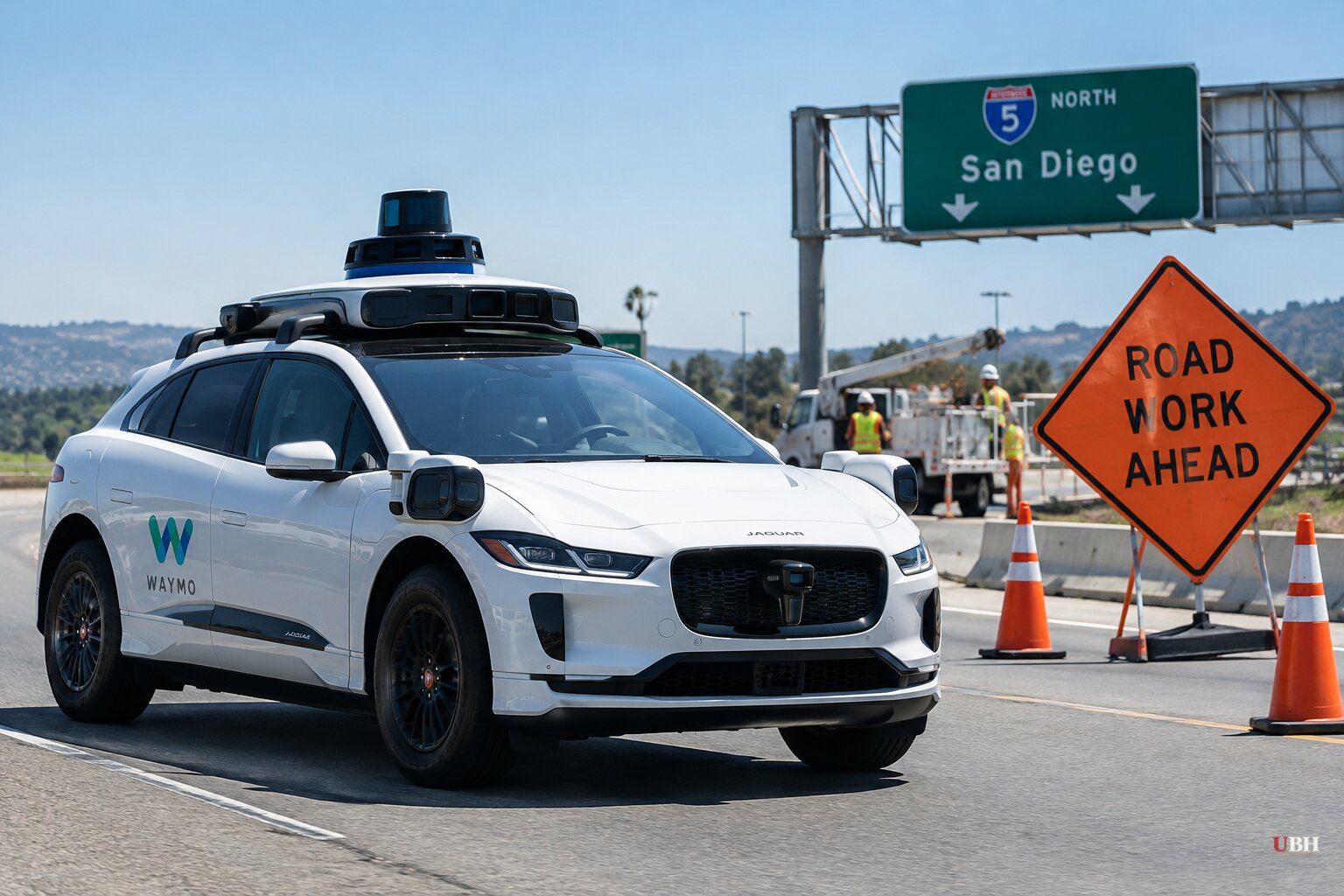
California's Department of Motor Vehicles announced today, Nov. 17, that Waymo's driverless cars are barred from the state's freeways. The department says the vehicles pose an "imminent hazard to public safety."
The restriction took effect Nov. 11, six days before the public announcement. It bars Waymo from both operating and testing driverless vehicles on every California freeway, DMV spokesperson Jonathan Groveman said.
What the DMV cited
Two incidents drove the order, according to the department.
On Nov. 5, three Waymo vehicles entered an active construction closure on U.S. 101 near Burlingame, south of San Francisco. Construction workers, vehicles and equipment were in the zone.
On Nov. 6, a Waymo on Highway 280 in San Francisco tried to pass California Highway Patrol vehicles that were conducting a traffic break. A driver captured video of it, and the footage spread widely online.
"The Department determined that Waymo's driverless freeway operations pose an imminent hazard to public safety due to recurring incursions by its vehicles into active construction zones where construction workers, vehicles and equipment are present," Groveman said.
Not the first time
This is the second freeway restriction on Waymo in California this year. The DMV says similar construction-zone incidents occurred May 18, and that the new action follows "prior restrictions and corrective actions" imposed after those.
Waymo paused freeway operations in San Francisco and Los Angeles in May to improve how its cars handle construction zones. Six months later, three of its vehicles drove into a closed work zone anyway.
The DMV is not citing a one-off glitch. It is citing a problem the company already said it was fixing.
Waymo's response
Waymo says none of the recent construction-zone encounters on U.S. 101 involved injuries or collisions. The company says it is complying.
"In alignment with our safety-first principles, we have also temporarily restricted freeway operations across our other operating markets to evaluate our performance," spokesperson Dana Gallagher said. "We are working with the California DMV and other state officials diligently and responsibly to resume freeway operations."
Waymo has offered freeway rides in the San Francisco Bay Area, Los Angeles County, Phoenix, Miami and Austin. Public freeway service began in November 2025 in the Bay Area, Phoenix and Los Angeles. Those rides are now paused.
Surface-street service in California continues as normal. Waymo says it provides more than half a million trips a week.
The safety argument
Waymo's case rests on its crash data. The company says its vehicles are involved in 95% fewer crashes resulting in serious injury or worse than human drivers. It describes the incidents CNN cataloged in a June analysis as largely isolated, and says the vast majority of rides are smooth and uneventful.
That June CNN analysis found hundreds of incidents in which robotaxis allegedly ran red lights, drove into oncoming traffic and active crime scenes, ignored emergency road closures and came within inches of pedestrians in crosswalks. Those are allegations drawn from reported incidents. Waymo disputes the framing.
Billy Riggs, a University of San Francisco professor, told ABC7 he sees the ban as "an opportunity to continue improving a technology." He said the data shows autonomous vehicles remain safer than human drivers overall, though challenges are expected as the technology develops.
The DMV is looking at something narrower than overall crash rates. Crash statistics measure what has already happened. Driving into a closed work zone, or trying to slip past highway patrol officers, is a failure to recognize basic road conditions that put people on foot in harm's way. Workers on a freeway shoulder have no seat belt and no airbag.
What it takes to come back
The DMV says the restriction stays in place until "Waymo demonstrates to the Department that it has taken effective corrective actions to address the deficiencies that precipitated the restrictions."
The department's stated benchmark is sufficient evidence that Waymo's vehicles can detect and respond to construction zones and emergency vehicles. Neither the DMV nor Waymo has given a date for resumption.
The ban lands while Waymo is growing. State regulators have already authorized the company to expand to Sacramento and Cloverdale, and Waymo has plans for Boston, Seattle, London and Tokyo. Whether Waymo can show regulators a durable fix for work zones, after the May fix did not hold, is the open question that decides when freeway rides return.
The DMV's formal sign-off, not Waymo's own timeline, is what that decision now hangs on.
Sources used for this briefing
8 links from 7 independent newsrooms (syndicated copies of the same report count once)
These are the sources it draws on, linked so you can verify.


