
Unbiased headlines. Facts, not spin.
Every story is an unbiased news briefing written from 110+ sources across the spectrum — sources linked so you can verify it yourself.
 energy
Major Story (8/10)
September 17, 2026 at 10:32 AM
energy
Major Story (8/10)
September 17, 2026 at 10:32 AM
Tanker Rates Top $1 Million a Day as Trump Administration Touts Record Oil Flow Through Hormuz
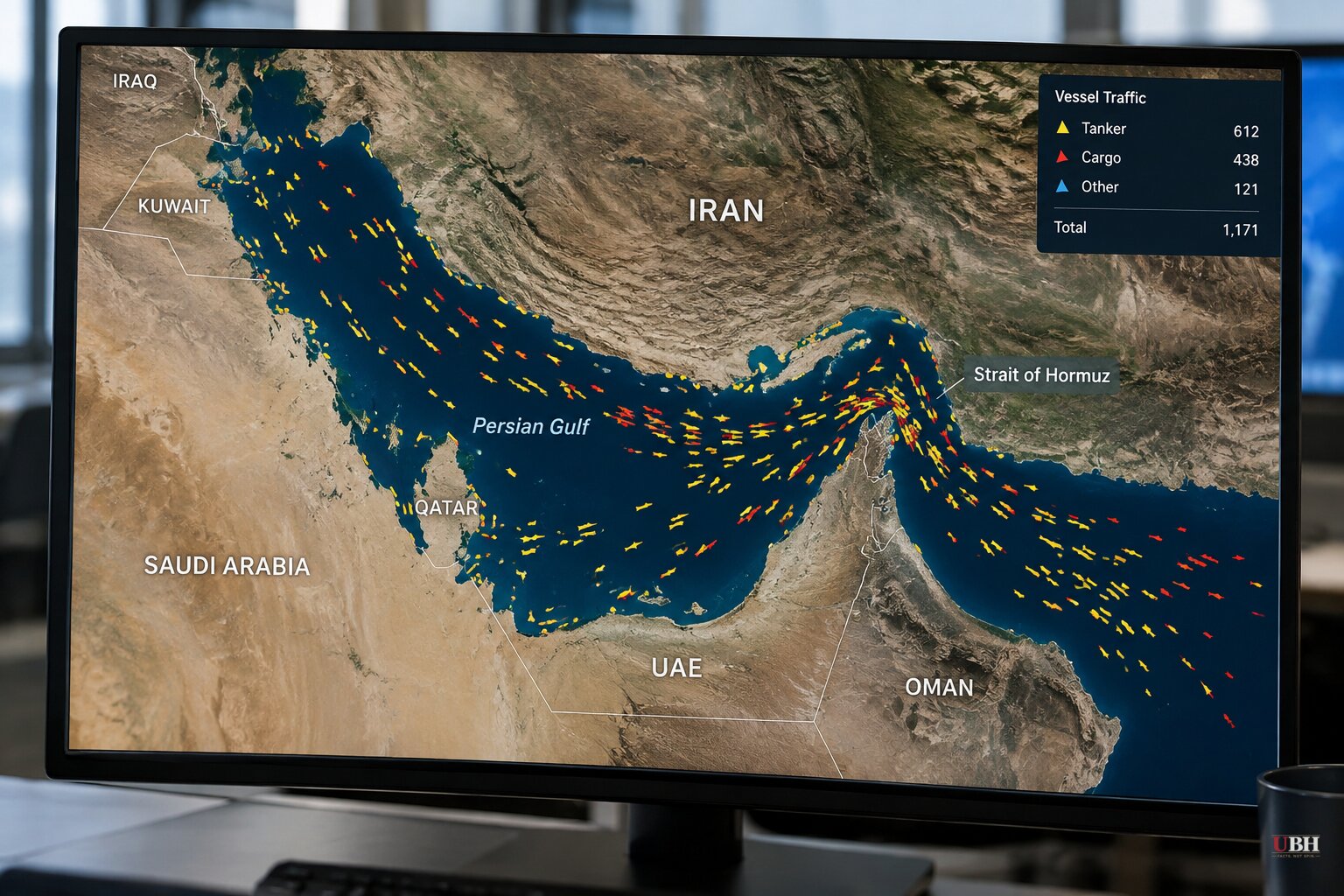
Since the US-Iran war began February 28, the fight over who controls Persian Gulf oil shipping has gotten more expensive, more dangerous, and harder to verify.
Tanker rates topped $1 million a day for the first time in history this week, according to Bloomberg data cited by OilPrice.com. Vessels picking up crude inside the Persian Gulf are fetching as much as $1.035 million a day, based on Baltic Exchange figures. A tanker hauling crude from the Gulf of Oman to China, outside the Strait of Hormuz itself, now costs $644,000 a day.
At Russia's Black Sea port of Novorossiysk, Aframax tanker rates to West India and North China rose for the seventh straight week through September 6, up 2.7% and 3.1% respectively, driven by fear of Ukrainian drone strikes on ships and port infrastructure.
Argus analyst Erica Tsirikou told OilPrice.com that buyers are now choosing to own tankers outright rather than pay soaring charter and insurance costs. A second-hand very large crude carrier is selling for about $182 million, versus $130 million for a new one.
A New Cybersecurity Front
On top of the physical risk, U.S. federal authorities are investigating a suspected cyberattack on tankers sailing from Europe to the U.S., according to the Wall Street Journal. At least two vessels, one carrying crude and one carrying liquefied gas, were targeted near Gibraltar and inspected on arrival at the Gulf Coast in August.
Rear Admiral Jason Tama, who heads the U.S. Coast Guard's Cyber Command, told the Journal there is "always a risk of an oil spill" from this kind of attack. Unnamed government officials cited by the Journal suspect an unfriendly nation could be behind it. No attribution has been confirmed and no charges have been filed. Gibraltar handles roughly 300 ships a day, making it one of the world's most consequential chokepoints for this kind of sabotage to matter.
The Administration Says Flow Is Up. Trackers Disagree.
The Trump administration says the war hasn't cut off Gulf oil after all. CNN reported that 40 commercial vessels carrying roughly 18 million barrels moved through the Strait of Hormuz on Tuesday under U.S. military escort, a wartime high, according to two U.S. officials. The operation involved nearly 60 strikes on Iranian military targets and the neutralization of anti-ship cruise missiles, the officials told CNN.
Energy Secretary Chris Wright told CNBC that more than 17 million barrels crossed the Strait on Monday, and that total regional exports, including pipeline flows that bypass Hormuz, now exceed pre-war levels. "With or without Iran, oil and gas will flow out of the Arabian Gulf region," Wright said, according to the Daily Wire.
Independent tracker Kpler recorded just five confirmed Hormuz crossings on Monday, down by half from the day before, according to the Daily Wire's reporting on the same data. U.S. officials attribute the gap to tankers running dark, transponders off, sometimes with Navy assistance, specifically to avoid being targeted. That's a plausible operational-security explanation in an active war zone, not necessarily evidence the administration's numbers are inflated. But it also means there's no independent way to verify the government's tonnage claims until ships surface with transponders back on.
Crude sat around $70 a barrel before the war; Brent hit $97.17 and WTI $92.27 on September 7, according to Epoch Times reporting on Goldman Sachs data. U.S. gasoline hit a Labor Day record of $4.15 a gallon on September 7, per AAA data cited by the Epoch Times, up from $2.98 before the war.
Goldman's Warning: $120 Oil Is on the Table
Goldman Sachs commodities co-head Daan Struyven told Bloomberg Television on September 7 that Brent could hit $120 a barrel if shipping attacks in the Gulf "broaden and intensify." Goldman estimates Gulf exports have fallen to about 16 million barrels a day, down from a pre-war average of 23 million. If exports normalize instead, Goldman sees Brent falling back toward $80.
The IEA says global observed oil inventories fell 95 million barrels in August alone, a cumulative loss of 507 million barrels since February, roughly 2.8 million barrels a day. Oil on water dropped another 65 million barrels as Hormuz attacks continued.
A Second Front Opens at Bab el-Mandeb
Hormuz isn't the only chokepoint under stress. NPR's Planet Money reported that the Bab el-Mandeb shipping lane connecting to the Red Sea, another vital artery for Saudi oil exports, is also under siege, a separate pressure point from the Persian Gulf fight that's compounding the global supply squeeze.
Gulf states aren't waiting around for the war to end. The UAE is expanding its pipeline from Abu Dhabi's oil fields to the port of Fujairah on the Gulf of Oman, avoiding Hormuz entirely. Treasury Secretary Scott Bessent said last month that new pipeline capacity could eventually make shipping through Hormuz "irrelevant," according to the Daily Wire.
Until that pipeline capacity actually comes online, the Gibraltar cyberattack investigation remains open with no named suspect, Saudi Arabia's East-West pipeline remains offline for repairs after a drone strike, and buyers are paying seven figures a day to move oil through waters both the U.S. Navy and Kpler can't fully account for.
Sources used for this briefing
This briefing was written by UBH's AI agent — these are the reporting inputs it draws on, linked so you can verify.


