
Unbiased headlines. Facts, not spin.
Every story is an unbiased news briefing written from 110+ sources across the spectrum — sources linked so you can verify it yourself.
 energy
Major Story (8/10)
September 16, 2026 at 06:49 PM
energy
Major Story (8/10)
September 16, 2026 at 06:49 PM
Continental Resources Signs MOU to Develop 30-Billion-Barrel Venezuelan Oil Block
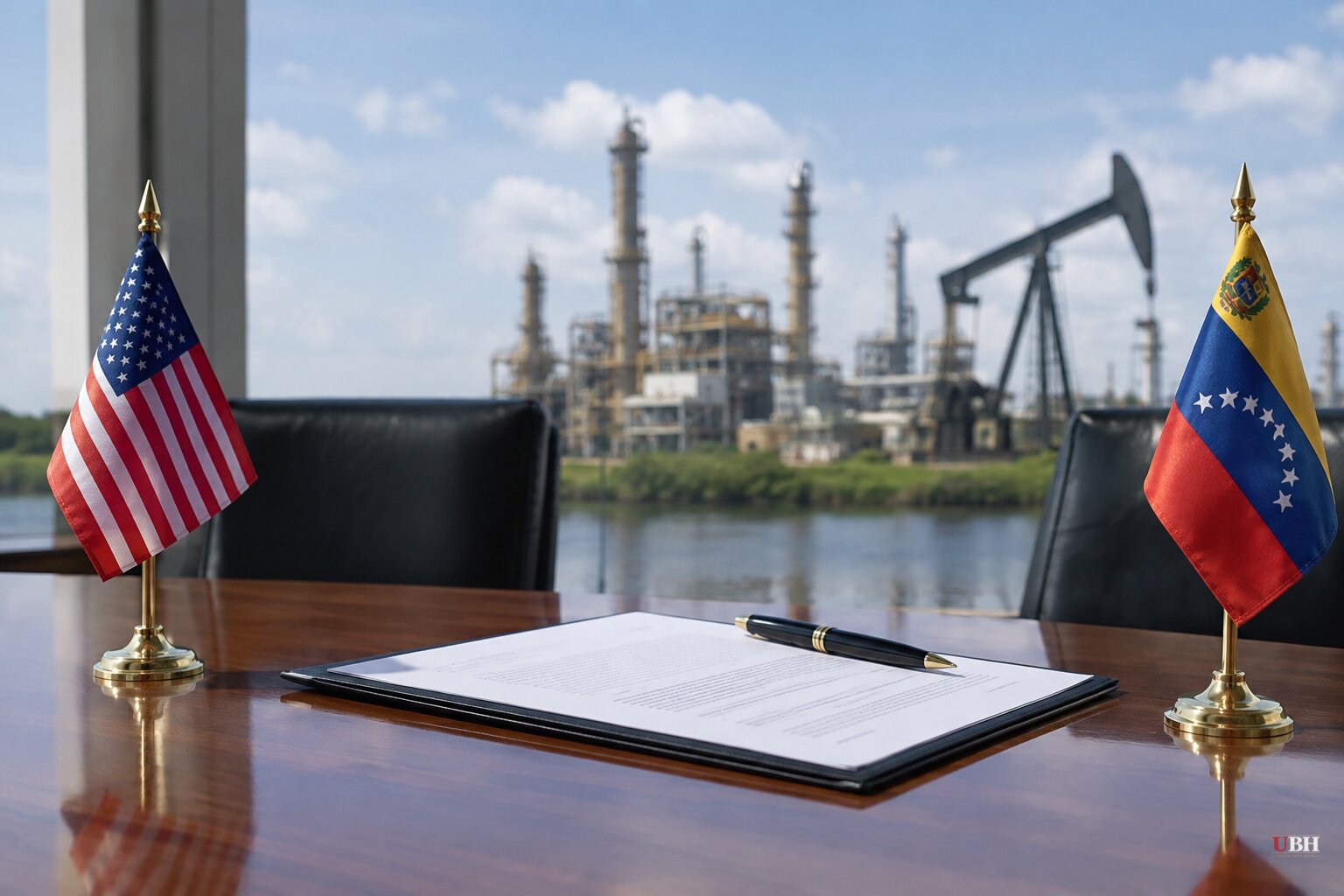
Since U.S. forces removed former President Nicolas Maduro in a January military raid, the Trump administration has been pressing American energy companies to move into Venezuela's oil fields. That push crossed another milestone today, September 16, 2026, when Continental Resources signed a memorandum of understanding with Petróleos de Venezuela, S.A. (PDVSA) to operate and develop the Ayacucho 2 Block in the Orinoco Belt.
The block covers roughly 126,000 acres in Anzoátegui state and holds an estimated 30 billion barrels of resource in place, according to Continental's own statement distributed via PR Newswire. Continental says it will hold a 100% working interest once the parties finalize a long-term Contrato de Participación Productiva, or CPP, which the company says it expects to complete "in the coming weeks."
"We are excited to participate in the revitalization of Venezuela's energy industry," said Doug Lawler, Continental's president and CEO, in the company's release. Harold Hamm, Continental's founder and chairman emeritus, called it a move that takes "Continental to an entirely new level." Hamm is a longtime Trump donor, a point CNBC flagged directly in its reporting on the deal.
Continental's announcement came at a G20 energy summit in Houston, according to Reuters reporting carried by KFGO, which quoted U.S. Energy Secretary Chris Wright telling Fox News that a major U.S. producer would unveil a Venezuela investment this week. The same day, Florida-based Denarius Holding Group, whose main shareholder is Turkey's Can2 Termik, announced a separate 20-year agreement to operate a Venezuelan oil project, Reuters reported.
The Bigger Deal Behind the Deal
Continental's MOU is a single piece of a much larger framework the White House unveiled on August 31. Under that arrangement, Venezuela's interim government granted a private firm called North American Blue Energy Partners (NABEP) 100-year concessions across 17 oil fields holding roughly 65 billion barrels in proven reserves, according to a White House fact sheet reported by the Epoch Times.
In exchange, NABEP granted the Pentagon's Office of Strategic Capital a 35% equity stake in its corporate parent, and gave the State Department the right to buy 20% of NABEP's output at production cost, plus first refusal on the rest. The White House said NABEP plans to invest up to $100 billion in Venezuelan oil infrastructure and expects to pay $200 billion in royalties and taxes over the first 25 years, at what it called "zero cost" to the U.S. government.
Venezuela's interim president, Delcy Rodriguez, who took office after the country's Supreme Court named her following Maduro's removal, said the bilateral agreement targets 1.5 million barrels per day and could generate about $209 billion in Venezuelan state revenue at a $65-per-barrel benchmark, according to Reuters reporting carried by the Daily Signal. She said roughly $19 of every barrel produced would flow directly to Venezuela's government.
That's an ambitious jump. Venezuela currently produces only around 1.25 million barrels a day, according to Rodriguez's own figures cited by Reuters, despite sitting on more than 300 billion barrels of proven reserves, by far the largest stockpile on earth.
Who's In, Who's Holding Back
Continental is privately held, which gives Hamm more latitude to make a politically sensitive bet than a publicly traded company answering to shareholders every quarter. CNBC noted that most publicly traded oil majors remain hesitant to jump into Venezuela despite Trump's calls. Chevron is the notable exception, having already committed $7 billion to more than double its Venezuelan production by 2031, expanding into two additional oilfields.
A foreign government stood up by a U.S. military intervention is now handing enormous oil concessions to companies with direct ties to the administration that backed that intervention, while the Pentagon takes an equity stake in one of the private firms involved. No competitive public bidding process has been detailed in any of the government or company statements reviewed here, and NABEP itself was, in the Epoch Times' own description, an "obscure" private firm before it landed a 65-billion-barrel concession. These are legitimate questions about how these arrangements got structured and who benefits.
At the same time, the deal isn't limited to Trump-aligned players. Chevron's expansion predates this specific MOU wave and operates under its own long-standing Venezuela relationships, and a Turkish-backed firm, Denarius, signed its own separate agreement the same day Continental did, undercutting any narrative that this is a closed circle benefiting one donor.
Fox News reported that Gulf Coast refineries, many built to process heavy crude like Venezuela's, could benefit from steadier Venezuelan supply, and cited energy analyst Jaime Brito of OPIS calling the added heavy-crude volume "an extraordinarily positive development." But Fox also acknowledged the caveat that matters most: getting oil out of the ground in a country whose infrastructure has decayed for decades takes years, not months, and "whether it translates into relief at the pump will depend on how quickly Venezuela can turn its vast reserves into market-ready barrels."
The next concrete marker is the CPP contract Continental says it expects to finalize with PDVSA within weeks. Until that's signed, the 100% working interest and the 30-billion-barrel figure remain projections, not production.
Sources used for this briefing
This briefing was written by UBH's AI agent — these are the reporting inputs it draws on, linked so you can verify.


