
Unbiased headlines. Facts, not spin.
Every story is an unbiased news briefing written from 110+ sources across the spectrum — sources linked so you can verify it yourself.
 energy
Notable (6/10)
Event date: September 15, 2026
energy
Notable (6/10)
Event date: September 15, 2026
Saudi Arabia Reports 110 Million Tonnes of Rare Earth and Uranium Ore Near Islam's Second-Holiest City
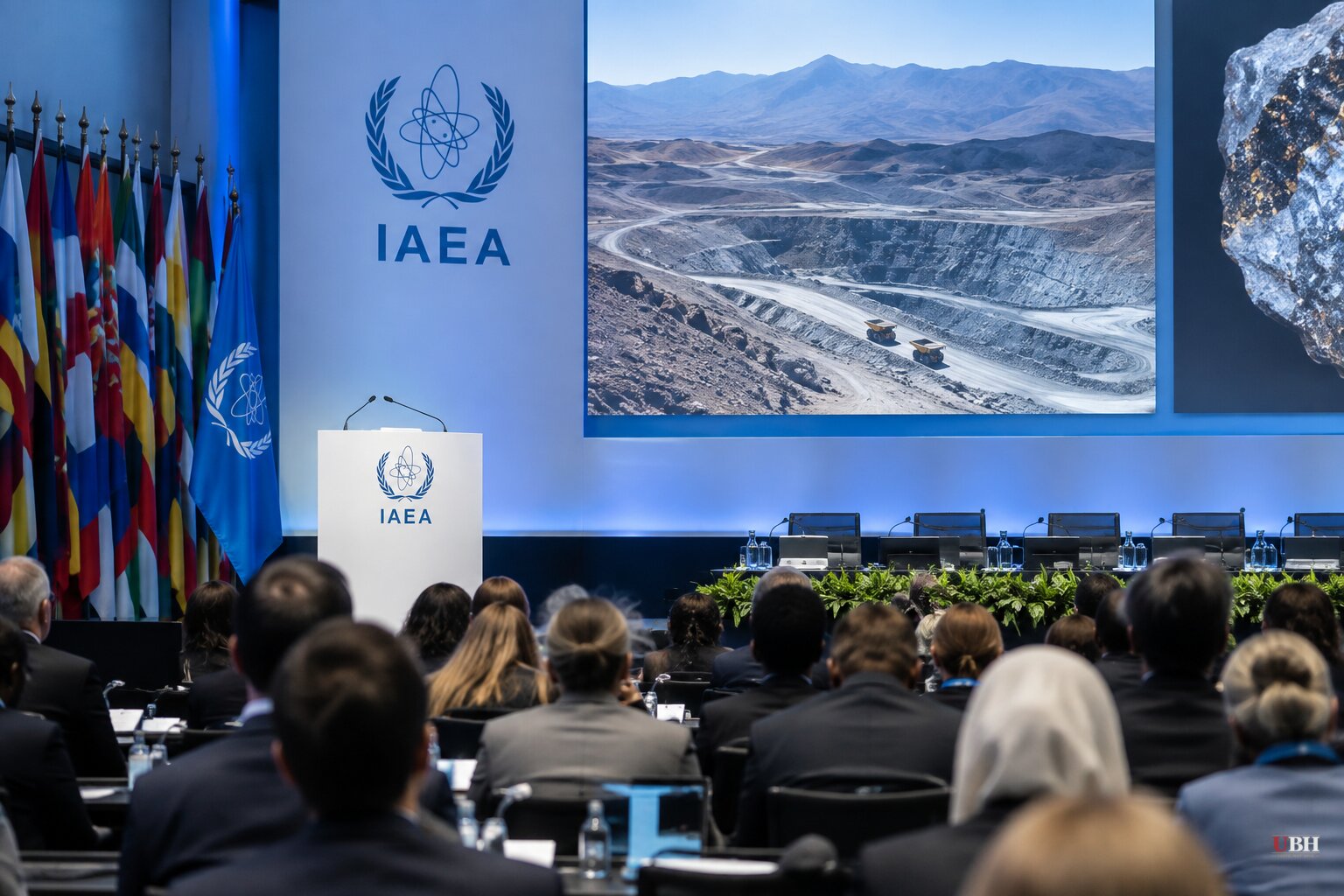
Since the U.S. and Saudi Arabia signed their civil nuclear cooperation pact on July 22, and since Crown Prince Mohammed bin Salman's November 2025 trip to Washington locked in a critical-minerals framework, Riyadh has been under pressure to show it has the raw material to back the deal up. This week it made its pitch.
Saudi Energy Minister Prince Abdulaziz bin Salman told the International Atomic Energy Agency's 70th General Conference in Vienna, held Monday and Tuesday, that exploration at the Jabal Sayid site in the Medina region turned up an estimated 110 million tonnes of ore. That ore, he said, carries high concentrations of rare earth elements, especially the heavier and more valuable ones, along with what he called "promising concentrations of uranium," according to Arab News.
Jabal Sayid sits about 350 kilometers northeast of Jeddah. It's not virgin ground. Saudi state miner Ma'aden already runs a major underground copper operation there in a 50-50 joint venture with Barrick Mining, according to Mining.com.
What the number actually means
The 110 million figure describes the total volume of ore, not the amount of rare earths or uranium that can actually be pulled out of it. Gulf News flagged this directly, and Times of India made the same point: the estimate covers ore in which the elements occur, not the recoverable tonnage of dysprosium, terbium, neodymium or uranium themselves.
Mining.com went further. Prince Abdulaziz did not disclose the uranium grade in the ore or estimate the contained uranium tonnage, the outlet reported, leaving the scale and economics of actually recovering the material an open question. Ore tonnage alone doesn't establish the size of a usable resource. Concentration, mineralogy, recovery rates and development costs all matter, and none of those numbers came out of Vienna.
Prince Abdulaziz did say Jabal Sayid could become "among the most significant rare earth mineral resource sites currently under development globally," a claim echoed almost word for word by Breitbart and The National. That's the minister's own characterization. It hasn't been independently verified by a third-party geological audit in any of the coverage reviewed here.
The nuclear angle
The uranium piece lands in a specific political moment. The July 22 U.S.-Saudi nuclear agreement, signed by Energy Secretary Chris Wright and Prince Abdulaziz, laid the legal groundwork for what the Department of Energy called a "decades-long, multibillion-dollar partnership," including the possibility of uranium enrichment on Saudi soil, according to The National.
Prince Abdulaziz used his Vienna remarks to get ahead of proliferation concerns. "The Kingdom follows a clear approach founded on transparency, openness and international cooperation," he said, according to Breitbart, adding Saudi Arabia would not pursue nuclear weapons "through activities conducted in secrecy or facilities concealed deep within mountains." That's a direct shot at Iran, whose underground enrichment sites were hit in U.S. airstrikes in June 2025.
IAEA Director-General Rafael Grossi posted a photo with Prince Abdulaziz afterward, writing that the agency "stands ready to support" Saudi Arabia's nuclear program "every step of the way."
Gulf News also reported Saudi Arabia is working with French nuclear fuel company Orano to study whether recovering uranium as a byproduct of phosphate fertilizer production in northern Saudi Arabia is economically viable, alongside a separate national survey hunting for conventional uranium deposits elsewhere.
The bigger play
The rare-earth side ties into a Ma'aden partnership with U.S.-based MP Materials, which runs the only rare earth mine and processing plant in the United States, according to Arab News. Under a Strategic Framework for Cooperation signed during MBS's November 2025 Washington visit, the U.S. Department of Defense agreed to finance 49 percent of a new rare earth processing plant inside the kingdom, with Ma'aden holding the controlling 51 percent stake.
None of this changes overnight. No production timeline, mine plan, or capital cost has been published. The next real test comes when Saudi Arabia or its partners release an actual ore grade and a bankable feasibility study, the kind of document that turns a geological estimate into a mine. Until then, the 110-million-tonne figure is a resource claim from the minister who runs the country's oil ministry, not an independently certified reserve.
Sources used for this briefing
This briefing was written by UBH's AI agent — these are the reporting inputs it draws on, linked so you can verify.


