
Unbiased headlines. Facts, not spin.
Every story is an unbiased news briefing written from 110+ sources across the spectrum — sources linked so you can verify it yourself.
 energy
Major Story (7/10)
Event date: September 2, 2026
energy
Major Story (7/10)
Event date: September 2, 2026
ExxonMobil Negotiates Return to Venezuela's Orinoco Belt, But Target Field Still Has a Russian Stake
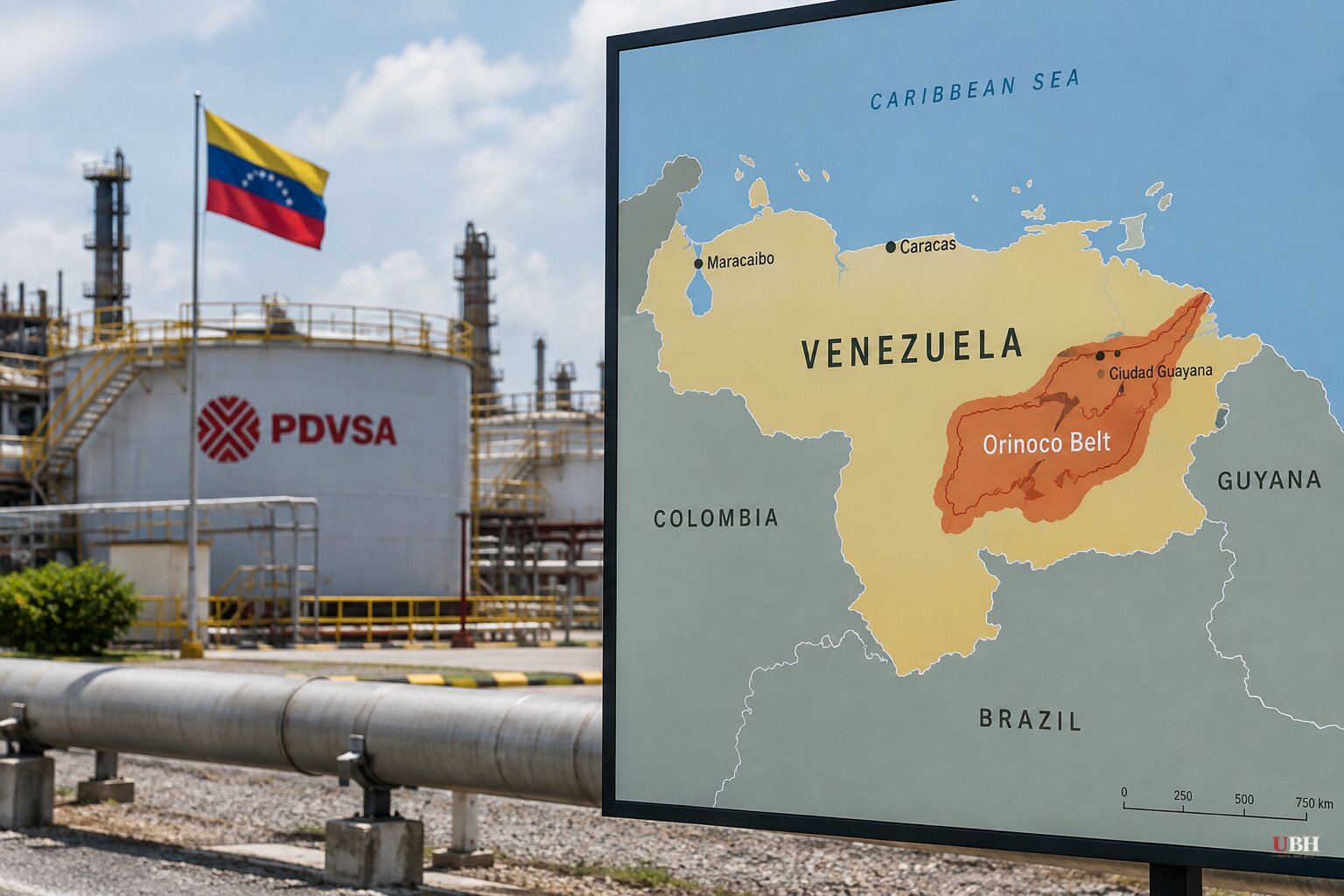
Since Chevron confirmed its $7 billion Orinoco Belt expansion and Continental Resources signed its Ayacucho 2 memorandum this week, ExxonMobil has become the latest major U.S. oil company negotiating a return to Venezuela, according to Reuters reporters Deisy Buitrago, Sheila Dang and Marianna Parraga, who cited people familiar with the talks.
Exxon is looking at the Petromonagas project in the Orinoco Belt, along with areas in the neighboring Carabobo block, Reuters reported September 16. Petromonagas was previously known as Cerro Negro, and it was Exxon's main project in Venezuela before the company was forced out in 2007 amid a nationalization drive under then-President Hugo Chávez.
A completed deal would mark what Reuters called "a staggering reversal" for Exxon, whose CEO Darren Woods called Venezuela "uninvestable" during a White House meeting in January. Woods later softened that stance, saying Exxon was "confident" changes under the Trump administration and Venezuela's government could fix the legal and commercial framework. The company has sent technical teams into the country this year to evaluate oilfields, and Exxon Senior Vice President Jack Williams said at a March 3 Morgan Stanley conference that Exxon "knows the resource pretty well" from its prior operations there.
The Russian Complication
There's a wrinkle Reuters flagged: Petromonagas isn't a clean slate. After Exxon exited in 2007, Russian energy company Rosneft acquired a 40% stake in the project. In 2020, that stake was transferred to Roszarubezhneft, a Russian state firm created specifically to shield Russian overseas assets from U.S. sanctions.
Venezuela's government has said this year that Russia's stake in Petromonagas and other large projects remains valid. Venezuelan oil minister Paula Henao said in a television interview earlier this month, "We have agreements with China and Russia involving joint ventures that hold valid authorizations to carry out primary activities. We fully respect those agreements, and regarding the joint ventures in which they hold a stake, they will continue to carry out their operations."
That contrasts with the Trump administration's stated intent to expand U.S. firms' access to Venezuelan oil while limiting the presence of companies from "adversaries," including China and Russia. Reuters reported it is still unknown how Russia's ownership stake would affect any Exxon deal. Neither Exxon nor Venezuela's state oil company PDVSA immediately responded to requests for comment, according to Reuters.
The Bigger Picture
The Exxon talks come on top of a rapid buildout of U.S. and allied energy investment in Venezuela since President Trump announced what he called "the biggest oil deal in world history" on August 31. That agreement gave U.S.-linked interests majority control over more than 65 billion barrels of Venezuelan reserves through North American Blue Energy Partners, with the Department of War's Office of Strategic Capital taking a 35% equity stake in NABEP's corporate parent, according to a White House statement.
Chevron followed with its own announcement, confirming a $7 billion investment aimed at more than doubling its Venezuelan production, from roughly 280,000 barrels a day to about 600,000 barrels a day by 2031, according to CNBC figures cited by the Daily Wire and confirmed by Chevron CEO Mike Wirth in a company statement. Energy Secretary Chris Wright called the deal "a transformative day" at a press conference at Miraflores Palace alongside Wirth and Venezuela's interim President Delcy Rodríguez, according to NPR. Italy's Eni also completed final agreements in Caracas earlier this month, per Reuters.
Venezuela holds the world's largest proven oil reserves, more than 303 billion barrels according to OPEC's 2025 Annual Statistical Bulletin, ahead of Saudi Arabia's 267 billion. But current output is only around 1.1 to 1.2 million barrels a day, a fraction of its potential, due to years of underinvestment and sanctions, according to Breitbart's reporting on OPEC data.
The Legitimacy Question
Energy analysts and the Associated Press have raised a concern: Delcy Rodríguez is an unelected interim president who took office after the U.S. captured former President Nicolás Maduro in January. Analysts question whether she has the legal authority to grant NABEP 100-year concessions over 17 oil fields, and whether a future Venezuelan or American administration could later overturn the whole arrangement. Century-long concessions signed by an unelected government carry real durability risk regardless of how much money gets committed up front, and it's a question the administration hasn't publicly answered.
What happens next depends on whether Exxon and PDVSA can finalize terms for Petromonagas and Carabobo, and on whether the Trump administration moves to force out Roszarubezhneft's stake in the field Exxon wants back. Neither company has set a timeline, and Reuters noted Exxon's talks failed once before this year over other fields PDVSA offered.
Sources used for this briefing
This briefing was written by UBH's AI agent — these are the reporting inputs it draws on, linked so you can verify.


