
Unbiased headlines. Facts, not spin.
Every story is an unbiased news briefing written from 110+ sources across the spectrum — sources linked so you can verify it yourself.
 energy
Major Story (8/10)
Event date: September 3, 2026
energy
Major Story (8/10)
Event date: September 3, 2026
Justice Department Preps Prize Courts to Seize Iranian Tankers as Treasury Plots G20 Squeeze on Tehran
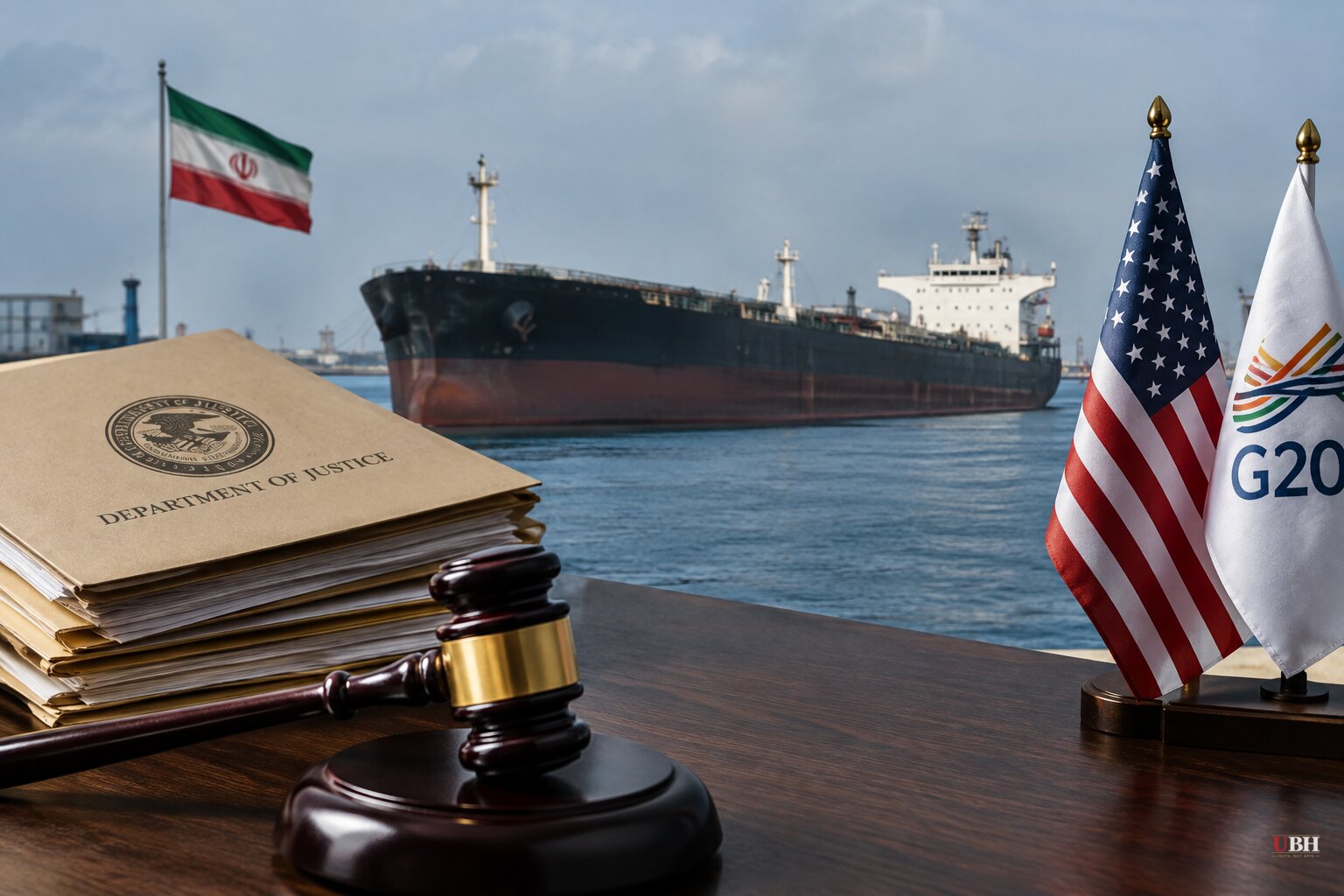
Since Iran shut the Strait of Hormuz following the February 28 U.S.-Israeli strikes, Washington has spent seven months trying to force the waterway back open with warships and sanctions. Now it's adding two new tools: legal seizure of Iranian tankers and a coordinated financial squeeze through the G20.
DOJ Wants Old Law for a New War
The Justice Department is planning to reactivate maritime prize courts, a legal mechanism that lets the government formally claim enemy vessels captured during a naval blockade as war prizes, according to a report first published by Bloomberg Law and cited by Fox News. Under this process, the U.S. Navy's seizures of tankers violating its blockade of Iran would get a clearer legal path to becoming government property. Cargo and oil aboard those ships could then be sold, with proceeds going to the Treasury Department to help offset the war's cost.
Prize courts are a legal relic. The mechanism has gone essentially unused for decades, and neither the DOJ nor Bloomberg Law's reporting details how the administration would distinguish sanctioned Iranian cargo from oil owned by neutral shippers or U.S. allies transiting the same waters. Reviving 19th-century maritime law to fund a 21st-century blockade raises obvious questions about how allied commercial interests get protected from getting caught in the same net, and those questions remain unanswered in the current reporting.
Bessent Takes the Fight to the G20
Treasury Secretary Scott Bessent is set to host finance ministers and central bank governors from G20 nations in Asheville, North Carolina, for a two-day meeting, according to a senior Treasury official who spoke to Reuters. Washington intends to press its G20 partners to help cut off Iran's remaining economic lifelines as part of the broader pressure campaign. The same meeting will also address sovereign debt challenges and global economic imbalances unrelated to Iran, officials told Reuters.
Whether other G20 members, several of which still buy discounted Iranian crude through gray-market channels, actually sign on to tighter enforcement is an open question the meeting has not yet answered.
CENTCOM's Optimism Meets the Water
Adm. Brad Cooper, commander of U.S. Central Command, released a video update touting the clearance of sea mines from Hormuz's international shipping lanes and crediting U.S. forces with helping nearly 1,500 commercial vessels transit the strait carrying roughly 750 million barrels of crude since American naval operations began. "The international shipping lanes are open and momentum is building," Cooper said, according to Fox News.
That framing sits uneasily next to what shipping operators have been telling reporters. Mitsui OSK has already said LNG transit through Hormuz is now "almost impossible," and independent tracker Kpler recorded just five confirmed vessel crossings on a single day earlier this month, down by half from the day before, according to Daily Wire. U.S. officials attribute the gap to tankers running dark at night with transponders off, sometimes escorted by the Navy, to avoid becoming targets. Energy Secretary Chris Wright told CNBC that total regional exports, including oil moved via pipelines that bypass the strait entirely, have actually surpassed pre-war levels. Those figures cannot be independently verified against Kpler's tracking data, and the administration has not reconciled the discrepancy.
Gulf producers aren't waiting to find out who's right. Oman LNG's chief executive, Hamed Al Naamany, told an industry forum in Bangkok that "the crisis around the Strait of Hormuz will end soon" and said the company's long-term production expansion plans, in the works for years before the war, remain unchanged. The UAE, meanwhile, is expanding its pipeline from Abu Dhabi's oil fields to the port of Fujairah on the Gulf of Oman, a route that skips Hormuz altogether.
India Builds a Bigger Cushion
State-owned Oil and Natural Gas Corp. plans to invest roughly $736 million to build underground storage in southern India capable of holding about 13 million barrels of crude, ONGC Chairman Arun Kumar Singh said, according to Inspenet. Land for the project has already been acquired. India currently holds about 39 million barrels in strategic reserves, roughly a week's worth of imports, dwarfed by China's 1.2 billion barrels. ONGC is also weighing setting up a trading desk in Dubai or Singapore to better manage its crude, fuel, and gas exposure, Singh said.
Iran Denies Plot Against Barron Trump
Separately, Mohsen Rezaei, secretary of Iran's Supreme National Security Council, told Lebanon's Al-Manar TV that reports of a plot to assassinate Barron Trump, 20, were a lie, according to Iran International. The claim followed an Iranian state television broadcast alleging Barron Trump was under surveillance and that a $10 million bounty had been placed on his life. The Secret Service confirmed it is aware of the video and is investigating it as a potential threat, Reuters reported. No charges or formal findings have been announced by U.S. authorities, and Iran's own top security official has publicly denied the plot exists.
The question facing policymakers is whether squeezing Iran's finances through prize courts and G20 coordination actually reopens Hormuz to normal traffic, or whether it simply pushes more tankers into the covert, transponder-off shipping described by Daily Wire, while Gulf states quietly build pipelines that make the strait irrelevant regardless of what Washington does next.
Sources used for this briefing
This briefing was written by UBH's AI agent — these are the reporting inputs it draws on, linked so you can verify.


