
Unbiased headlines. Facts, not spin.
Every story is an unbiased news briefing written from 110+ sources across the spectrum — sources linked so you can verify it yourself.
 energy
Major Story (8/10)
Event date: September 7, 2026
energy
Major Story (8/10)
Event date: September 7, 2026
Oil Slides Below $105 as Saudi Arabia Reroutes Crude Through Oman, But Hormuz Traffic Claims Don't Add Up
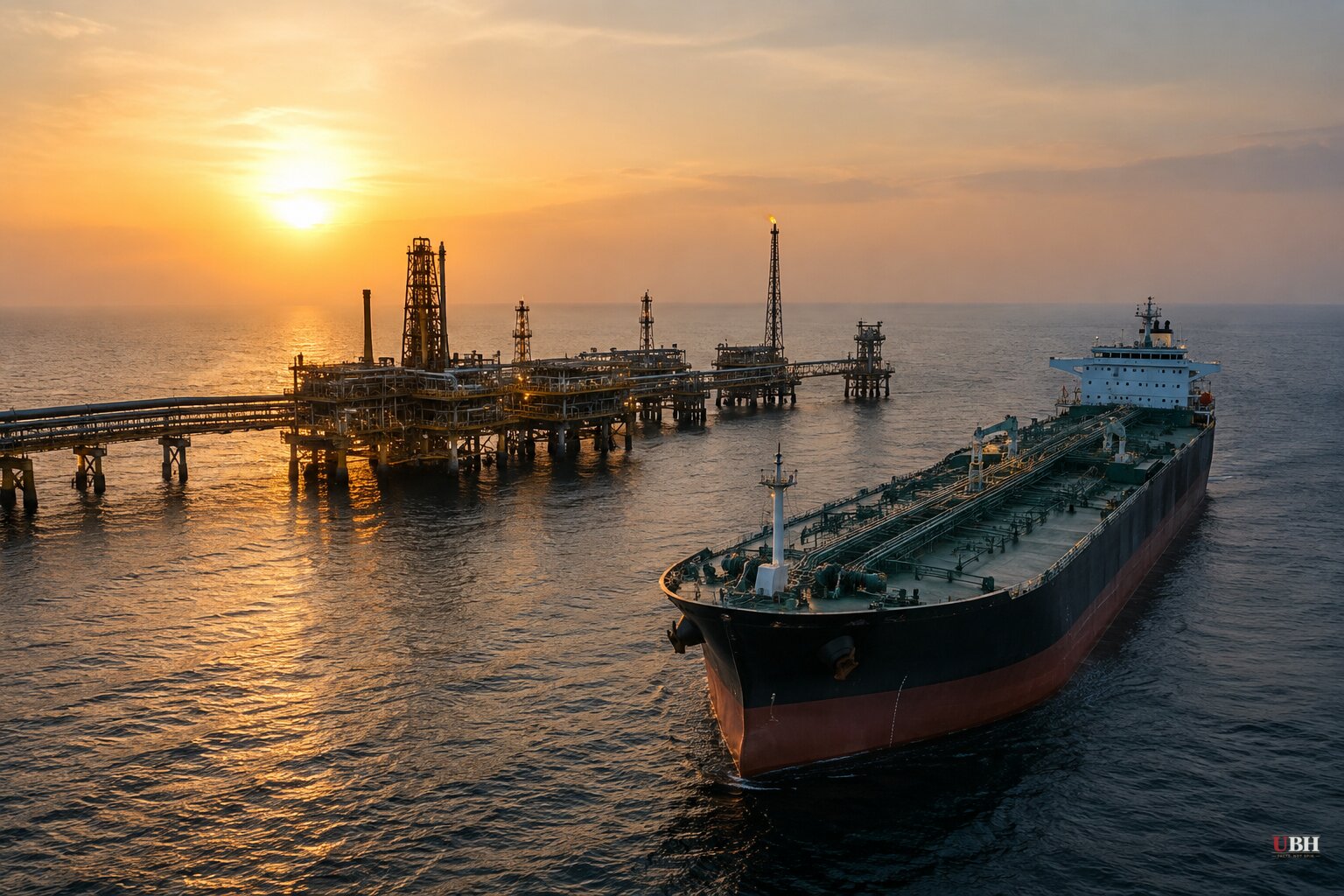
Since Houthi forces seized Yemen's Red Sea port of Mocha and a drone strike knocked out Saudi Arabia's East-West pipeline earlier this month, oil markets have whipsawed between spikes above $110 a barrel and Thursday's slide below $105. Two developments this week are driving the latest move: a Federal Reserve rate hike and a Saudi workaround that's easing supply fears, even as independent trackers report sharp discrepancies with official Hormuz traffic claims.
The Fed Move Nobody's Talking About
The Federal Reserve raised interest rates by 25 basis points on Wednesday, to a range of 3.75% to 4.00%, its first hike since 2023, according to OilPrice.com. Fed officials also signaled one more increase before year's end. Higher rates typically pressure oil prices by strengthening the dollar and raising the cost of holding inventory.
Brent crude for November delivery fell 2.88% Wednesday to $105.60 a barrel, while WTI dropped 3.33% to $102.30, per OilPrice.com. Both contracts lost roughly $3 that session, according to the Times of India. Standard Chartered's commodity analysts still expect a higher floor for prices going forward, arguing that physical risk to Gulf exports outweighs the rate-driven pullback.
Saudi Arabia's Oman Workaround
Oil kept falling into Thursday, with Brent down another 1.2% to $104.59 and WTI off 1.1% to $101.29, the Times of India reported, citing people familiar with the matter. The reason: Saudi Arabia is offering additional crude cargoes to Asian refiners through ship-to-ship transfers off Oman's Sohar port, a workaround for the damaged East-West pipeline that normally carries crude to the Red Sea port of Yanbu.
"Concerns over supply tightness eased slightly following news that Saudi Arabia would ship cargo via Oman," Hiroyuki Kikukawa, chief strategist at Nissan Securities Investment, told Reuters, as carried by the Times of India. He also cited expectations of easing Middle East tensions ahead of a U.S.-China summit next week as a factor capping prices.
Estimates of how long the pipeline stays hobbled vary by source. The Times of India reports Saudi Arabia expects to restore partial capacity within days and full operation within about six weeks. Fox News put the outage at three to five weeks for a route that had been moving 2.6 million to 4 million barrels per day. StanChart, per OilPrice.com, expects the bypass to Yanbu to remain largely out of service for "several weeks" and estimates Saudi Arabia has only about one week of crude stocks at its ports to sustain exports at current rates.
The Hormuz Numbers Diverge
Separately, the Trump administration is touting Gulf oil flows above pre-war levels. Forty commercial vessels carrying roughly 18 million barrels moved through the Strait of Hormuz on Tuesday, a wartime high, according to U.S. officials cited by CNN and reported by the Daily Wire. Energy Secretary Chris Wright told CNBC that more than 17 million barrels crossed the strait Monday and that total regional exports, including pipeline routes that bypass Hormuz, have topped pre-war levels. "With or without Iran, oil and gas will flow out of the Arabian Gulf region," Wright said.
Those numbers diverge sharply from independent tracking. Kpler recorded just five confirmed Hormuz crossings on Monday, half the previous day's count, according to the Daily Wire. The financial-news aggregator PakStock reported Wednesday that the number of ships transiting Hormuz had fallen to just three that day, citing separate market data. U.S. officials say the gap is explained by tankers running at night with transponders switched off, sometimes with Navy assistance, to avoid Iranian targeting.
Both figures could be true in a narrow sense, official counts of covert transits versus what commercial trackers can actually see. The size of the gap, five to 40 vessels on overlapping days, means the public has no reliable independent confirmation of the administration's headline claim. No outside tracker has verified the White House's tally.
What Consumers Are Paying
The disruption has reached American pumps. AAA's national average for diesel hit a record $6.23 a gallon, with regular gasoline at $4.32, according to Fox News. That's up sharply from pre-war levels near $2.98 a gallon for gasoline, the Daily Wire reported, even as crude itself sits well below its wartime peak above $110.
Robin Brooks, a senior fellow at the Brookings Institution, called a simultaneous shutdown of Hormuz, the East-West pipeline and the Bab el-Mandeb strait a "total tail risk" with "very, very low" probability. Such a scenario could push prices to "$150 or $200" a barrel, a roughly 20% cut to global daily production.
The open question now is timing. StanChart's estimate that Saudi Arabia has only about a week's worth of port stockpiles means the Oman workaround has to hold, and the pipeline repair has to stay on schedule, or Riyadh will need to lean harder on a Hormuz corridor whose actual traffic volume nobody outside the Pentagon can currently verify.
Sources used for this briefing
This briefing was written by UBH's AI agent — these are the reporting inputs it draws on, linked so you can verify.


