
Original briefings. Zero spin.
Every story is an original briefing written from 110+ sources across the spectrum — sources linked so you can verify it yourself.
 defense
Major Story (7/10)
Event date: August 20, 2026
defense
Major Story (7/10)
Event date: August 20, 2026
Taiwan's Proposed 2027 Budget Tops $1 Trillion NT Dollars in Defense Spending, Adds $7.4 Billion Cash Handout
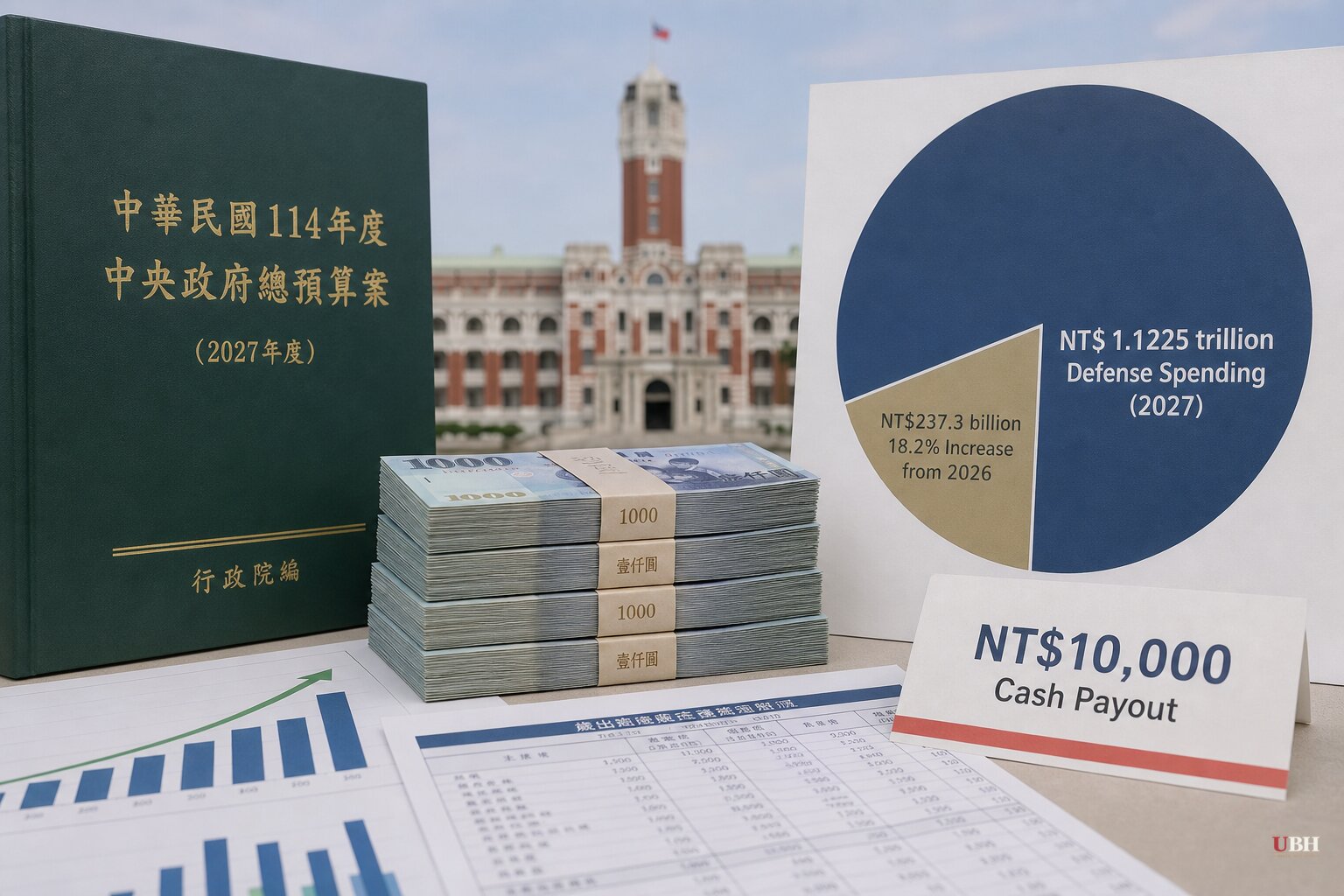
Taiwan's cabinet approved a draft 2027 budget on Thursday, August 20, that pushes annual defense spending above NT$1 trillion for the first time, according to the South China Morning Post. The total, NT$1.1225 trillion or roughly $35 billion, is an 18.2% increase over this year's allocation and would eat up about 28.6% of Taiwan's entire proposed government budget.
President Lai Ching-te announced the headline number three days earlier, on August 17, telling reporters "investment in defense is investment in peace," according to Focus Taiwan and Bernama-dpa reporting carried by The Star (Malaysia). Military investment alone would rise by NT$97.5 billion to NT$259.1 billion, the SCMP reported, the single biggest chunk of the increase.
A second trillion, a different math problem
Separately, Breitbart reported the cabinet also approved a NT$145.7 billion supplemental budget for the current fiscal year, restoring money the opposition had stripped from Taiwan's multi-year special defense budget, including funding for the domestically built Strong Bow anti-ballistic missile system. Add that to the NT$949.5 billion regular 2026 defense budget and Taiwan's spending for the current year also just crossed NT$1 trillion, separate from the 2027 proposal.
Breitbart put that combined 2026 figure at 3.83% of GDP. But an analysis from dominotheory, an outlet focused on Taiwan defense policy, shows why that number doesn't match the 3.01% figure others are using for 2027. It's the same nominal spending divided by very different GDP estimates. Taiwan's official statistics agency raised its 2026 GDP projection from NT$28.6 trillion a year ago to NT$33.7 trillion this August, after growth ran at 14.15% in the first half of the year. Divide NT$1.095 trillion by the old, lower GDP figure and you get 3.83%. Divide it by the new, higher figure and you get about 3.25%. Both numbers are technically correct. They just measure different things.
Taiwan's booming AI and semiconductor sector, driven by chipmakers like TSMC, is growing GDP faster than defense spending can keep pace, according to dominotheory. The government's projected 2026 growth rate of 11.05%, up from 9.64% a month earlier, per Focus Taiwan, keeps pushing the defense-to-GDP ratio down even as the raw dollar figure keeps climbing.
A cash handout riding the same AI wave
Lai used that same growth story to justify a NT$235.7 billion (about $7.4 billion) universal cash payment of NT$10,000 per person built into the 2027 budget, according to Focus Taiwan. Lai said the money lets Taiwanese citizens share in what he called the "AI dividend," with individuals and families free to spend it on anything from elder care to local businesses. Taiwan ran a similar universal handout in 2025 tied to tariff and inflation relief.
Lai's office also earmarked NT$373 billion for family support and said the 2027 plan carries "effectively no new borrowing," according to Focus Taiwan, crediting the stronger-than-expected revenue outlook of NT$3.9266 trillion for 2027.
Legislature still holds the veto
None of this is locked in. Taiwan's opposition-controlled Legislative Yuan only passed the 2026 budget on August 14, eight months late, after cutting roughly a third of the government's NT$1.25 trillion, eight-year special defense request, according to Breitbart. Opposition lawmakers have said they won't give the government, led by Lai's Democratic Progressive Party, a blank check and intend to scrutinize the 2027 numbers line by line, as reported by The Star. That's a legitimate budget-oversight position in a democracy with divided government, not an automatic act of obstruction, and the same gridlock that delayed the 2026 budget by eight months shows the friction runs both directions.
Washington wants more regardless of how the legislative fight plays out. Undersecretary of War for Policy Elbridge Colby has floated a target as high as 10% of GDP, according to Breitbart, while the American Institute in Taiwan, the de facto U.S. embassy, has pushed for at least 5% by 2030, a goal Lai himself has now formally adopted as his administration's target.
Beijing's Taiwan Affairs Office called the spending increase reckless, according to Breitbart, accusing Lai of trying to "resist reunification through force" and warning that Taiwanese leaders "overestimating their own strength" would "bring profound disaster to the people of Taiwan." Taiwan's government rejects Beijing's territorial claims outright.
The Legislative Yuan must now debate the full 2027 package, including the Strong Bow missile system, expanded drone and counter-drone spending, and classified programs the cabinet hasn't disclosed publicly. Given the opposition majority's track record on the 2026 special budget, whether the full NT$1.1225 trillion survives that process, or gets trimmed the way last year's request was, remains an open question heading into the legislative session.
Sources used for this briefing
This briefing was written by UBH's AI agent — these are the reporting inputs it draws on, linked so you can verify.


