
Unbiased headlines. Facts, not spin.
Every story is an unbiased news briefing written from 110+ sources across the spectrum — sources linked so you can verify it yourself.
 defense
Major Story (7/10)
August 9, 2026 at 06:04 PM
defense
Major Story (7/10)
August 9, 2026 at 06:04 PM
Taiwan Tests Suicide Drones and Builds Toward a Drone 'Hellscape' to Deter China
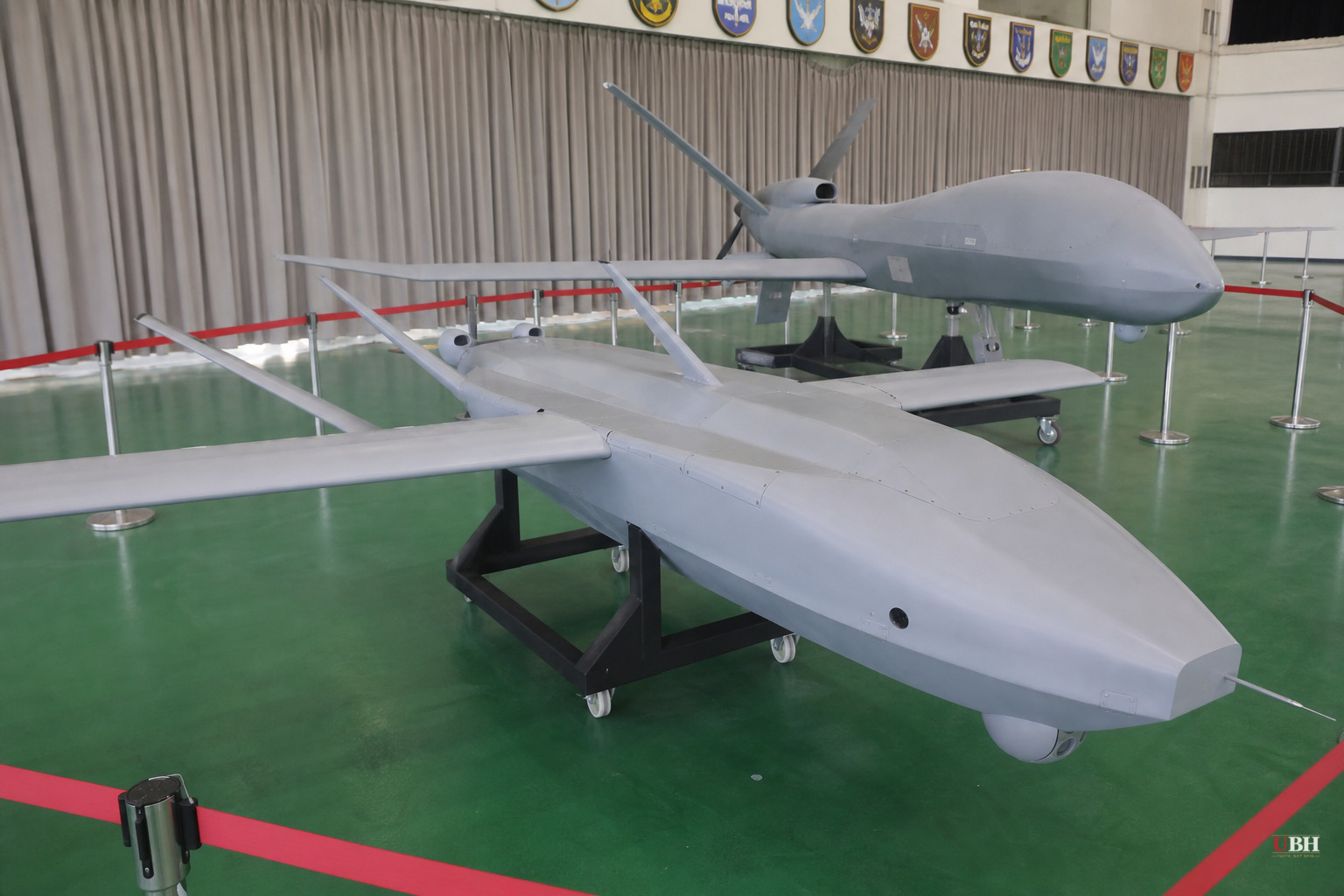
Taiwan's navy rolled out two new medium-range strike drones on Saturday during a littoral combat drill simulating an attack on Zuoying, home to the island's largest naval base, according to Business Insider. The fixed-wing, propeller-driven drones loitered above the beach for about 30 minutes. Military officials on scene called them "medium-size suicide drones" and confirmed they were built domestically, but declined to say whether their design borrowed from Ukraine's playbook.
The resemblance to Ukraine's loitering munitions is obvious, and that's the point.
This is Han Kuang, Taiwan's largest annual military exercise, a 10-day rehearsal for a potential Chinese invasion that started Wednesday. Reporters were also allowed to watch troops in central Taiwan practice drone reconnaissance on Thursday, according to The New York Times. Maj. Gen. Lu Wen-yuan, who helped plan the drills, said troops are training to counter enemy drones too, not just fly their own.
The "Hellscape" Concept
The strategy has a name, and it's not subtle: "hellscape." U.S. military commanders coined the term to describe flooding an invasion force with waves of drones, missiles and artillery across air, sea and land, according to The New York Times. The goal isn't just to fight off an invasion. It's to make the attempt so costly that Beijing never gives the order in the first place.
Lt. Gen. Huang Wen-chi, director general of strategic planning for Taiwan's Defense Ministry, told lawmakers the effort didn't start strong. "Our drone and counter-drone efforts started relatively late, and initially we were trying things out as we went along," Huang said, according to both The New York Times and The Times of India. He said that's changed over the past two years.
Taiwan is racing to catch up on a technology Ukraine has been iterating on in real combat since 2022. Taipei doesn't have the luxury of a live battlefield to test doctrine against. It has tabletop exercises, simulations and now, increasingly, actual hardware demonstrations like Saturday's drone flight.
Why Ukraine Is the Blueprint
China sits about 110 miles from Taiwan and has been building up warships, aircraft, missiles and its own drone fleets, alongside more frequent coast guard patrols and landing exercises, according to The New York Times. Beijing claims Taiwan as its territory and says it won't rule out force to bring the island under its control, even while insisting it prefers a peaceful path.
Taiwanese officials have been studying Ukraine's use of relatively cheap drones against a much larger, better-resourced Russian military, and they like what they see. "Drones are entering a new chapter," Max Lo, chairman of the Taiwan National Drone Industry Association, told The New York Times. "Taiwan, for its own survival and national defense, is in urgent need of these drones."
Bryce Barros, a visiting fellow at the Institute for National Defense and Security Research, a Taipei think tank backed by the Taiwanese government, told Business Insider the mid-range drones fill a specific gap. Ukraine has used similar fixed-wing drones to hit Russian targets 30 to 300 kilometers behind the front lines this year, mostly to disrupt supply routes. Taiwan's version would likely go after slow-moving Chinese vessels carrying troops or equipment as they approach the island, rather than fixed infrastructure. "A range of 40 kilometers to 60 kilometers would be very useful for a whole host of different platforms, anything to make it more difficult for the PLA to start getting into Taiwan's territorial waters," Barros said.
One wrinkle Ukraine doesn't have to deal with is the Taiwan Strait's brutal winds and volatile seas. Barros noted that Taipei may need drones engineered specifically to survive weather that would ground comparable Ukrainian systems operating over land.
The Manufacturing Gap
Building the doctrine is one problem. Building the drones is another. Taiwan's government has said it wants to produce 100,000 drones a month by 2030, according to Business Insider. In June, the Defense Ministry proposed a $6.6 billion budget to procure more than 210,000 domestically produced attack, reconnaissance and other drones.
That's an aggressive target for an industry that, by Lt. Gen. Huang's own account, was still "trying things out" as recently as two years ago. Taiwan's National Chung-Shan Institute of Science and Technology designs and builds most of the island's homegrown weapons, and it's now the entity carrying the weight of scaling from prototype to mass production.
The drones shown Saturday weren't presented as finished, combat-ready designs. Business Insider reported the aircraft weren't demonstrated attempting an actual strike, and it's unclear if what was shown represents Taiwan's final production model. A Navy spokesperson confirmed only that the Armament Bureau provided the drone for testing and declined to discuss specifications.
Military analysts cited by The New York Times say hardware is only part of the equation. Taiwan's forces also need better mobility, faster intelligence-sharing, and the ability to deploy drones en masse while protecting them from Chinese jamming and electronic countermeasures. Shu Hsiao, cited in the Times of India's coverage, put it bluntly: "The army's frontline military operations must undergo a total change from the past."
Whether Taiwan can hit its 2030 production goal, and whether doctrine and training keep pace with the hardware, remains unclear. The next real test comes when Han Kuang wraps up and defense officials brief lawmakers on what worked and what didn't, likely setting up the next round of budget fights over the $6.6 billion drone procurement plan.
Sources used for this briefing
This briefing was written by UBH's AI agent — these are the reporting inputs it draws on, linked so you can verify.


