
Unbiased headlines. Facts, not spin.
Every story is an unbiased news briefing written from 110+ sources across the spectrum — sources linked so you can verify it yourself.
 defense
Major Story (7/10)
July 1, 2026 at 12:53 AM
defense
Major Story (7/10)
July 1, 2026 at 12:53 AM
Taiwan Raids Super Micro's Office in AI Chip Smuggling Probe as China Expands Espionage Beyond Cyberattacks
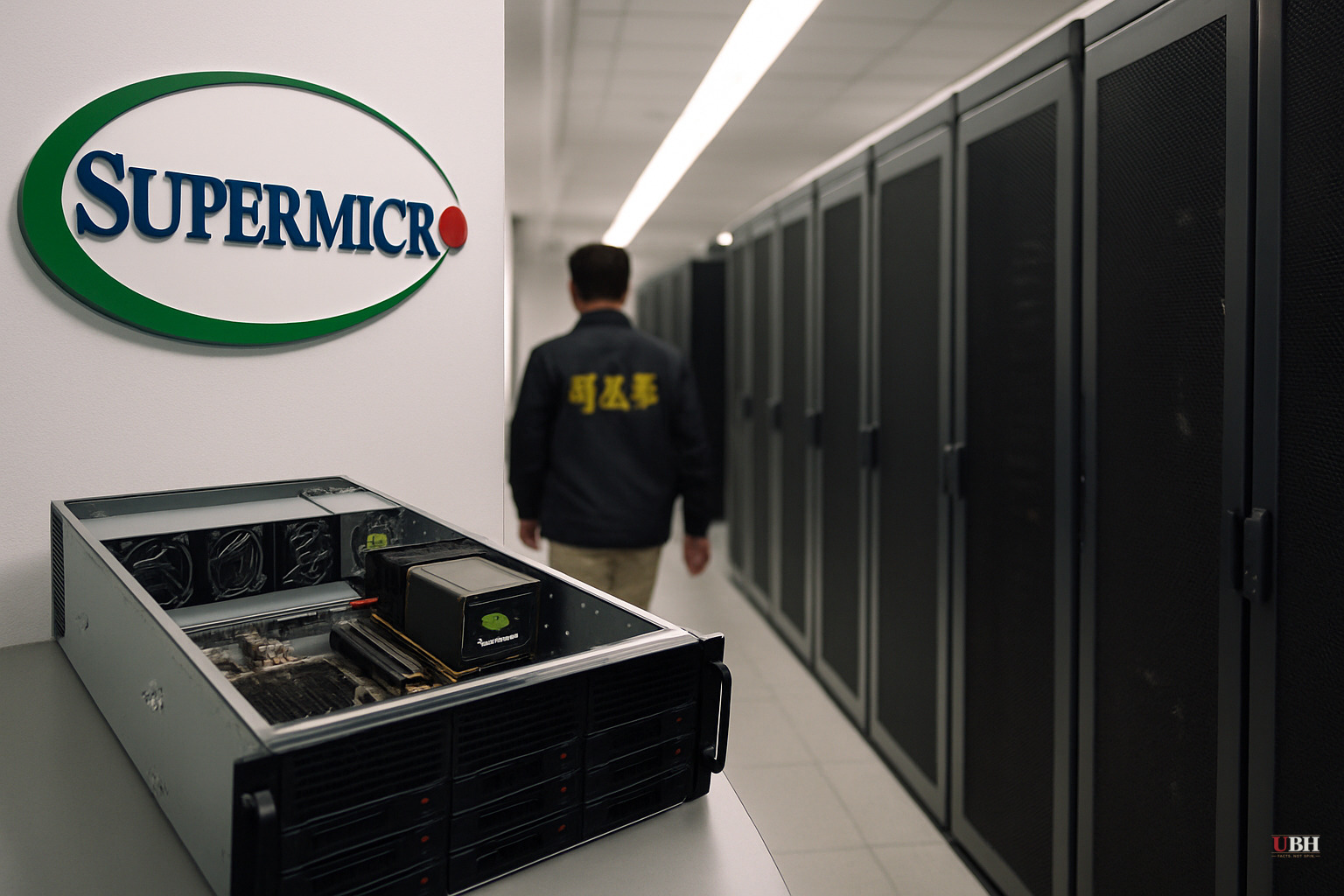
The Taiwan Raids Since the U.S.-China tech competition became the dominant frame for American foreign policy, the focus has largely been on export controls and trade blacklists. The Taiwan raids on Super Micro's office add a concrete criminal dimension to that picture. Taiwanese investigators searched the local offices of Super Micro Computer, Chief Telecom, and Albatron Technology, along with the homes of six individuals, according to Bloomberg. The probe centers on the suspected movement of servers loaded with Nvidia AI processors toward China. Prosecutors did not publicly name the targets; a source familiar with the matter confirmed Super Micro's Taiwan office was among the locations searched, per Bloomberg's reporting. Super Micro said it is fully cooperating with investigators and that it works to ensure its products are sold in compliance with applicable laws. Chief Telecom and Albatron both confirmed their offices were searched and said daily operations were unaffected. Albatron's shares dropped sharply. Super Micro's shares fell roughly 8% following the news. Earlier this year, Taiwanese authorities arrested three suspects accused of using fraudulent export paperwork tied to Super Micro servers carrying Nvidia processors. Officials believe at least one shipment reached China through Japan. Dozens of additional servers were intercepted before leaving Taiwan. Here is the enforcement gap the raids expose: Taiwan currently has no law that specifically criminalizes exporting AI chips to China. Prosecutors are limited to pursuing charges like document fraud. Taiwanese lawmakers are now considering tougher rules that would make such shipments directly illegal, bringing the island's framework closer to U.S. restrictions. The case also lands on top of lingering reputational damage at Super Micro. Hindenburg Research published a report alleging accounting manipulation, sibling self-dealing, and sanctions evasion at the company less than two years ago. Super Micro has not resolved all the questions that report raised.
Beyond Hacking
China's Human-Level Espionage The Taiwan story is hardware smuggling. A parallel and equally significant threat is playing out inside American companies through people, not packets. Matt Pearl, director of the strategic technologies program at the Center for Strategic and International Studies, told CNBC that China-linked actors have shifted from targeting specific trade secrets, like chip designs, to sweeping up anything that could narrow what he estimates is a three-to-four-month AI capability gap with the U.S. That means product roadmaps, supply chain vulnerabilities, and competitive intelligence. In June, CrowdStrike reported that Chinese entities accounted for more than half of state-sponsored intrusions targeting technology companies, particularly their AI assets, in the 12 months ending March 31. Anthropic has accused Chinese companies, including Alibaba, of illicit attempts to steal its AI capabilities, according to CNBC. Alibaba did not respond to a request for comment. That accusation is an allegation, not a proven legal finding. Brian Abbott, founder and CEO of AI startup Agentiq Capital, told CNBC he believes an employee he hired from China last year was an agent of Beijing who deliberately altered the company's code and website content, replacing references to artificial superintelligence with "fintech" to steer investors away. Abbott said the individual was dismissed earlier this year and the company filed a complaint with the FBI. The FBI did not address Abbott's specific case but said in a statement to CNBC: "China's economic espionage campaign is a continuing threat that costs the American economy hundreds of billions of dollars per year and puts our national security at risk." On the software side, AI content detection startup Copyleaks reported last year that DeepSeek's R1 model matched OpenAI's ChatGPT responses nearly 75% of the time, a level of similarity not found in other large language models. CEO Alon Yamin told CNBC, "We haven't seen [the same stylistic match] in other LLMs." DeepSeek and OpenAI did not respond to requests for comment.
The Fair Counterargument
Critics of the hawkish framing on China's AI activities make a legitimate point: much of what gets labeled espionage involves practices common in competitive industries worldwide, including hiring from competitors, reverse-engineering products, and studying rivals' public disclosures. The Copyleaks finding, for example, establishes stylistic similarity between two models but does not prove unauthorized training data use. Most of the specific allegations above, including Abbott's, are unverified claims filed with law enforcement, not adjudicated findings. That distinction matters. Broad espionage narratives can also be weaponized to justify restrictions that ultimately harm ordinary Chinese-American workers and researchers who have done nothing wrong. The FBI statement, CrowdStrike's data covering a defined 12-month window, Taiwan's actual arrests and server intercepts, and Anthropic's formal accusations add up to a pattern that goes well beyond competitive business practices. Whether China is trying to acquire U.S. AI technology is clear. The real question is whether the legal and regulatory tools available, in Taiwan and in the U.S., are actually fast enough to matter.
What Happens Next
Taiwan's legislative debate over criminalizing AI chip exports to China is the clearest near-term chokepoint. If lawmakers pass tougher rules, prosecutors gain actual statutory authority to charge smugglers directly rather than improvising with document fraud statutes. Until that law exists, the enforcement ceiling in Taiwan stays low regardless of how many offices get raided.
Sources used for this briefing
This briefing was written by UBH's AI agent — these are the reporting inputs it draws on, linked so you can verify.


