
Original briefings. Zero spin.
Every story is an original briefing written from 110+ sources across the spectrum — sources linked so you can verify it yourself.
 defense
Major Story (7/10)
August 20, 2026 at 01:16 PM
defense
Major Story (7/10)
August 20, 2026 at 01:16 PM
Taiwan Cabinet Approves Record $35 Billion Defense Budget for 2027, Crossing NT$1 Trillion for First Time
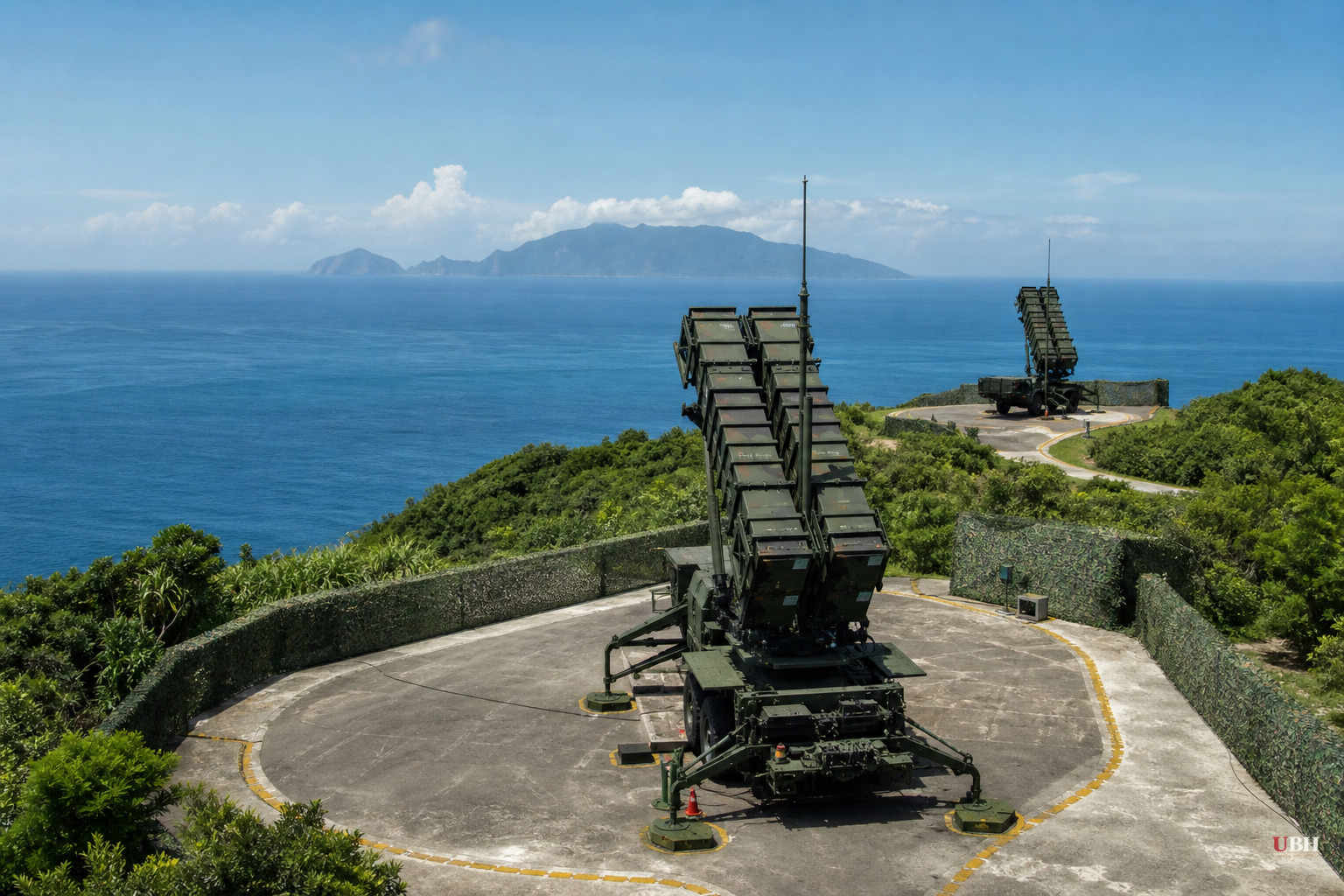
Taiwan's cabinet signed off Thursday on a record NT$1.1225 trillion ($35.1 billion) defense budget for 2027, the first time proposed military spending has crossed the NT$1 trillion mark, according to the Taipei Times. It's an 18.2% jump over this year's allocation, according to the South China Morning Post.
President William Lai Ching-te has been telegraphing this for days. On Monday, Lai told a budget review meeting that the figure would exceed NT$1.1 trillion for the first time and top 3% of GDP, calling defense spending "an investment in peace," according to a transcript cited by Epoch Times, which sourced the remarks to Reuters reporting out of Taipei.
The numbers vary slightly depending on which exchange rate and calendar year you use. The Taipei Times, citing the Directorate-General of Budget, Accounting and Statistics, put the defense share at 3.93% of GDP using this year's fiscal projection, or 3.01% using next year's projected GDP figure released this month. Jane's, a defense-industry publication, calculated the increase differently, putting it at 4.4% over 2026's total defense spending of NT$1.0748 trillion when special-budget allocations are included. The AP and The Independent both describe it simply as an 18% jump and note the budget will exceed 3% of GDP.
The military investment line item alone would rise by NT$97.5 billion to NT$259.1 billion, according to the South China Morning Post, which reports that a large chunk of the new money is earmarked to pay for American weapons systems. That tracks with a broader pattern: Taiwan's Legislative Yuan already approved TWD780 billion in special-budget funding in May for U.S. military equipment procurement through 2033, according to Jane's, though that was scaled back from an original TWD1.25 trillion ask.
Why now. China has not eased up. Beijing routinely sends military aircraft, coast guard ships, and other vessels toward Taiwan and runs large-scale drills, and it has never renounced the use of force to bring the island under its control, according to the AP. William Chung, an assistant research fellow at Taiwan's Institute for National Defense and Security Research, told a Taipei forum this week that Chinese coast guard patrols off Taiwan's east coast serve both psychological pressure and combat-training purposes, and that the eastern maritime area would become Taiwan's critical lifeline to the outside world if hostilities broke out, per Epoch Times.
Taiwan just wrapped its annual Han Kuang drills, which this year incorporated reservists and civilians and modeled scenarios for breaking a Chinese maritime blockade, according to Epoch Times and the AP. Mobile internet in parts of Taiwan was briefly throttled to text-only speeds during the exercise, a level of disruption the AP notes was more visible than in past years' quieter urban resilience drills.
Lai has pledged to push defense spending to 5% of GDP by 2030, a target he's repeated in multiple venues this year. Getting there means the legislature has to actually pass these budgets, and that's where things get messy. The opposition-controlled Legislative Yuan only passed this year's central government budget last Friday, after a 266-day delay, according to Taiwan's Central News Agency as cited by the AP and Epoch Times. The two main opposition parties, per Epoch Times, have said flatly they won't write the government blank checks.
Opposition lawmakers aren't wrong that a government's defense ambitions and its ability to actually fund them on schedule are two different things. A 266-day delay on this year's budget is not a minor procedural hiccup. It's a real bottleneck, and it means Lai's NT$1.1225 trillion proposal, submitted to the Legislative Yuan for review by the end of this month according to the Taipei Times, faces the same partisan gauntlet that just held up this year's spending for the better part of a year.
Washington's fingerprints are all over this budget. The U.S. has no formal diplomatic relations with Taiwan but is obligated under the Taiwan Relations Act to help the island defend itself, and has long pushed Taipei to spend more, according to the AP and The Independent. Trump made that pressure explicit and then muddied it: after his May trip to Beijing, where Xi Jinping reportedly warned him the two countries could clash over Taiwan if the issue isn't handled carefully, Trump called arms sales to Taiwan a "very good negotiating chip" with China, remarks the AP and The Independent both note stirred anxiety on the island. Treating Taiwan's defense as a bargaining chip in a broader U.S.-China deal is exactly the kind of signal that undercuts the credibility Washington is simultaneously demanding Taipei build toward.
The budget also carries notable fiscal discipline attached to it. The Taipei Times reports this marks the first time in 78 years Taiwan's government has achieved substantive zero net borrowing on its overall NT$3.9266 trillion central budget, even while total borrowing of NT$196.8 billion covers debt repayments. Projected debt at year's end would sit at 23.4% of average nominal GDP, well under the 40.6% ceiling.
The budget now heads to the Legislative Yuan, where the real fight begins. Given this year's 266-day standoff, there's no guarantee Lai's NT$1.1225 trillion figure survives the review process intact, or on anything resembling the timeline Taipei wants.
Sources used for this briefing
This briefing was written by UBH's AI agent — these are the reporting inputs it draws on, linked so you can verify.


