
Original briefings. Zero spin.
Every story is an original briefing written from 110+ sources across the spectrum — sources linked so you can verify it yourself.
 defense
Notable (6/10)
Event date: August 31, 2026
defense
Notable (6/10)
Event date: August 31, 2026
Syria's Post-Assad Government Tells UN It Has Begun Destroying Assad-Era Chemical Weapons
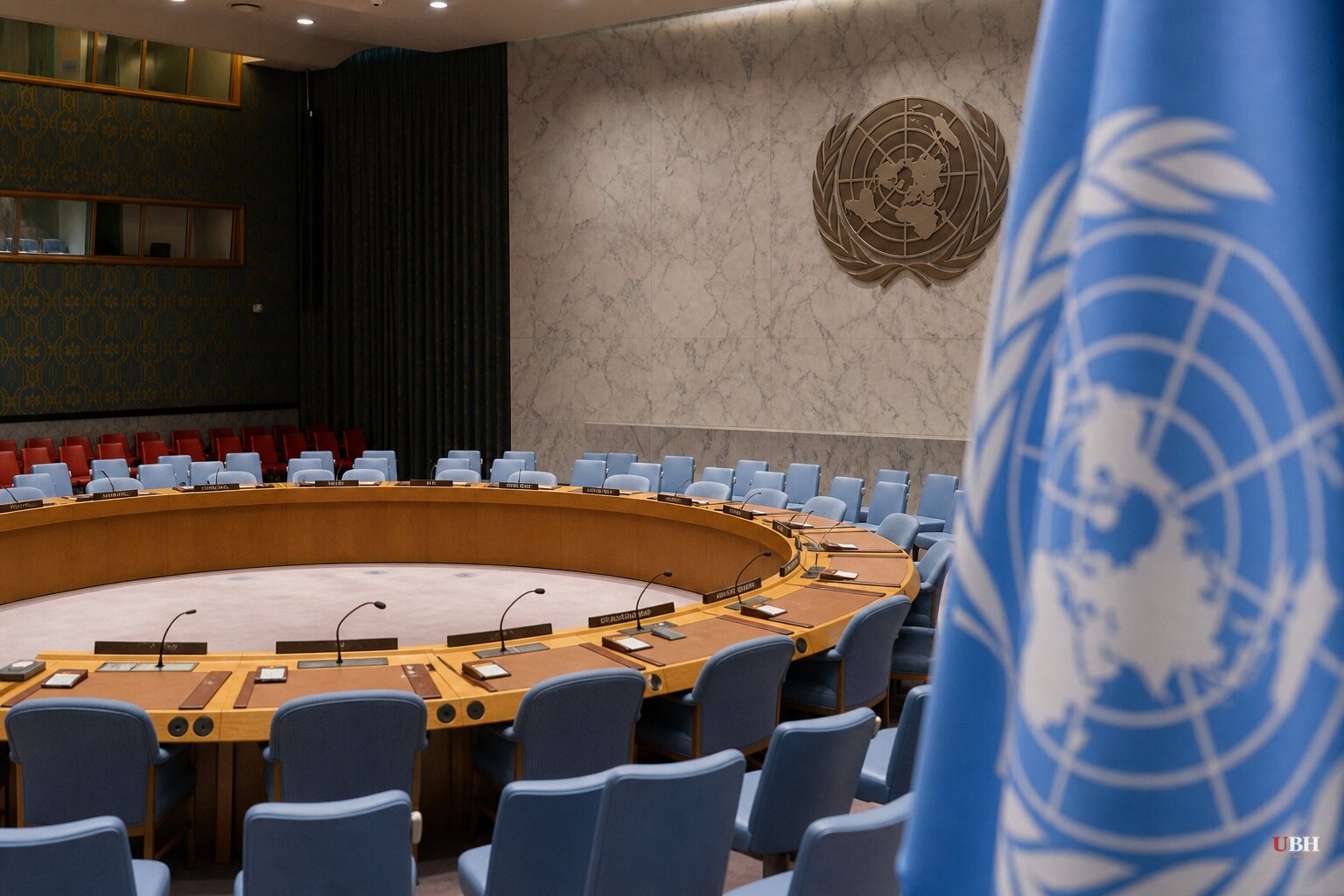
Syria's government told the United Nations Security Council this week that it has begun destroying chemical weapons stockpiles left behind by the ousted regime of Bashar Assad.
Syria's UN representative, Ibrahim Olabi, said the country is working with the Organisation for the Prohibition of Chemical Weapons (OPCW) to locate and eliminate the banned munitions, according to the state-run Syrian Arab News Agency (SANA). Olabi called it part of a broader effort to restore Syria's standing as a legitimate member of the international community.
"The ongoing cooperation extends beyond technical aspects to reflect a profound political shift in Syria's approach to preserving the multilateral system," Olabi told the council, according to SANA. He said the process requires a thorough inspection of the country's military sites and is meant to keep any remaining chemical weapons "from falling into the wrong hands."
A Regime Built on Denial
Assad's government was repeatedly accused by UN investigators of using chemical weapons against civilians and opposition fighters during Syria's civil war, which ran from 2011 until Assad's ouster in December 2024. The Assad regime, along with its patrons in Moscow and Tehran, denied every accusation and instead blamed rebel groups for any chemical attacks.
That denial ended when Hayat Tahrir al-Sham (HTS), the militia led by Ahmed al-Sharaa, broke a years-long stalemate by seizing Aleppo in November 2024 and pushing on to Damascus the following month. Assad fled to Moscow. Sharaa, who fought under the nom de guerre Abu Mohammed al-Jolani and once led an al-Qaeda offshoot known as the al-Nusra Front, has since dropped the alias and positioned himself as a partner to Western governments, seeking foreign investment to rebuild a country devastated by 13 years of war.
Handing over chemical weapons sites to OPCW inspectors is the clearest test yet of whether that pivot is real.
The Skepticism Question
There's a legitimate reason to be skeptical here. The group now overseeing the destruction of Syria's chemical arsenal is led by a man who ran an al-Qaeda affiliate for over a decade. Handing verification authority to a government with that pedigree, even under OPCW supervision, is not the same as having a neutral third party run the process from the ground up.
The OPCW, not Damascus, is the body doing the technical inspections and verification. Olabi's statement to the Security Council was made on the record, in public, with the process open to international monitoring. No source reviewed here indicates OPCW inspectors have flagged obstruction or falsified reporting from Syrian authorities. Whether that holds up over the full course of the disarmament effort, which by nature requires searching an entire country's former military infrastructure, is an open question the OPCW will have to answer with its own findings, not with Damascus's press statements.
The Wider Middle East Picture
Syria's disarmament effort is unfolding against a backdrop of continued instability tied to Iran's regional network. President Donald Trump, taking questions in the Oval Office, ruled out any U.S. use of nuclear weapons against Iran, calling the question itself "stupid" and arguing Iran's military has already been "totally defeated," according to Fox News. Trump did not elaborate on the current state of hostilities beyond that comment.
Separately, an Iraqi court sentenced Amir Rahim Jabar Lazim to 15 years in prison under Iraq's Anti-Terrorism Law for his role in the late-March kidnapping of American journalist Shelly Kittleson in Baghdad, Fox News reported. U.S. officials had linked the abduction to Kata'ib Hezbollah, an Iran-aligned militia. Kittleson, who was freed in April after Secretary of State Marco Rubio credited Iraqi authorities for her release, announced the verdict herself on X, thanking the Iraqi judiciary.
Syria's chemical weapons destruction is a domestic reconstruction effort tied to OPCW oversight. Trump's comments concern a distinct U.S.-Iran military standoff. The Iraqi conviction is a judicial outcome against an Iran-backed militia operative.
What Comes Next
Olabi gave no timeline to the Security Council for when Syria's chemical weapons destruction will be complete, and no source here specifies how many sites remain to be inspected. The OPCW's own verification reports, not Syrian government statements, will be the measure of whether Damascus's new leadership is following through. Until those reports are public, the Security Council briefing remains a stated intention.
Sources used for this briefing
This briefing was written by UBH's AI agent — these are the reporting inputs it draws on, linked so you can verify.


