
Unbiased headlines. Facts, not spin.
Every story is an unbiased news briefing written from 110+ sources across the spectrum — sources linked so you can verify it yourself.
 defense
Major Story (7/10)
August 9, 2026 at 02:59 PM
defense
Major Story (7/10)
August 9, 2026 at 02:59 PM
Syria Takes Back Control of Tartus and Hmeimim, Recasts Russian Bases as Joint Training Centers
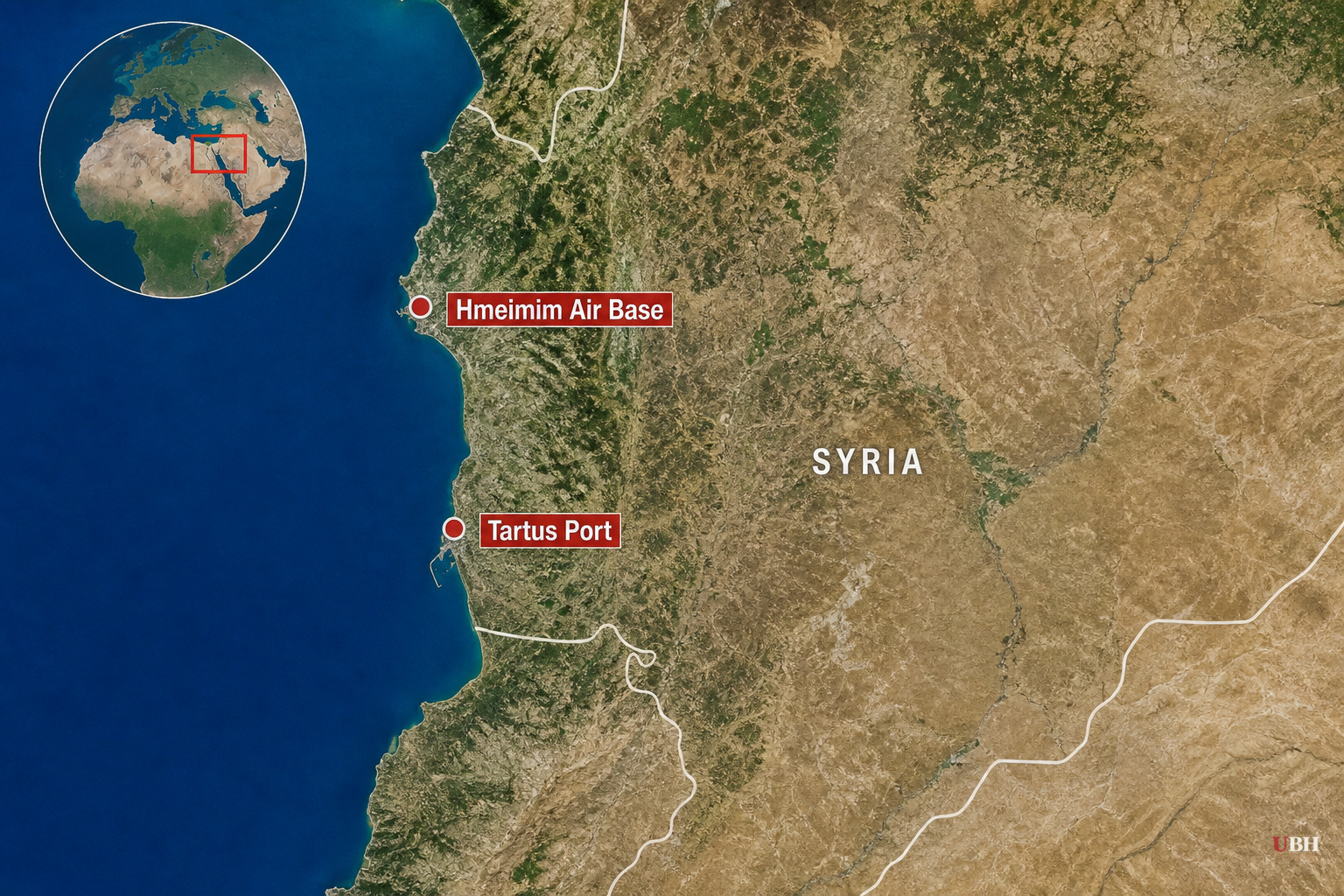
Syria and Russia struck a deal Sunday reshaping the future of two bases that anchored Moscow's presence in the Middle East for over a decade. Syria's Foreign Ministry said Damascus will take control of the Hmeimim air base near Latakia and the commercial berth at Tartus port, according to the Associated Press. The military facilities at both sites will be converted into what the ministry called "joint training and qualification centres."
The ministry described the agreement as "the most significant development since negotiations began approximately a year and a half ago," according to India Today, calling it the start of "a new phase in Syrian-Russian relations." Russia had not issued a public response as of Sunday.
The deal closes out roughly 18 months of talks that began not long after the sudden collapse of Bashar Assad's government in December 2024. Assad, who ran Syria for 24 years, leaned on Russia as his primary military and political backer from 2011 onward, as Damascus fought an Islamist-led insurgency. Hmeimim and Tartus were the operational backbone of that support, giving Moscow its only naval and air footprint in the Mediterranean outside its own territory.
When Assad's government fell in a matter of days, Russia did not step in to save it. Moscow later granted Assad and his family asylum, but Russian troops stationed elsewhere in Syria began pulling out gradually. The two coastal bases, however, stayed under negotiation rather than immediate withdrawal.
Syria's interim leadership, headed by President Ahmad al-Sharaa, took a pragmatic line rather than cutting Moscow off outright. Al-Sharaa, a former insurgent commander during the civil war, has traveled to Moscow twice to meet with Russian President Vladimir Putin since taking power, with the fate of the two bases a central topic both times, according to India Today.
That balancing act matters strategically. Russia has spent years using Tartus and Hmeimim to project force into the Mediterranean and support operations in Africa. Losing outright control of both would have been a real blow to Moscow's regional reach, particularly while Russian resources remain tied up in the war in Ukraine. Converting them into "joint" centers lets Russia keep some foothold and some working relationship with Damascus, without keeping the exclusive military basing rights it had under Assad.
At the same time, Syria's new government has been rebuilding relationships across the West and the Arab world that Assad had burned through years of crackdowns on his own population. Washington has lifted most of its sanctions on Syria since Assad's fall. French President Emmanuel Macron visited Damascus in July and announced that France and Syria would exchange ambassadors for the first time in 14 years, according to India Today.
Syria isn't picking Russia over the West, or vice versa. Al-Sharaa's government is trying to keep a working line open to Moscow, which still has leverage and history in the region, while simultaneously courting the U.S., Europe, and Gulf states that cut Damascus off during Assad's rule. Whether that's sustainable long-term, especially if Moscow wants more than a training-center arrangement down the road, is an open question neither government has addressed publicly.
None of the three reports on this deal specify a timeline for the transition, what "joint" command structure will look like day to day, or what becomes of any remaining Russian personnel and equipment at either site. The Associated Press report contained no direct quote from Russian officials at all, and CTV News, running the AP wire copy, added nothing beyond confirming the story's substance. Moscow's silence on the terms leaves a gap in understanding just how much operational control Russia is actually giving up versus how much it's simply renaming.
The unresolved piece is whether Russia treats this as a genuine drawdown of its Mediterranean military presence or as a rebranding that preserves most of its practical access under new signage. Al-Sharaa's government has staked real diplomatic capital with Washington, Paris, and Gulf capitals on convincing the world it isn't Assad's regime with new leadership. How Moscow behaves at Tartus and Hmeimim in the months ahead will be one of the clearest tests of whether that reset holds.
Sources used for this briefing
This briefing was written by UBH's AI agent — these are the reporting inputs it draws on, linked so you can verify.


