
Unbiased headlines. Facts, not spin.
Every story is an unbiased news briefing written from 110+ sources across the spectrum — sources linked so you can verify it yourself.
 defense
Low Interest (4/10)
July 21, 2026 at 04:01 AM
defense
Low Interest (4/10)
July 21, 2026 at 04:01 AM
Sweden Says Its Three GlobalEye Radar Planes Are Separate From NATO's Fleet of 10
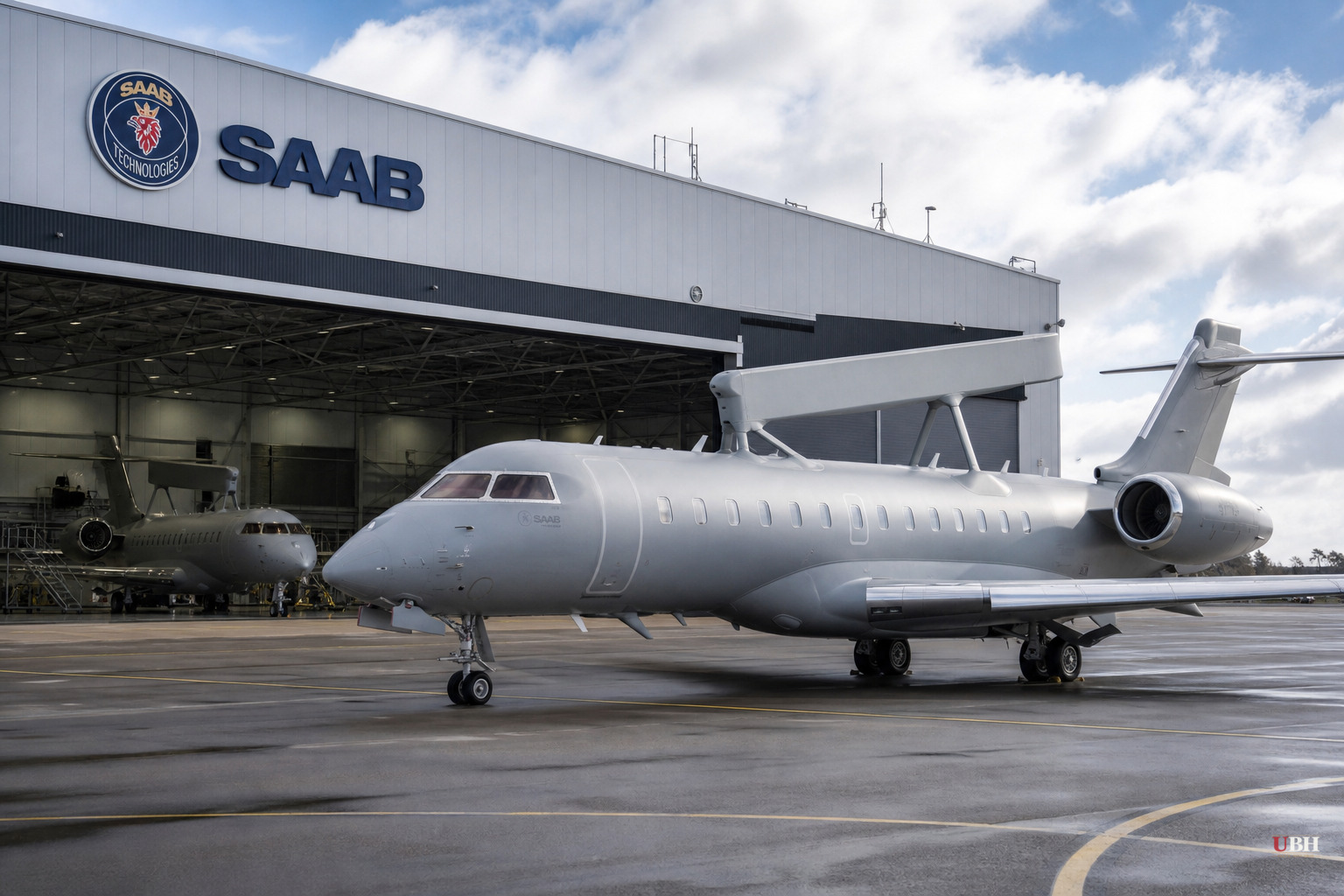
NATO picked a winner in the race to replace its aging E-3 Sentry AWACS fleet. Sweden wants everyone to know its own radar jets are a different program entirely.
Maj. Gen. Jonas Wikman, chief of the Swedish Air Force, told reporters in London on Monday that Sweden's order of three Saab GlobalEye aircraft is separate from, but complements, NATO's alliance-wide purchase of 10 of the same planes. NATO announced that deal at its summit in Turkey earlier this month, choosing the Swedish-built GlobalEye over Boeing's E-7 Wedgetail to replace the E-3.
"My view is that NATO will have the fleet, like AWACS today," Wikman said. "We will have our fleet, a national fleet, in cooperation with other nations, hopefully." He said he's opened a dialogue with the alliance to work out how the two fleets will operate together.
Two Fleets, Different Missions
Sweden placed its order for a third GlobalEye back in 2024, before NATO's decision. The country is still waiting on delivery, expected in 2027 or sooner, according to Wikman. In the meantime, Sweden has donated two of its older Saab 340 radar aircraft to Ukraine.
Wikman was careful to frame the GlobalEye as something bigger than a straight AWACS replacement. "The intention of introducing the GlobalEye, or the S106, is not to introduce another early warning and control aircraft for control of the air," he said. "It is to introduce airborne early warning and control aircraft for all domains."
NATO's fleet is being bought to directly replace the E-3's job of tracking aircraft and coordinating airspace. Sweden's national fleet, per Wikman, is meant to do more: multi-domain surveillance beyond just air traffic control, which is the pitch Saab has made globally for the GlobalEye platform.
Boeing Still Defending the Wedgetail
Boeing isn't conceding the fight. In a roundtable with reporters in London on Sunday, Steve Parker, president and CEO of Boeing Defense, Space and Security, made the case that the E-7 Wedgetail remains the superior aircraft, NATO's decision notwithstanding.
"We've got a number of platforms, airborne early warning and control platforms, in the Middle East. What capability was asked to come and help? It was the E-7 Wedgetail," Parker said. "It's that way for a reason, because it is unmatched and it has a technology roadmap that's going to take it out 30, 40 years and stay relevant. It's the world's leading capability right now."
Parker also said Boeing remains "super proud" to keep supporting the E-3 mission for NATO in the meantime.
This isn't a small commercial disappointment for Boeing. The company has spent months lobbying to keep the Wedgetail program alive in the U.S. budget, and it has had mixed success. Defense Secretary Pete Hegseth reversed course in May and backed funding for the E-7 after it had been zeroed out of the initial Pentagon budget request. House appropriators followed with mostly bipartisan support last month for a $1.5 billion White House budget amendment to fund Wedgetail development.
Why the Debate Got Louder
The urgency behind fielding a new radar plane, of either type, intensified after a U.S. Air Force E-3 Sentry was heavily damaged during the war in Iran last year. That incident pushed Hegseth to rally support for the Wedgetail at the time, while also defending a parallel bet on space-based surveillance capabilities as a longer-term answer.
Air Force officials are now backing both tracks simultaneously: continued investment in space programs like the Airborne Moving-Target Indicator, alongside the next-generation radar plane question that NATO just resolved in Saab's favor for the alliance fleet, and that the Pentagon is still resolving domestically for its own fleet.
That leaves an odd but real split. NATO as an institution is buying GlobalEye. Sweden, a NATO member, is buying GlobalEye separately for its own national fleet. And the U.S., NATO's largest member, is still funding development of a completely different aircraft, the Wedgetail, that NATO passed over.
Wikman said his conversations with NATO on how to integrate Sweden's national fleet with the alliance's new GlobalEye order are ongoing, with no timeline given for when an operational concept will be finalized. Sweden's own aircraft aren't expected before 2027.
Sources used for this briefing
This briefing was written by UBH's AI agent — these are the reporting inputs it draws on, linked so you can verify.


