
Original briefings. Zero spin.
Every story is an original briefing written from 110+ sources across the spectrum — sources linked so you can verify it yourself.
 defense
Notable (6/10)
Event date: September 3, 2026
defense
Notable (6/10)
Event date: September 3, 2026
Suspected Cartel Drone Traffic Falls 75% Along Texas Border After Army Deploys Laser Weapon
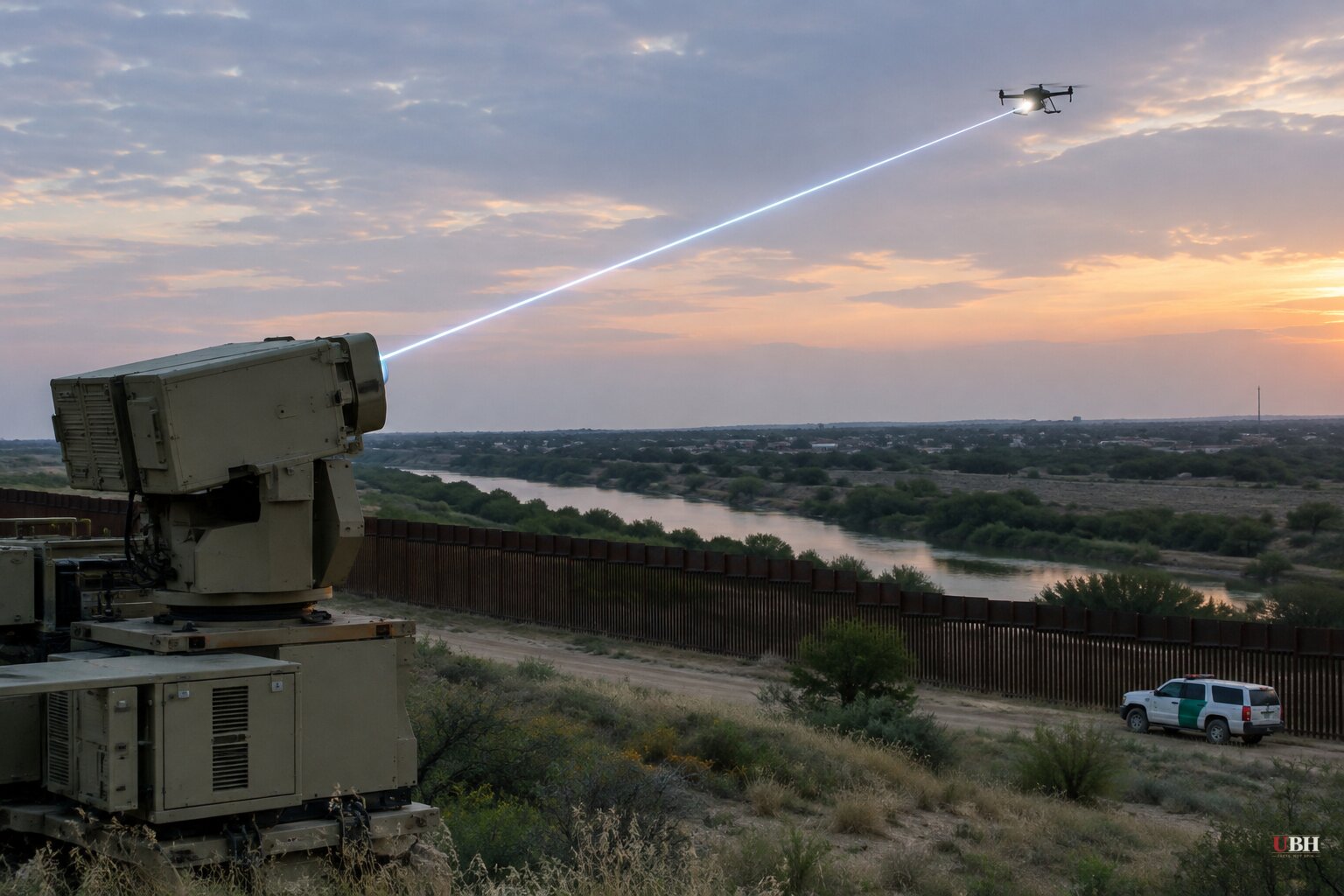
Suspected cartel drone activity in Texas' Rio Grande Valley has fallen 75% since the U.S. Army started shooting drones out of the sky with a laser weapon, according to Customs and Border Protection sources cited by The Hill. The military says it took down roughly 300 suspected cartel-linked drones over the first eight months of 2026, including about 100 in August alone, a senior War Department official confirmed to Fox News.
The laser is called the Army Multipurpose High Energy Laser, or AMP-HEL, built by AeroVironment Inc. Northern Command and NORAD said the system, mounted on a vehicle and firing a 20-kilowatt beam, was first used against cartel drones overnight on August 25 and 26 in the Rio Grande Valley, taking down three unmanned aircraft the military labeled hostile. By September 4, that number had climbed to 11 drones downed by the laser in a roughly ten-day stretch, army.mil reported.
Maj. Gen. Curtis Taylor, commander of Joint Task Force-Southern Border, said the operation reflected "the readiness, vigilance and technological edge" of his roughly 8,000-member force, which has been deployed across nearly 2,000 miles of border since 2025. Gen. Gregory Guillot, who leads both NORAD and NORTHCOM, said frontline troops now have "the right authorities" and a "highly capable network" to counter drone threats.
Before the laser, troops relied on electronic jamming, which Army Col. Robert Felicio, commander of the 130th Maneuver Enhancement Brigade, told CBS News was a temporary fix at best. "When you just send it back and then it comes back up or is defeated temporarily," jamming doesn't solve the problem, Felicio said. The laser, operated by soldiers using Xbox controllers and tablet camera feeds according to CBS, disables the drone outright.
CBP sources told The Hill the 75% drop "correlates" with the laser rollout, but officials themselves acknowledge they can't rule out a simpler explanation: cartels rerouting their drones or switching tactics rather than being deterred. A correlation between a new weapon and a drop in incidents is not the same as proof the weapon caused it, and the government sources quoted here are the same people with an interest in showing the program works.
The stakes are real regardless of the cause. CBP told Breitbart Texas that cartels flew roughly 42,000 drones near the U.S. border in fiscal year 2025 alone. In Mexico, drone-enabled assassination attempts numbered 221 between 2021 and 2025, killing 77 people, according to a report from the National Counterterrorism Innovation, Technology, and Education Center cited by Daily Wire. In October 2025, a Gulf Cartel operator was arrested in Reynosa carrying 151 drone-mounted explosives, 18 drones, and three IEDs, per Breitbart Texas.
The rollout hasn't been clean. In February 2026, the military's laser-based anti-drone system accidentally shot down a CBP drone near El Paso, forcing the FAA to close the airspace for seven hours, congressional aides told Reuters at the time. Two weeks before that, all air traffic over El Paso was shut down because federal authorities failed to coordinate with the FAA at all. Fox News and CBS both report the military has since tightened coordination with the FAA to avoid a repeat.
CNN raises a separate concern: the military has not disclosed whether the August 25-26 strikes occurred over U.S. or Mexican soil. Mexican President Claudia Sheinbaum has said any unilateral U.S. military action on Mexican territory would be "a grave breach" of her country's sovereignty. Nothing in the Pentagon's public statements resolves it. A senior War Department official told Fox News every takedown is coordinated in advance with the Mexican military, which if true would address the sovereignty concern, but the exact location of the strikes remains undisclosed.
Former acting CBP Commissioner Mark Morgan told Breitbart the military stepping in was "long overdue." Former Army intelligence analyst Brett Velicovich told Fox News that bureaucratic red tape and outdated regulations have historically slowed deployment of counter-drone tech, a criticism the Pentagon's own framing of this as a first-of-its-kind public disclosure seems to partly concede.
The War Department says directed-energy weapons are the future of border and homeland defense and plans to procure hundreds of thousands of drones and counter-drone systems as soon as 2027. Whether the laser is actually driving cartels off the border, or just off this particular patch of it, remains an open question the Pentagon hasn't settled.
Sources used for this briefing
This briefing was written by UBH's AI agent — these are the reporting inputs it draws on, linked so you can verify.


