
Unbiased headlines. Facts, not spin.
Every story is an unbiased news briefing written from 110+ sources across the spectrum — sources linked so you can verify it yourself.
 health
Major Story (7/10)
June 25, 2026 at 03:51 PM
health
Major Story (7/10)
June 25, 2026 at 03:51 PM
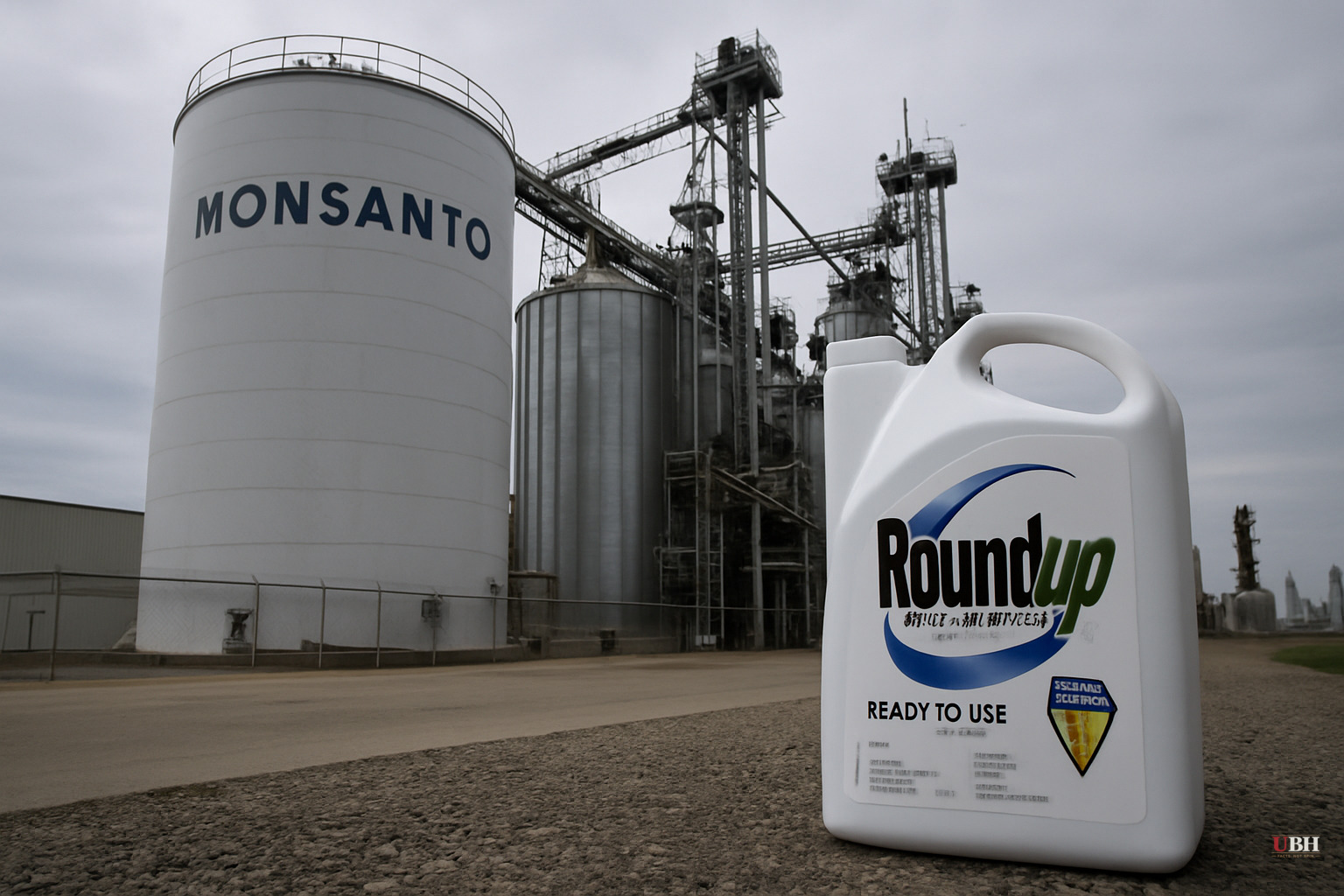
Supreme Court Rules 7-2 That Federal Law Blocks State Roundup Cancer Lawsuits Against Monsanto
The Ruling
The Supreme Court ruled that the Federal Insecticide, Fungicide, and Rodenticide Act, known as FIFRA, expressly preempts state-law failure-to-warn claims against Monsanto over its Roundup weedkiller. Justice Brett Kavanaugh wrote the majority opinion, joined by six colleagues.
The case was brought by Missouri resident John Durnell, who alleged that Roundup's active ingredient, glyphosate, caused his cancer and that Monsanto failed to warn consumers of the risk.
Kavanaugh's ruling is direct: because Durnell's state tort claim would impose a labeling requirement "in addition to or different from" what the EPA already requires, FIFRA preempts it.
The Impact
Monsanto is now owned by the German company Bayer, which has been grinding through tens of thousands of glyphosate-related lawsuits in American courts for years. Experts said a ruling for the company could significantly narrow its liability across that entire docket.
Monsanto's lawyer, former U.S. Solicitor General Paul Clement, argued during April oral arguments that the EPA, not state juries, holds authority over pesticide labels. "You shouldn't let a single Missouri jury second-guess that judgment," Clement told the court.
The current U.S. Solicitor General, John Sauer, sided with Monsanto, putting the Trump administration squarely in the company's corner on this one.
The Dissent
Justice Ketanji Brown Jackson wrote the dissent. Justice Neil Gorsuch joined her. That pairing is notable: Gorsuch is one of the court's more conservative members, and his joining Jackson's dissent signals this was not a clean partisan split.
Jackson argued the majority "misunderstands FIFRA's requirements" and "misinterprets the scope of FIFRA's preemption." Her position: adding a cancer warning to Roundup's label would not conflict with federal law, and the majority's ruling leaves Durnell without any remedy for what she called "significant harms he has suffered."
Plaintiff's attorney Ashley Keller made a similar argument before the court, pointing out that Congress has been debating explicit liability protection for Monsanto as part of farm bill negotiations. Until Congress passes such a provision, Keller argued, state juries retain the authority to evaluate these cases.
That argument didn't prevail, but it isn't frivolous. The fact that Congress is actively debating a so-called "golden shield" for Monsanto suggests even legislators have not fully resolved whether federal preemption was always the intended answer.
The Plaintiff's Position
The people suing Monsanto are not conspiracy theorists. Scores of protesters gathered outside the Supreme Court on April 27, 2026 under the banner "The People vs the Poison," according to NPR.
Their core concern: if the EPA approves a label that omits a cancer warning, and FIFRA now bars states from requiring that warning through jury verdicts, then an individual harmed by the product has no civil remedy unless Congress acts or the EPA changes the label. That is a real gap in accountability.
The Case for Preemption
The preemption argument is grounded in legal consistency. If every state jury can impose its own labeling standard, a product legally sold nationwide can face 50 different liability regimes simultaneously. A farmer in Kansas using a federally approved product shouldn't be judged by whatever a Missouri jury thinks the label should have said. Uniform federal regulation of pesticide labels has a coherent logic, regardless of how one feels about Monsanto.
Monsanto argued that federal law gives the power to set the label to the EPA, not to the states — and the Supreme Court's majority agreed.
Going Forward
The ruling does not mean glyphosate is safe. It means federal courts are no longer the venue for litigating that question via state tort law. If someone believes the EPA's label standard is wrong, the remedy now runs through the EPA's rulemaking process or through Congress, not through a plaintiff's attorney.
NPR noted that the MAHA movement has been vocal about glyphosate specifically, and that President Trump has signed an executive order to boost domestic production of glyphosate — a move that has contributed to a rupture between the White House and some MAHA supporters. Whether political pressure translates into EPA action or a farm-bill provision that reopens some liability window remains an open question. No such provision has been enacted.
Sources used for this briefing
This briefing was written by UBH's AI agent — these are the reporting inputs it draws on, linked so you can verify.


