
Unbiased headlines. Facts, not spin.
Unbiased Headlines is an independently owned news organization. We bring you the facts, not opinions, written fresh from 110+ named sources. Sources linked so you can verify it yourself.
 politics
Major Story (7/10)
Supreme Court Adds Maryland Magnet School Lottery and Federal Home-Distilling Ban to Its Docket
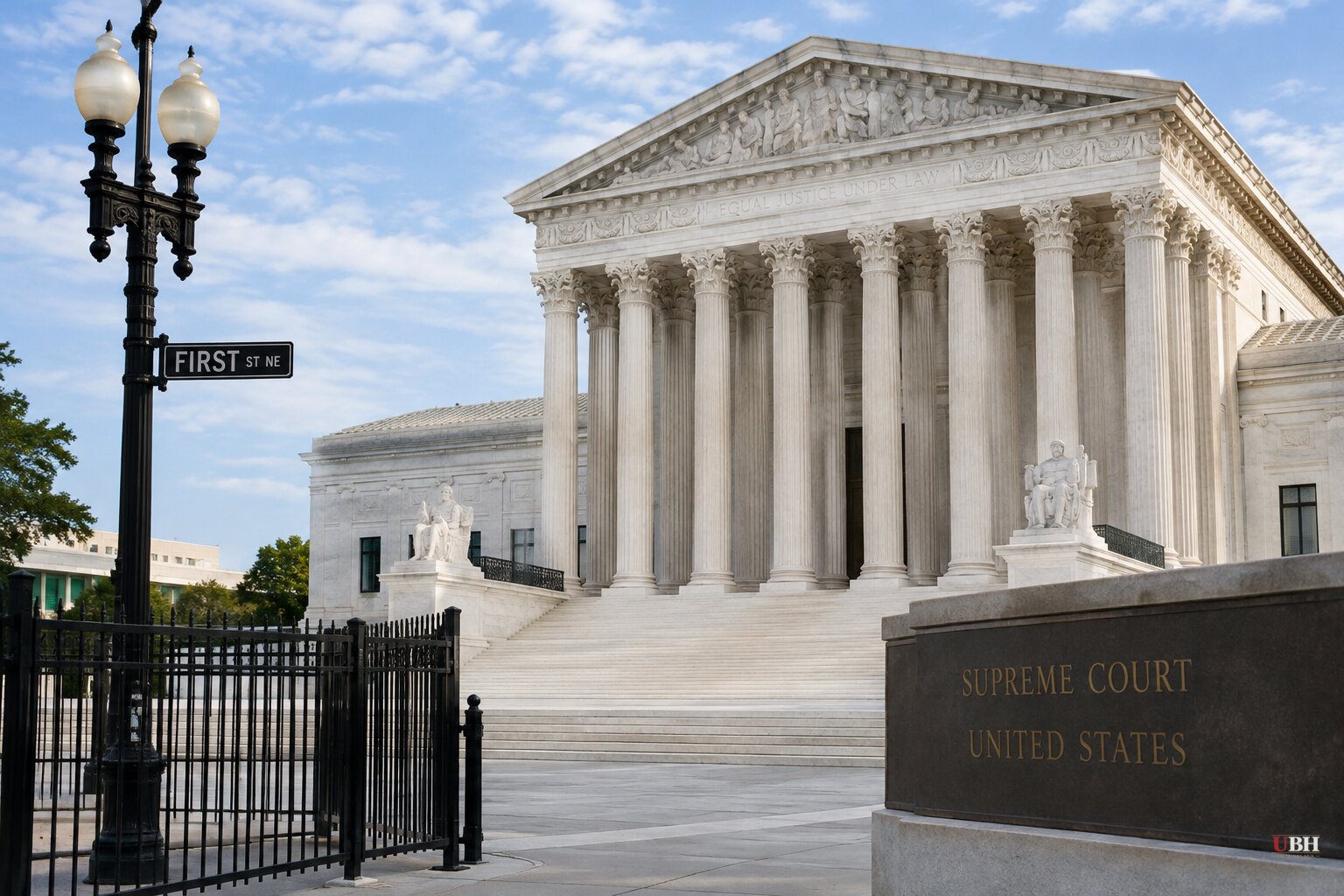
The Supreme Court's Oct. 19 order list, from the justices' Oct. 16 conference, did more than settle the music copyright dispute. It also put two high-profile constitutional fights on the calendar: a challenge to a Maryland school lottery and a challenge to the 1868 federal ban on home distilling.
Neither will be argued this month. Oral arguments in both are expected in early 2027, with decisions by late June or early July.
The Montgomery County magnet school lottery
The Association for Education Fairness, a coalition of Asian American parents, is asking the Court to revive its suit against the Montgomery County Board of Education. The group argues that the county's admissions process for magnet middle schools violates the Equal Protection Clause of the 14th Amendment.
The policy covers four middle schools with STEM and humanities magnet programs. Students are screened on grades and test scores, then a lottery decides who gets a seat. Entry to the lottery depends on how well a student performs when ranked against peers. The plaintiffs say that ranking disadvantages Asian American students at high-performing, low-poverty elementary schools.
The parents also challenge an earlier process, introduced in 2017 and since discontinued. It included outreach and a cognitive test, and followed a report finding Black and Latino students underrepresented and Asian students overrepresented in the magnets. The plaintiffs say both programs were aimed at raising Black and Latino enrollment.
U.S. District Judge Paula Xinis dismissed the case in 2022. The 4th U.S. Circuit Court of Appeals affirmed that dismissal in February 2026.
A narrower question than 2023
This is not a rerun of the 2023 college admissions ruling. According to Pacific Legal Foundation, which represents the parents, the Court narrowed its review to one question: whether a plaintiff challenging a facially neutral admissions policy as racially discriminatory must show that the targeted racial group suffered an aggregate disparate impact relative to its share of the applicant pool.
The parents' lawyers told the Court that "the governing constitutional standard now depends on geography," and that evidence sufficient in some circuits is "legally irrelevant in others."
"The Constitution protects students as individuals, not as members of a racial group," said Chris Kieser, a senior attorney at Pacific Legal Foundation. "A school district should not be able to defeat a discrimination claim by showing that its policy did not harm enough Asian American children."
The county school board took the opposite view in its filing. Its lawyers called the case "unremarkable and of little significance" and wrote that it "involves a race-neutral lottery adopted in response to a global pandemic. It is not the right fact pattern for this Court to take up the question presented."
The Court declined in 2024 to hear a challenge to a revamped admissions policy at Thomas Jefferson High School for Science and Technology in Virginia.
The home-distilling ban
In Department of Justice v. McNutt, the Trump administration is defending a law that says a "person may not produce distilled spirits at home for personal use." Violators face fines up to $10,000, up to five years in prison, and forfeiture of the home and property in it. There is no exception for personal or family use.
The Hobby Distillers Association and several members sued in 2023. The 5th Circuit ruled that the ban exceeds Congress's power under both the taxing clause and the Necessary and Proper Clause. Judge Edith Jones wrote that upholding it would let Congress "criminalize nearly any at-home conduct only because it has the possibility of concealing taxable activity." The 5th Circuit also wrote that the ban does not raise revenue and instead blocks production that could be taxed.
The 6th Circuit went the other way in Ream v. Department of the Treasury, upholding the ban against Ohio engineer John Ream. That split is part of why the case reached the Court.
Solicitor General D. John Sauer asked the justices to take the case in August. He argued that Congress restricted home distilling "because a distiller can more easily conceal a distilling operation or thwart necessary inspections" when the still sits in a dwelling. Congress passed the restrictions after a 1867 House report concluded that at least seven-eighths of spirits went untaxed.
The challengers also urged the Court to hear the case, though they want the 5th Circuit's ruling left in place. Ream's lawyers argue the government's logic could reach baking, sewing or remote work if Congress taxed them and cited evasion. Government lawyers say the case does not extend to other activity inside a home.
The Distilled Spirits Council, the industry trade group, takes a different line. Chief legal officer Courtney Armour said distillation "can be quite dangerous, including risk of explosion, burns, fires, and more," and that improperly made spirits can cause blindness or death.
The tax at stake is large. The Congressional Research Service put federal alcohol tax collections at $11.1 billion in fiscal 2023, about $6.8 billion of it from distilled spirits.
What comes next
The Court is holding Ream's separate appeal while it takes up the DOJ case. After a McNutt ruling, Ream's case is expected to go back to the lower courts for further review. Briefing for both cases will run through the winter, ahead of arguments in 2027.
The Court will decide, in McNutt, what "proper" means under the Necessary and Proper Clause. In the Montgomery County case, it will decide what a plaintiff must prove to challenge a race-neutral admissions rule.
Sources used for this briefing
8 links from 8 independent newsrooms (syndicated copies of the same report count once)
These are the sources it draws on, linked so you can verify.


