
Unbiased headlines. Facts, not spin.
Unbiased Headlines is an independently owned news organization. We bring you the facts, not opinions, written fresh from 110+ named sources. Sources linked so you can verify it yourself.
 politics
Major Story (8/10)
Event date: October 17, 2026 ·
France Riots: Marseille Bans All Gatherings and Louvre Closes as Lecornu Asks Cities for Partial Curfews
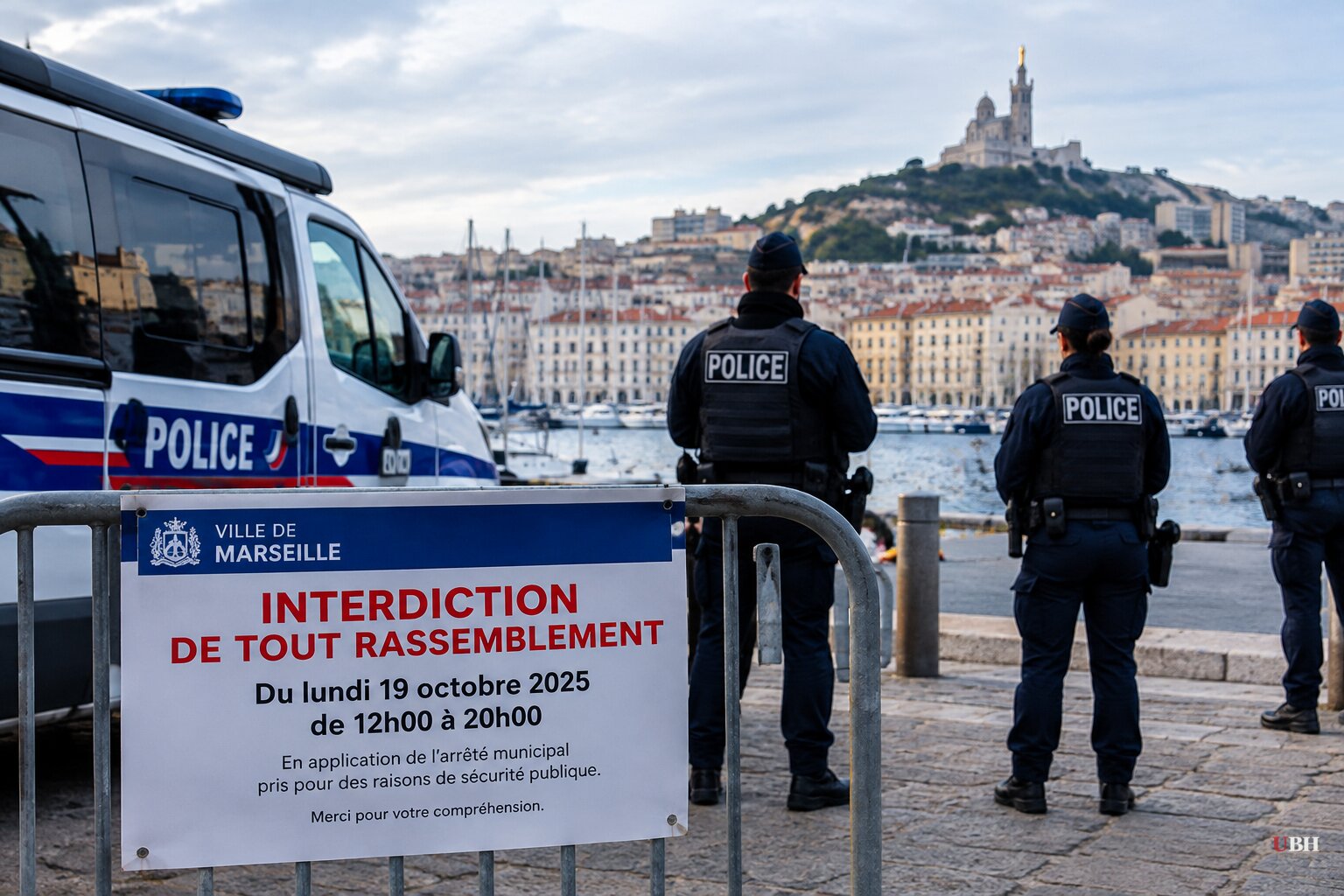
Since Saturday's Oct. 17 protests over living costs and school conditions turned into the worst rioting France has seen in years, the disruption has carried into Monday, Oct. 19. Authorities are now moving from policing the streets to restricting them.
Bans, closures and curfew requests
In Marseille, officials banned all gatherings and demonstrations from midday until 8 p.m. local time today, in anticipation of further flare-ups. In Paris, protesters blocked access to the Louvre, and the museum closed.
Lecornu has asked some cities to impose "partial curfews" to protect people, property and businesses. No curfew has been announced for any named city in the material available as of midday Monday. Macron has also told prefects to work with mayors to protect public buildings and shops in the coming weeks, including by banning protests where necessary.
The measures follow more than 2,000 arrests over the weekend. The latest tally is at least 2,400, and Paris police counted 855 arrests in the capital region alone, with the Paris prosecutor's office saying 557 people remained in custody.
Casualties
At least two deaths have been reported. Paris police said one person died of a heart attack, without giving details, and the Paris prosecutor's office is investigating. Serious injuries have also been reported, including two people who lost their hands.
The damage is concentrated in a few places. In Limoges, the 1883 town hall burned after a group forced its way in. Prefect Maurice Barate said the roof had collapsed onto the lower floors and about two-thirds of the building's exterior was gone. He called it "a catastrophe for heritage."
In Paris, looters hit a Monoprix supermarket near Place de la République and broke into the Galeries Lafayette department store on Boulevard Haussmann. Interior Minister Laurent Nuñez cited looting of hundreds of businesses in Paris, Marseille, Lyon and Bordeaux.
Who pays
Macron said Sunday evening: "Those who destroyed must pay. Those who looted must pay back. Those who sought to bring down the Republic will be held accountable."
Lecornu has backed so-called vandals-pay legislation that would make people involved in rioting liable for the damage, whether or not they personally destroyed anything. "Public money is scarce: it must fund our public services, not endlessly repair what vandals destroy," he said.
The government has not put a figure on the total cost. Recovering the damage to a building like Limoges city hall from individual rioters looks unlikely on any realistic timeline.
Blame, and the argument over preparation
The government's account is that the far left drove the violence. Nuñez said it began from the start of the march rather than at the end, as in many past protests, and that groups of hundreds or thousands, "clearly instigated by the far left," attacked police. Lecornu wrote on X that "ultra-left groups organized the violence in several cities." Macron blamed "insurrectionist elements from radical far-left groups, joined by numerous criminals."
Some former Yellow Vest figures say the same about the movement's name. Benjamin Cauchy, a prominent face of the 2018 protests, told Europe 1 that the far-left France Unbowed (LFI) party was using the Yellow Vests "as a Trojan horse." Another veteran told France 24 she saw "a takeover from all sides by the far left, from the Communist Party to France Unbowed." Paris police have reportedly linked student protests to LFI and other far-left groups, and agents of Jean-Luc Mélenchon's party allegedly infiltrated the youth movement. Those are allegations; no charges against any party have been announced.
The government itself faces a different accusation: that it failed to anticipate the scale of the crisis. The unrest began in September with a strike by students and teachers at a high school in the Paris suburbs demanding more staff and resources. Their demands were met and the strike ended, but protests spread among students nationwide. A heavy-handed police response fueled public anger, particularly after videos showed a police officer using a banned headlock on a girl.
Authorities and political leaders stress that the vast majority of marchers were peaceful. Authorities put Saturday's turnout at about 550,000. Organizers claimed about 800,000.
What comes next
Macron has promised meetings this week to discuss "concrete proposals" and to hear protesters' demands. Similar cost-of-living demonstrations are spreading to neighboring countries.
The open questions are which cities will actually adopt curfews, and whether any government proposal can defuse a movement that began over school staffing and has since folded in fuel prices, living costs and the run-up to the April 2027 presidential vote. Lecornu has said the government will not be intimidated by anyone treating the unrest as a "warm-up" for that election.
Sources used for this briefing
6 links from 6 independent newsrooms (syndicated copies of the same report count once)
These are the sources it draws on, linked so you can verify.


