
Unbiased headlines. Facts, not spin.
Unbiased Headlines is an independently owned news organization. We bring you the facts, not opinions, written fresh from 110+ named sources. Sources linked so you can verify it yourself.
 politics
Major Story (8/10)
Event date: October 14, 2026 ·
Lisa Cook's Lawyers Call White House Inquiry Biased, Say She Can't Attend Nov. 5 Hearing
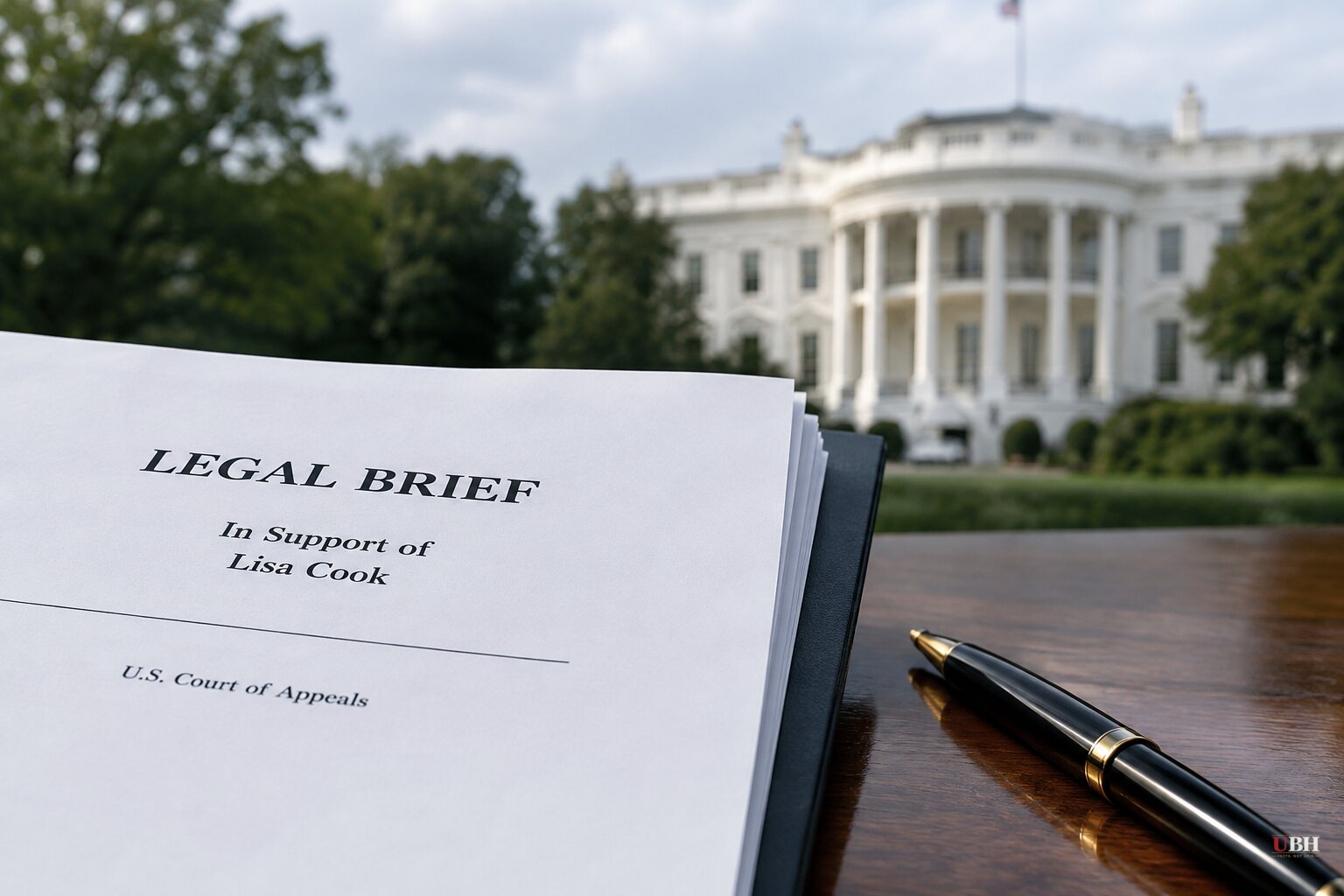
President Trump's second attempt to remove Federal Reserve Governor Lisa Cook is now a fight over process, not just mortgage paperwork.
Cook's lawyer, Abbe Lowell, wrote to William Scharf, a counsel to President Trump, that the three-person "committee of inquiry" is "demonstrably biased." He also wrote that "we have significant concerns regarding the objectivity and fitness of the committee for its assigned purpose."
Lowell did not rule out Cook appearing. But he said she cannot attend the Nov. 5 hearing because she "will be executing her official duties as Governor at financial and monetary policy meetings in Europe." The earliest she could appear, the letter said, is after the Fed's Dec. 8-9 policy meeting.
How the case got here
The accusation dates to August 2025. Bill Pulte, director of the Federal Housing Finance Agency, alleged on social media that Cook had designated two homes as her primary residence on 2021 mortgage applications, before she joined the Fed board. He posted screenshots of her loan documents and referred her to the Justice Department.
No criminal charges have been filed. Cook denies wrongdoing. Her lawyers call the discrepancy an "inadvertent error" and say Trump's and Treasury Secretary Scott Bessent's own property filings contain a similar discrepancy.
Mother Jones reported that the Government Accountability Office is investigating whether Pulte misused his position to access private mortgage data, and that the FHFA inspector general is reportedly examining his conduct. Pulte has been a vocal defender of the president.
Trump moved to fire Cook in August 2025. The Supreme Court ruled in June that she could stay on while litigation continues. A footnote suggested Trump could try again if she got adequate notice and a chance to respond. The same morning, the justices decided Trump v. Slaughter, which held that agency heads wielding executive power answer to the president. Economist Alexander Salter, writing for The Daily Economy, says the Court then carved out an exception for the Fed.
The new committee is the administration's effort to meet the notice-and-response condition. Under the law governing the Fed, a governor can be removed only "for cause." The Court did not decide whether Cook's alleged conduct meets that standard.
What the White House says
Trump's memo creating the committee frames it as a matter of law enforcement and trust. "As President, it is my job to ensure the laws are faithfully executed, including by firing subordinates who cannot be trusted to tell the truth and follow the law," he wrote. The committee, he said, will "investigate the allegations against Governor Cook and report to me whether there is cause for Governor Cook's removal."
The hearing is set for two days after the Nov. 3 midterm elections. The committee only recommends. The decision on removal stays with Trump.
Salter argues the process is legitimate on its face. In his view, the White House "is now complying with both requirements" the Court set. He goes further, contending that the Fed's insulation from presidential control does not fit the Constitution because much of its work, bank supervision and enforcement in particular, is executive power. He cites Milton Friedman's argument in Capitalism and Freedom against dispersing great power among a few unaccountable people.
That position is contested. Economists cited by the Associated Press say Trump's repeated demands that the Fed cut its key interest rate, along with his other moves, threaten the central bank's independence. Cook's lawyers argue the Supreme Court's ruling shows the Fed is a unique agency.
The wider record
No president has fired a Fed governor. Cook, appointed by former President Joe Biden, is one of seven members of the Board of Governors.
Earlier this year the Justice Department sought to investigate then-Chair Jerome Powell over testimony about a building renovation. A judge threw out subpoenas in that case, and it was later dropped.
What comes next
The dispute now turns on scheduling and the committee's makeup. The White House has set Nov. 5. Cook's lawyers say the earliest workable date is after Dec. 8-9. The White House has not publicly responded to the scheduling objection or to the bias claim.
If the committee finds cause and Trump acts on it, Cook's lawyers have already signaled they will contest both the process and whether a 2021 mortgage form meets the statute's "for cause" standard. A court would then have to decide a question the Supreme Court left open.
Sources used for this briefing
7 links from 4 independent newsrooms (syndicated copies of the same report count once)
These are the sources it draws on, linked so you can verify.


