
Unbiased headlines. Facts, not spin.
Unbiased Headlines is an independently owned news organization. We bring you the facts, not opinions, written fresh from 110+ named sources. Sources linked so you can verify it yourself.
 politics
Notable (6/10)
Event date: October 15, 2026 ·
Supreme Court Declines Chicago Car-Forfeiture Case as Sotomayor and Gorsuch Voice 'Serious Concerns'
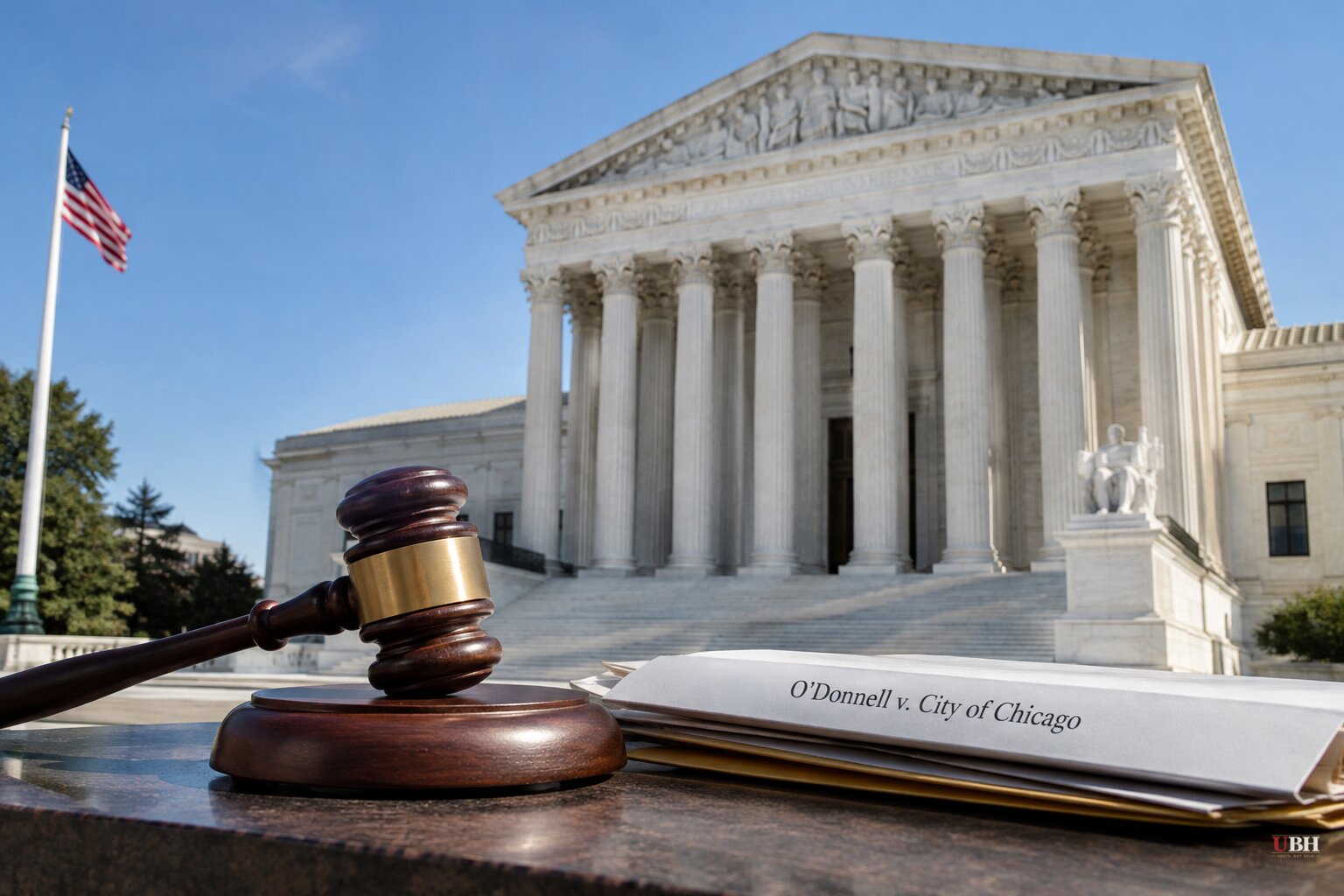
The Supreme Court on Monday, Oct. 19, denied review of O'Donnell v. City of Chicago, No. 25-1098. It left in place a Seventh Circuit ruling that lets Chicago impound a driver's car over unpaid parking tickets, sell it, and keep the money.
Sotomayor wrote a statement respecting the denial. Gorsuch joined it.
"I have serious concerns about that conclusion," she wrote, referring to the Seventh Circuit's holding.
What Chicago's ordinance allows
In Chicago, Sotomayor wrote, a driver who fails to pay as few as two parking tickets risks forfeiting his vehicle. The city can then do as it pleases with the car. It has no obligation to pay compensation, offset the ticket debt, or return any surplus if the car sells for more than what is owed. She cited sections 9-100-120(b) and (f) of the city's municipal code.
The Seventh Circuit upheld that scheme under the Fifth Amendment's Takings Clause. Its reasoning, quoted in Sotomayor's statement, was that the forfeiture is "an exercise of the City's police power to enforce its traffic code." That is the opposing position, and it is the one the Court's denial leaves standing.
The Takings Clause bars taking private property for public use without just compensation.
The two drivers
According to the complaint, Ryan O'Donnell received two tickets for an expired meter and one for time-restricted parking, about $524 in total. Michael Goree had no tickets of his own. A co-signer on his vehicle owed roughly $560 from a different car.
When the tickets went unpaid, the city towed and impounded both vehicles and added boot, tow and storage fees. Chicago sold O'Donnell's car for its scrap value of $273. Goree's car went to the lienholder.
Neither man received compensation. They sued, arguing the ordinance facially violates the Takings Clause.
Money at stake for the city
Sotomayor called the forfeiture scheme "vast and lucrative." She cited one estimate, a 2018 ProPublica analysis, that Chicago generated $264 million in traffic-ticket revenue in 2016, or 7 percent of the city's operating budget.
That is a 2016 figure from a single estimate. The statement does not offer a current number.
Why she still voted to deny
Sotomayor did not argue the Court should take the case. She wrote that the question "implicates a Circuit split over whether, and under what circumstances, exercises of the State's police power are immune to takings claims." That split, she said, "would continue to benefit from further percolation."
She also said this was not the best vehicle. The petitioners brought a facial challenge, which could require the Court "to invalidate even those features of the law that have nothing to do with vehicle forfeiture."
She gave lower courts a direction. They should "carefully and narrowly define the circumstances in which the State's exercise of its police powers are held exempt from the just compensation requirement, as well as explain the source of any such exemption."
She added: "I again encourage courts considering this issue to take care that due deference to state police powers does not eclipse constitutional rights."
A pattern with Gorsuch
The statement came six days after a similar one in a very different case. On Tuesday, Oct. 13, the Court declined to hear Jesus Herrera-Salazar's appeal. Sotomayor, again joined by Gorsuch, wrote about "serious constitutional problems" in his case.
Herrera-Salazar, a Mexican national, was indicted in 2020 for being "found in" the United States after removal. He pleaded guilty and served 15 months. Authorities then ordered him not to leave the Eastern District of Oklahoma while on supervised release. In 2022 he was indicted on the same charge, without having left and re-entered.
The Tenth Circuit rejected his double jeopardy claim. It said a separate reentry was not required for the second indictment.
The justices wrote that by that logic he could have been charged for each day he was "found in" prison. "Absurd as that seems, it is a logical outgrowth of the Government's contention," they wrote. They called his position a "Hobson's choice": stay and break the law, or leave and break it.
The Court did not take that case because Herrera-Salazar had already been removed from the country in 2024. The two justices urged courts to give the Double Jeopardy Clause its full force if a similar case returns.
The pair has done this before. In November 2024 they questioned whether homeowners should be compensated when police destroy property during law enforcement operations. Months later they raised concerns about warrantless misdemeanor arrests. The Court declined review in both.
What comes next
The Seventh Circuit's ruling stands for Chicago drivers. Other circuits are divided on how far police power shields a government from takings claims, and the statement signals two justices see the issue as unresolved.
Sotomayor's own caution is on the record. A later petition with a narrower challenge, from a circuit that has more fully developed its position, could give the Court a cleaner chance to decide whether a city can take a car, sell it, and keep the surplus.
Sources used for this briefing
7 links from 5 independent newsrooms (syndicated copies of the same report count once)
These are the sources it draws on, linked so you can verify.


