
Unbiased headlines. Facts, not spin.
Unbiased Headlines is an independently owned news organization. We bring you the facts, not opinions, written fresh from 110+ named sources. Sources linked so you can verify it yourself.
 politics
Major Story (7/10)
WFP Cuts Gaza Food Aid by a Third, Dropping 500,000 People From Monthly Assistance
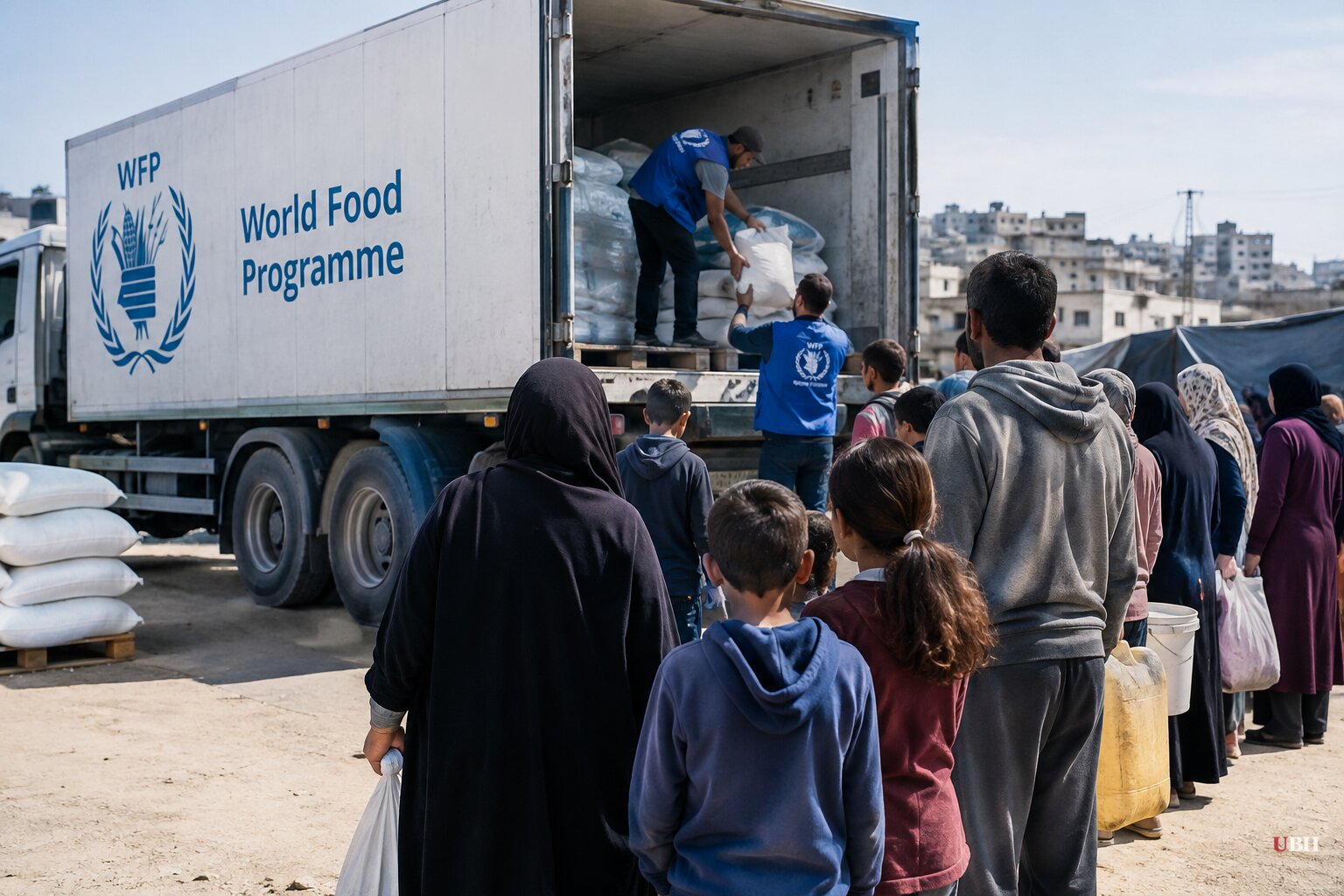
A year after the October 2025 ceasefire took hold, the UN World Food Programme says it can no longer afford to feed the number of people it was reaching in Gaza.
The agency announced Monday, Oct. 19, that it is cutting the number of people receiving monthly assistance from 1.6 million to 1.1 million. That leaves about 500,000 people without monthly food support.
What is being cut
The reductions reach nearly every part of the program, according to the WFP:
- Food rations have been halved. Families will get one food parcel instead of two, plus a smaller bag of wheat flour.
- Daily hot meals from community kitchens fall from 250,000 to 150,000.
- Families in hard-to-reach areas, including those near the Israeli-controlled "Yellow Line," will get a hot meal every other day instead of daily.
- Cash assistance has been cut for 75,000 families.
The BBC reported that the number of people getting flour and ration boxes will fall from 1.1 million to 600,000 each month. It also reported that cash transfers to about half a million people have been reduced since July.
The agency is making similar cuts in the West Bank. Assistance there is being halved, from 400,000 people to 200,000.
Money, not access
Shaun Hughes, the WFP's Palestine director, said the cuts are about finances and "not because the needs are coming down, or because we don't have access; we do."
Acting Executive Director Carl Skau said the same in an NPR interview. "It's not because the needs are down. It's also not because we are not able to bring in food. It's because the funding is no longer there."
The numbers behind that: the WFP says it received less than half as much funding for its Palestinian operations in 2026 as in previous years. It says it needs $450 million over the next six months, through March 2027, to sustain critical work across Gaza and the West Bank.
The need on the ground
The WFP says about 1.4 million people, or 67% of Gaza's population, face crisis-level food insecurity or worse. Roughly 200,000 of them are in emergency conditions that require immediate food assistance to prevent deaths from hunger. Only one in five children eats a sufficiently diverse diet.
Nearly all of Gaza's 2.1 million residents remain displaced. Unemployment exceeds 80%.
Food itself is not scarce. The BBC reported that markets are now well stocked, but few families can afford what is on the shelves. That is why aid cuts bite harder than the supply picture suggests.
In the al-Mawasi area of Khan Younis, Mervat al-Satari, a displaced mother of five, told the BBC: "It's a disaster! What will we do with these reduced rations?" Sawsan Bahloul, a mother of three, said community-kitchen portions of pasta or lentils were already too small to feed her family.
A ceasefire that hasn't delivered much
The US-brokered ceasefire calls for eventual reconstruction. Little progress has been made on the deal's broader terms, which include Hamas disarming and Israel withdrawing its troops.
The BBC reported that there has been no reconstruction and little recovery, with Israel tightly controlling the entry of goods through the crossings. Violence has continued, including near-daily Israeli strikes.
Skau, on his eighth trip to Gaza since the war began, told Reuters that "life is still brutal here. There is no proper shelter... There is no basic services. There is no safety, no security." He told NPR the WFP logs an average of about 50 security incidents a day. At a distribution point he visited, he said, someone had been killed the previous day and shooting broke out as his group left.
Skau credited the agency's own work with pushing back famine. Famine was declared in parts of Gaza more than a year ago. He said the agency had been reaching almost everyone in Gaza for the past few months. The WFP calls the gains since the ceasefire "modest" and "fragile," and warns that further cuts could reverse them quickly.
What comes next
Skau said the cuts land as Gaza faces its fourth winter of the war. "This is not the time to look away," he said, urging donors to "step up to sustain this support."
Whether anyone does is not yet known. The WFP has put a number on it: $450 million by March 2027. As of today, Oct. 19, the agency has not announced any new pledges to cover the gap, and the reduced rations take effect in the coming weeks.
Sources used for this briefing
8 links from 6 independent newsrooms (syndicated copies of the same report count once)
These are the sources it draws on, linked so you can verify.


