
Unbiased headlines. Facts, not spin.
Unbiased Headlines is an independently owned news organization. We bring you the facts, not opinions, written fresh from 110+ named sources. Sources linked so you can verify it yourself.
 politics
Major Story (8/10)
Event date: October 16, 2026 ·
60 Minutes Airs Utah Lieutenant Governor's Pushback on Trump Administration Election Demands as DOJ Cites Noncitizen Voting Cases
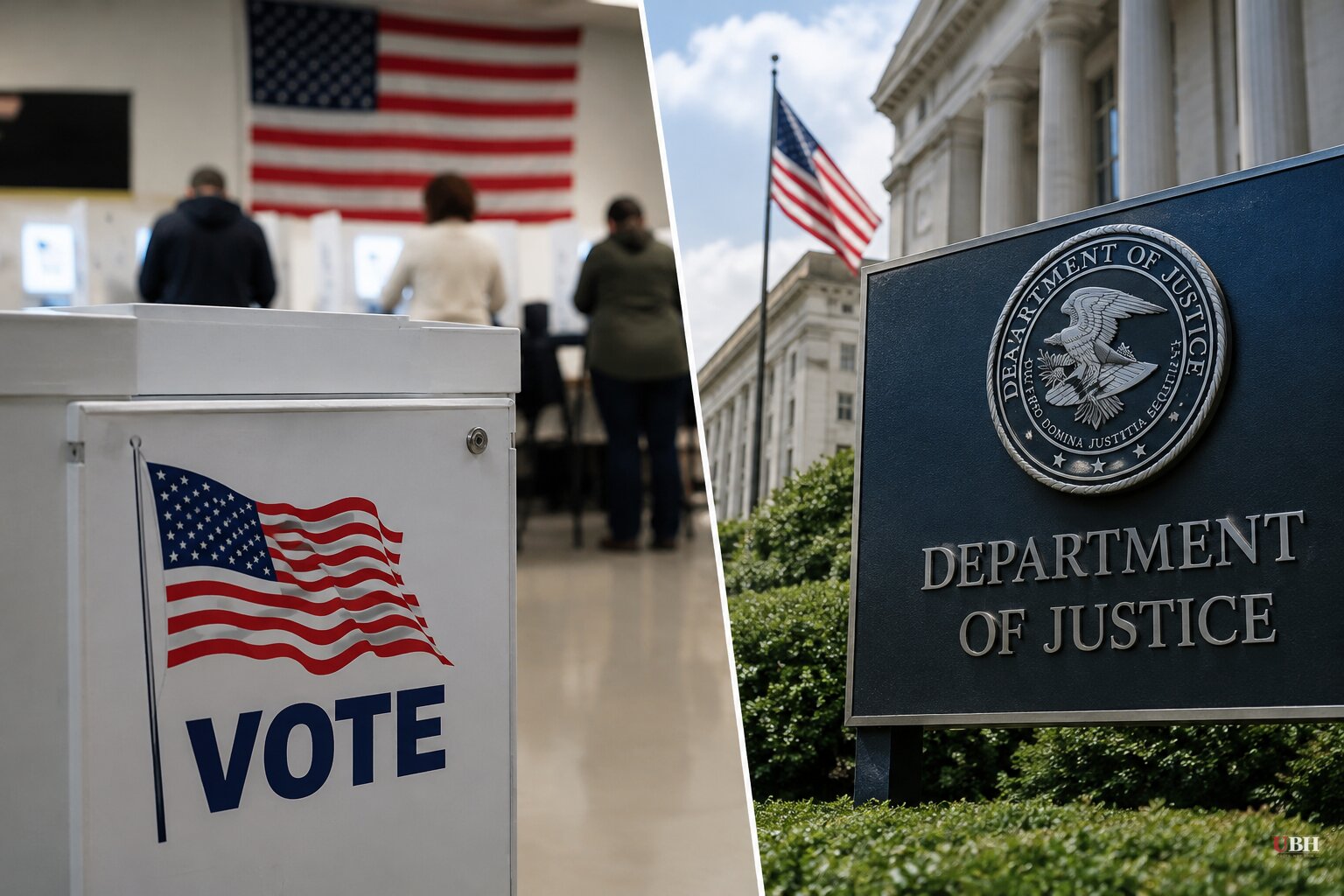
Since Assistant Attorney General Harmeet Dhillon said in September that the Justice Department would send 1,000 monitors to select locations for the midterms, the fight over who controls election administration has only sharpened. On Sunday night, Oct. 18, 60 Minutes aired a segment by correspondent Lesley Stahl on the pressure the Trump administration is placing on state and local election officials.
Stahl traveled to Utah to speak with Republican Lieutenant Governor Deidre Henderson, who explains why she is resisting pressure from Washington. Stahl also interviewed Dhillon about the federal government's role. CBS said the segment includes new polling showing only half of Americans believe the coming elections will be free and fair.
The segment's own framing was blunt: the president is "using his power to intimidate the people who run our elections." That is CBS's characterization. The administration rejects it.
What the segment reported
Henderson, who oversees Utah's elections, said the Justice Department demanded her state's statewide voter registration list, including items such as Social Security numbers, full dates of birth and driver's license numbers. She refused. "We just weren't given very good answers and we were concerned about what they would do with that data," she said. According to the segment, officials in 29 other states, Democratic and Republican, also refused, and the Justice Department has sued all of them, saying it needs access to voter rolls to help ensure that immigrants who are not entitled to vote don't.
Henderson said state audits show noncitizen voting is extremely rare, though it does happen. In Utah she found only 52 questionable voters out of more than 2 million. She said she has been notified that if she knowingly allows any noncitizens to vote in Utah she could be prosecuted. "We're not going to prison," she told Stahl.
The segment also reported that the Justice Department threatened to prosecute California election officials if they knowingly count mail-in ballots from 20,000 people the administration says are "likely noncitizens." Stahl also covered the FBI's January seizure of ballots from a Fulton County, Georgia, election facility. Fulton County Commissioner Dana Barrett, a Democrat, called it "political theater."
What the Justice Department says it is doing
Attorney General Todd Blanche addressed the intimidation charge in an Oct. 6 interview with The Epoch Times. He said the idea that armed federal agents would show up to scare voters or seize uncounted ballots "comes from a certain pocket of mostly people on the left trying to scare Americans."
Blanche said DOJ has monitored elections since the 1960s. "We're not monitoring Republicans. We're not monitoring Democrats," he said. "We're there to make sure that federal law is followed."
Dhillon has described the 1,000-monitor plan as the largest monitoring effort in the department's history.
Blanche named the biggest vulnerability as "making sure that the only people voting are eligible to vote." He said DOJ has indicted nearly 100 people in a broader effort against noncitizen voting, with arrests across 15 states.
The noncitizen voting cases
In a recent announcement, the Justice Department said nine foreign nationals were charged with election-related crimes and two others pleaded guilty. It also charged a U.S. Postal Service employee with destroying hundreds of mail-in ballots.
Two of the cases involve guilty pleas. Bernadette Acaso, a 20-year-old Filipino national, admitted in her plea agreement that she registered in March 2024 and cast a mail-in ballot in the November 2024 election. She later lied about the vote to immigration officials. Valery Zidor, a Haitian national in the U.S. under Temporary Protected Status, admitted voting in the 2024 presidential election after lying about his citizenship.
The charged defendants have not been convicted. Prosecutors allege that Christiane Vinette Young, a 75-year-old Canadian living in Florida, voted in the 2022 primary and the 2022 and 2024 general elections. They allege that George Olawunmi Johnson, a Nigerian lawful permanent resident, has been registered since 2010 and voted in Kansas in 2024. Court records listed no lawyer for Johnson at the time of the announcement.
White House spokeswoman Lauren Bis said non-citizens "continue to register and vote in federal elections" and that those who do "will face the consequences including deportation."
The argument over scale
Critics have pointed to the small number of indictments as evidence that noncitizen voting is not a serious problem. Blanche rejected that. "For months and months, it was 'There's no proof there's anybody voting illegally,' and then it was 'Well, okay, there's a little bit of proof,' and then we keep on coming up with more and more examples," he said.
His proposed fix is a voter ID law. That would give DOJ and the Department of Homeland Security "a lot less to investigate," he said. President Trump has also pushed the Senate to pass the SAVE Act, which would require proof of citizenship to vote in federal elections.
Voter ID and citizenship verification are mainstream election-integrity positions, and the cases above are real prosecutions with real guilty pleas. The dispute is over scale and method. The Justice Department says the cases show a problem that needs fixing. Henderson, citing Utah's audit, says noncitizen voting there has never been an issue. The two accounts can both hold some truth.
Blanche said DOJ expects litigation after the midterms whatever the outcome. "There hasn't been an election since at least the '60s where some lawsuit hasn't been filed in some jurisdiction," he said.
Sources used for this briefing
6 links from 6 independent newsrooms (syndicated copies of the same report count once)
These are the sources it draws on, linked so you can verify.


