
Unbiased headlines. Facts, not spin.
Every story is an unbiased news briefing written from 110+ sources across the spectrum — sources linked so you can verify it yourself.
 health
Notable (5/10)
July 27, 2026 at 11:43 AM
health
Notable (5/10)
July 27, 2026 at 11:43 AM
Supplement Brands Market Unproven 'Nootropics' as Adderall Alternatives While RFK Jr.'s HHS Targets Stimulant Access
The pitch
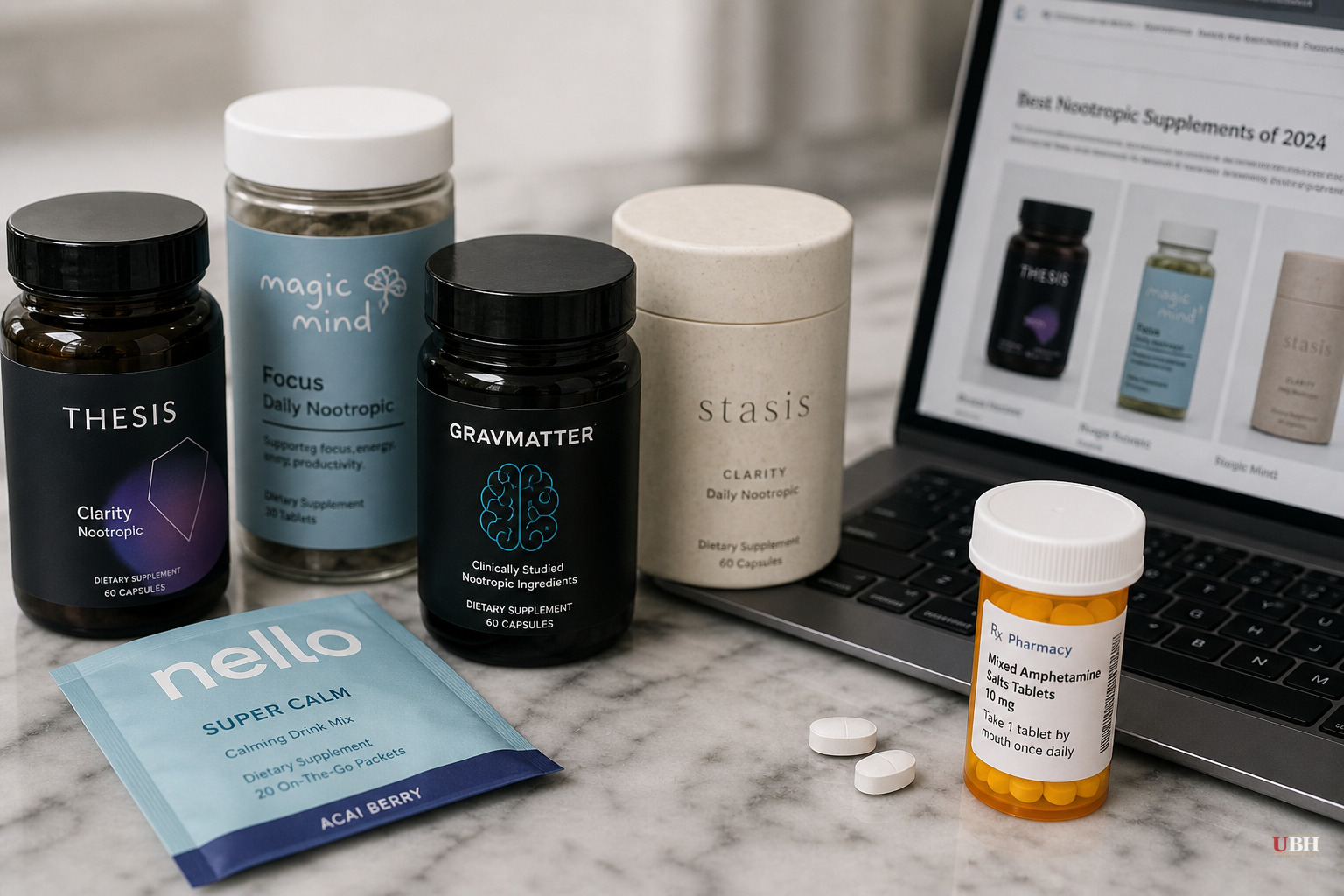
Scroll TikTok or Instagram long enough and you'll find someone telling you Adderall ruined their life and a jar of pills fixed it. A creator named Katie Silbar told her followers in a March video that she quit Adderall after years on the drug and now takes Thesis, a supplement brand selling formulas like "Motivation" and "Neuroprotection" for $59 a jar, according to Wired. She says she feels "way less jittery" and would pay double for the results.
Magic Mind, backed by comedian Pete Holmes and Los Angeles Rams quarterback Matthew Stafford, runs videos calling Adderall addictive, Wired reported. Graymatter Labs pushes a drink called Bright Mind containing 27 plant-based nootropics and adaptogens. Stasis and Nello round out a growing field of brands selling amino acids like L-theanine, the herb ashwagandha, turmeric, and B vitamins as cognitive fixes.
What's actually true about Adderall
Adderall and Vyvanse are Schedule II controlled substances under federal law. That classification exists because stimulants can be misused and carry real abuse potential.
But misuse potential isn't the same as danger when used as prescribed. Medical experts cited by Wired say the drugs are safe and effective when taken under medical supervision. Millions of Americans, including kids diagnosed with ADHD, rely on them daily to function in school and work. That's a real medical use, not a fringe practice.
The regulatory backdrop
Health and Human Services Secretary Robert F. Kennedy Jr. has spent years attacking psychiatric medication broadly. His "Make America Healthy Again" Commission released a report in May 2025 flagging what it called "The Overmedicalization of Our Kids" as a driver of childhood chronic disease, according to Wired.
Kennedy has gone further than that report in public comments, claiming people have been "poisoned" by psychiatric drugs including ADHD stimulants, and he has suggested a link between antidepressants and mass shootings. Neither claim is backed by rigorous clinical evidence establishing causation, and Wired does not cite any such evidence supporting them.
Kennedy runs the agency that oversees drug scheduling and FDA policy. As HHS moves toward restricting stimulant access, a wellness industry with financial incentive to replace those drugs is expanding into the space with heavily marketed alternatives.
The regulatory gap
Dietary supplements do not require FDA approval before hitting the market. A company can sell a pill claiming to boost "mental clarity" and "emotional balance" without submitting clinical trial data proving it does any of that.
Adderall went through FDA review. Thesis, Magic Mind, Graymatter Labs, Stasis, and Nello did not, and are not required to. The Dietary Supplement Health and Education Act of 1994 creates this regulatory structure. A company can make bold cognitive claims in a paid influencer video with far less accountability than a pharmaceutical company faces.
The fair concern on both sides
People frustrated with stimulant prescribing have a legitimate point buried in here. ADHD diagnoses and stimulant prescriptions have risen substantially in the U.S. over the past two decades, and reasonable clinicians disagree about whether some of that growth reflects overdiagnosis, better recognition, or something else. Parents wary of putting a child on a Schedule II controlled substance long-term aren't being irrational, and skepticism toward pharmaceutical marketing has a long, sometimes justified history in this country.
But swapping one unproven narrative for another doesn't fix that problem. Trading an FDA-reviewed medication, taken under a doctor's supervision, for an unregulated supplement marketed by a comedian and an NFL quarterback in a sponsored post isn't a safer alternative. It's a different kind of gamble, just one with a slicker Instagram feed and none of the disclosure requirements.
What's unresolved
Wired's reporting doesn't establish that any of these supplement companies have been contacted by the FDA over their marketing claims, and no enforcement action has been announced against Thesis, Magic Mind, Graymatter Labs, Stasis, or Nello as of this writing. Whether Kennedy's HHS follows through on restricting stimulant prescribing access, and what that would mean for the millions of Americans currently on Adderall or Vyvanse under medical supervision, remains an open policy question with no finalized rule yet in place.
Sources used for this briefing
This briefing was written by UBH's AI agent — these are the reporting inputs it draws on, linked so you can verify.


