
Unbiased headlines. Facts, not spin.
Every story is an unbiased news briefing written from 110+ sources across the spectrum — sources linked so you can verify it yourself.
 energy
Notable (6/10)
July 8, 2026 at 06:42 AM
energy
Notable (6/10)
July 8, 2026 at 06:42 AM
Super El Niño Forecast to Drive 18 TWh Generation Gap in India, Pushing Coal Demand Higher
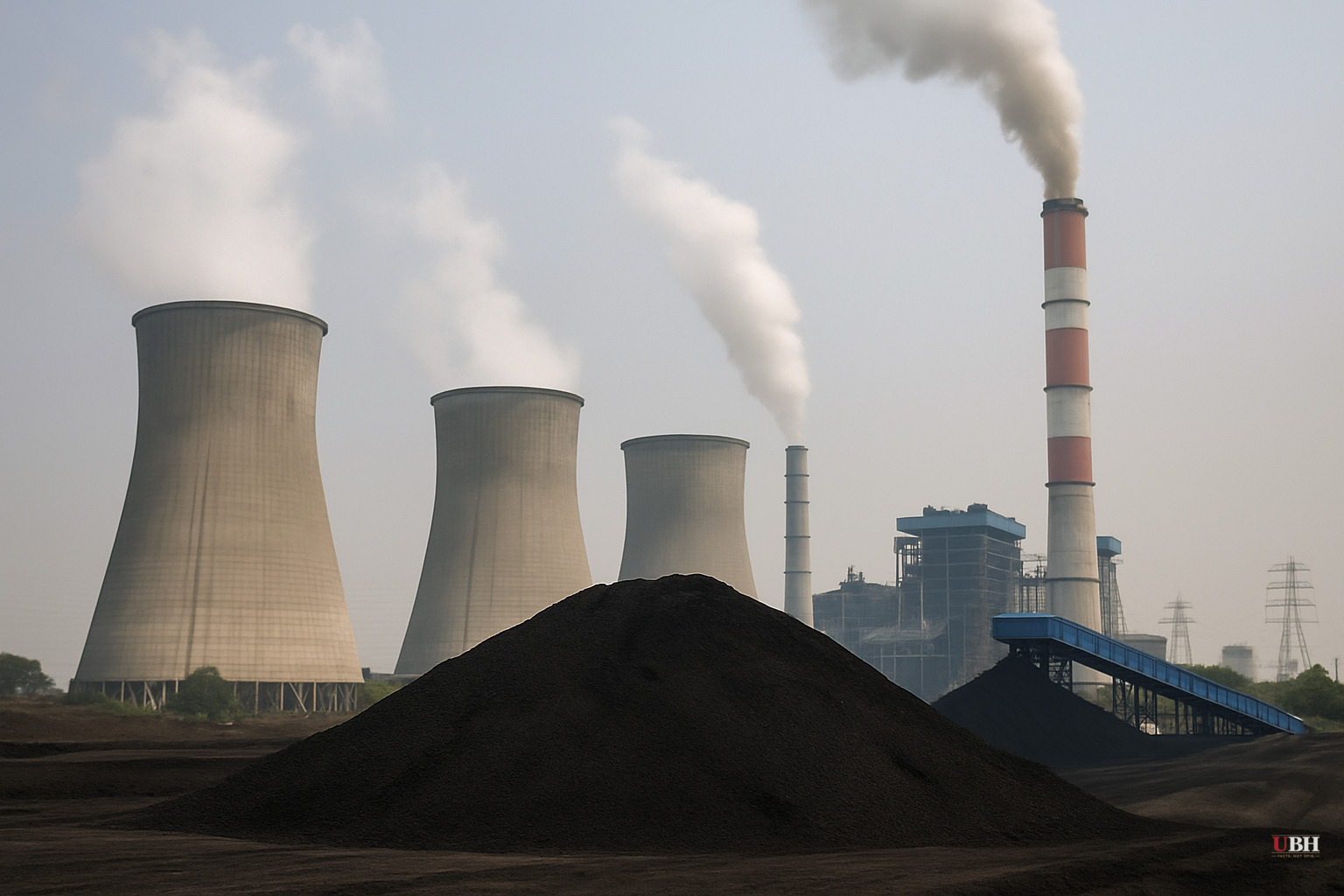
Since this series began tracking India's energy mix — including last week's report on India importing record crude volumes while burning less of it — a separate pressure on the country's power system has sharpened into focus: weather.
The Centre for Research on Energy and Clean Air (CREA), a Finland-based think tank, published a report warning that a super El Niño event will significantly boost India's coal-fired power demand over the next 12 months, according to OilPrice.com's coverage of the CREA findings.
What El Niño Does to India's Grid
El Niño is a recurrent Pacific climate pattern associated with elevated global temperatures, reduced wind speeds, and lower rainfall. For India, that combination hits two renewable sources at once: wind turbines produce less when wind slows, and hydropower reservoirs shrink when monsoon rains underperform.
CREA's analysts quantified the problem. Strip out the lost renewable generation and add the higher electricity demand driven by heat, and India faces a generation gap of nearly 18 TWh, the report states. The gap gets filled predominantly by coal.
The estimated CO2 consequence: 17 million tonnes of additional emissions tied to that coal surge.
India's Coal Baseline Is Already High
This isn't a country where coal is a marginal fuel being squeezed out. Coal accounts for roughly 60% of India's total power output, and coal-fired capacity installations continue to rise even as renewable capacity additions boom, according to OilPrice.com.
India is the world's second-largest coal importer and consumer after China. The government has been explicit about the timeline. Rajnath Ram, adviser for energy at NITI Aayog, the government's own policy think tank, said at the end of last year that coal will remain a key part of India's power system for the next two decades. His framing was direct: "We cannot be subjective about coal. The question is how sustainably we can use it."
It reflects a government that has watched blackouts during severe heat waves and concluded that grid reliability requires a firm baseload that solar and wind cannot yet guarantee.
The Strongest Counter-Argument
Climate advocates make a legitimate case worth stating plainly: every El Niño-driven coal surge reinforces fossil fuel infrastructure, locks in long-term capital investment, and makes future decarbonization harder and more expensive. If India builds or extends coal plant capacity to cover the El Niño gap, those plants don't disappear when the weather pattern ends. CREA's own report frames the 17 million tonne CO2 figure as a warning precisely because it sees a risk of temporary demand becoming permanent capacity.
Whether it outweighs India's grid reliability calculus is a policy question, not a settled fact. India has 1.4 billion people, temperatures that kill during heat waves, and a per-capita income that makes expensive energy a genuine hardship. The government's decision to keep coal as backup isn't irrational on its face.
What the Numbers Actually Mean
The nearly 18 TWh generation gap figure deserves context. Coal already holds about a 60% share of India's total power output, meaning the El Niño-driven shortfall lands on a grid already heavily dependent on the fuel. A gap of this size, concentrated during periods of high heat-driven electricity demand, can tighten coal plant margins fast and risks localized blackouts if dispatch isn't managed precisely.
This is why coal isn't being retired as a margin-of-safety resource anytime soon.
One Unresolved Question
CREA's report projects forward 12 months, but super El Niño events vary in intensity and duration. The open question is whether the El Niño follows the track that matches CREA's worst-case generation gap scenario, or whether monsoon performance surprises to the upside. If rainfall comes in closer to normal, hydro output recovers and some of the projected coal demand doesn't materialize. India's Central Electricity Authority will be watching reservoir levels closely, and those numbers will determine how much of the 18 TWh gap actually has to be plugged.
Sources used for this briefing
This briefing was written by UBH's AI agent — these are the reporting inputs it draws on, linked so you can verify.


