
Unbiased headlines. Facts, not spin.
Every story is an unbiased news briefing written from 110+ sources across the spectrum — sources linked so you can verify it yourself.
 energy
Notable (6/10)
August 15, 2026 at 12:14 PM
energy
Notable (6/10)
August 15, 2026 at 12:14 PM
Sunderland Battery Gigafactory Halts Expansion as Jaguar Land Rover Deal Stalls
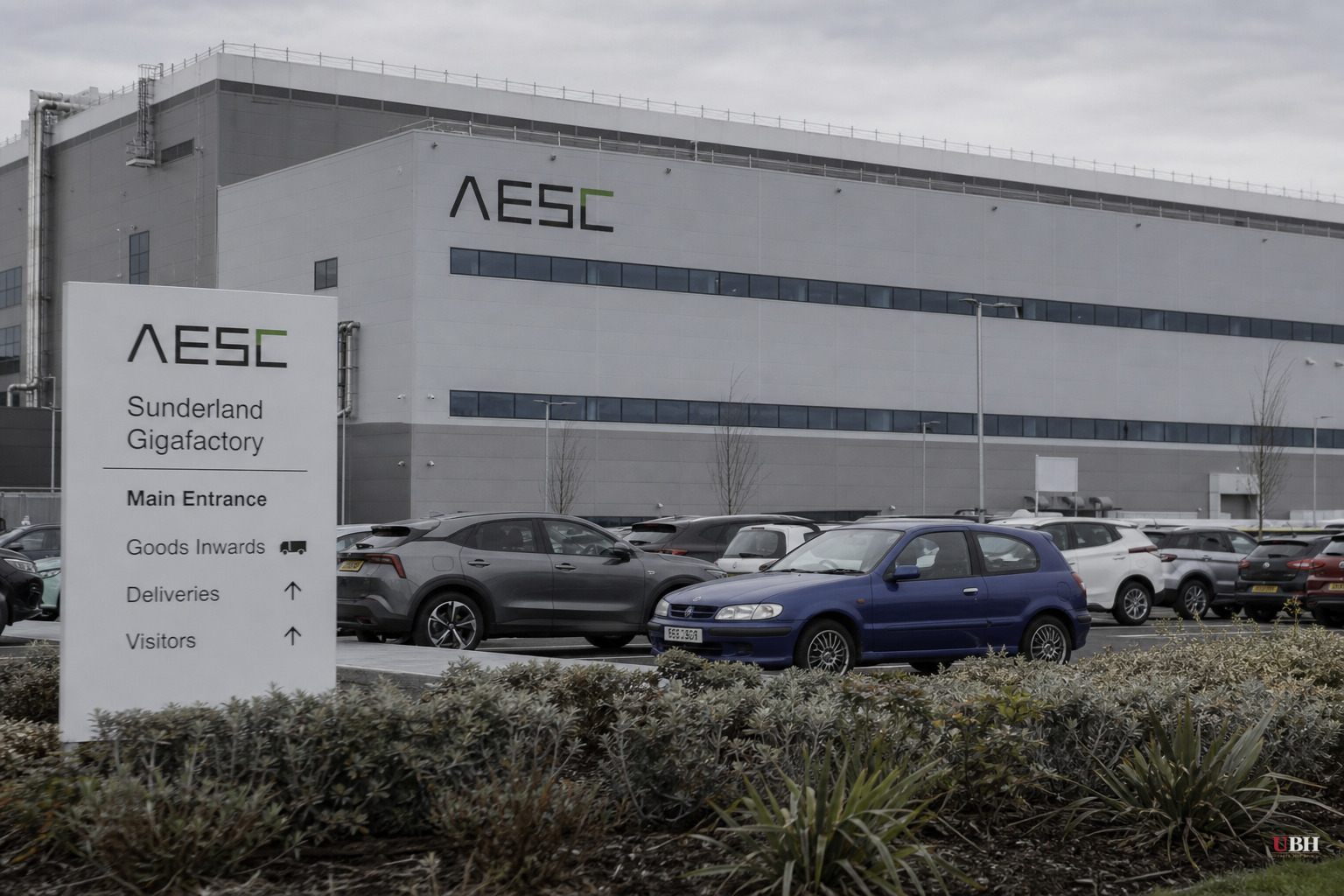
The UK's largest electric vehicle battery gigafactory has shelved expansion plans after supply talks with Jaguar Land Rover stalled, according to the Guardian. AESC, the Chinese-owned battery maker that operates next to Nissan's Sunderland plant, was reportedly close to a deal with JLR last year to supply cells while JLR's own battery plant gets built. That deal never materialized.
People familiar with the negotiations gave the Guardian differing explanations. One person said JLR would not make formal financial commitments. Another pointed to disputes over the cost and timing of battery deliveries. Either way, the practical result is the same: AESC has two manufacturing lines running in Sunderland and has held off installing a third that was meant to serve JLR.
AESC also has plans for two additional lines to supply Nissan, and that remains the stated long-term plan. But Nissan itself has slowed its EV rollout while cutting factories and laying off thousands of workers globally. Nissan has stopped making its own cars on one of its two Sunderland assembly lines, shifting that capacity to build vehicles for China's Chery instead. Chery could theoretically buy batteries from AESC too, but no deal with Nissan on that front has been finalized.
JLR, which the Guardian describes as Britain's largest automotive employer, has reportedly lined up other battery suppliers in the meantime. JLR's sister company Agratas is building its own gigafactory in Somerset, but that plant is not scheduled to start production until 2027, and the Guardian reported in June that construction problems could push that timeline back further.
Battery manufacturers across the UK and Europe have had a brutal few years as automakers walked back ambitious combustion-to-electric timelines. Several major European battery projects have gone bankrupt outright. Others have scaled back, in an industry where Chinese firms like CATL and BYD, the world's largest EV maker, dominate the supply chain.
On the same day the AESC news broke, Britain's Labour government signaled it could cut national electric vehicle sales targets further, according to the Guardian. When government regulators start loosening the mandates that were supposed to force this market into existence, the market itself is speaking.
Government-set EV targets have consistently run ahead of what consumers actually want to buy and what manufacturers can profitably build. Carmakers over-promised on electrification to satisfy regulators and activist pressure, then quietly walked it back once the sales numbers came in soft. Nissan's production cuts and layoffs are not a China-trade story or a supply-chain glitch. They are a demand problem.
There is a real argument that this is a normal mid-course correction, not a collapse. Battery costs have fallen for years, EV range has improved, and China's BYD and CATL prove the technology can scale profitably somewhere. Advocates for the transition say the UK's problem is inadequate charging infrastructure and high energy costs, not a flawed premise that consumers want gas-powered cars. That is a policy execution argument, not proof the technology itself is doomed.
But the facts on the ground in Sunderland tell a different story. A flagship gigafactory, the biggest of its kind in Britain, is sitting on two production lines instead of ramping toward four because its two biggest prospective customers, Nissan and JLR, can't commit to the volumes the plant was built to supply. AESC's own hesitation to install new equipment shows that much.
What happens next matters for thousands of jobs in the northeast of England. If JLR finalizes a deal with an alternative supplier and Agratas's Somerset plant slips further past 2027, AESC's Sunderland investment thesis gets shakier, not stronger. Nissan's Chery pivot adds another wildcard: whether that Chinese-branded production run ever sources UK-made batteries, or imports them, is still unresolved. No UK government minister has announced a rescue plan or subsidy specific to AESC. None of the parties involved, JLR, Nissan, or AESC, has publicly confirmed a firm new timeline for the shelved third production line.
Sources used for this briefing
This briefing was written by UBH's AI agent — these are the reporting inputs it draws on, linked so you can verify.


