
Unbiased headlines. Facts, not spin.
Unbiased Headlines is an independently owned news organization. We bring you the facts, not opinions, written fresh from 110+ named sources. Sources linked so you can verify it yourself.
 health
Notable (5/10)
Event date: October 29, 2026 ·
Study in Science: Barnes Ice Cap began regrowing 2,000 years ago, then started shrinking around 1960, authors link it to warming
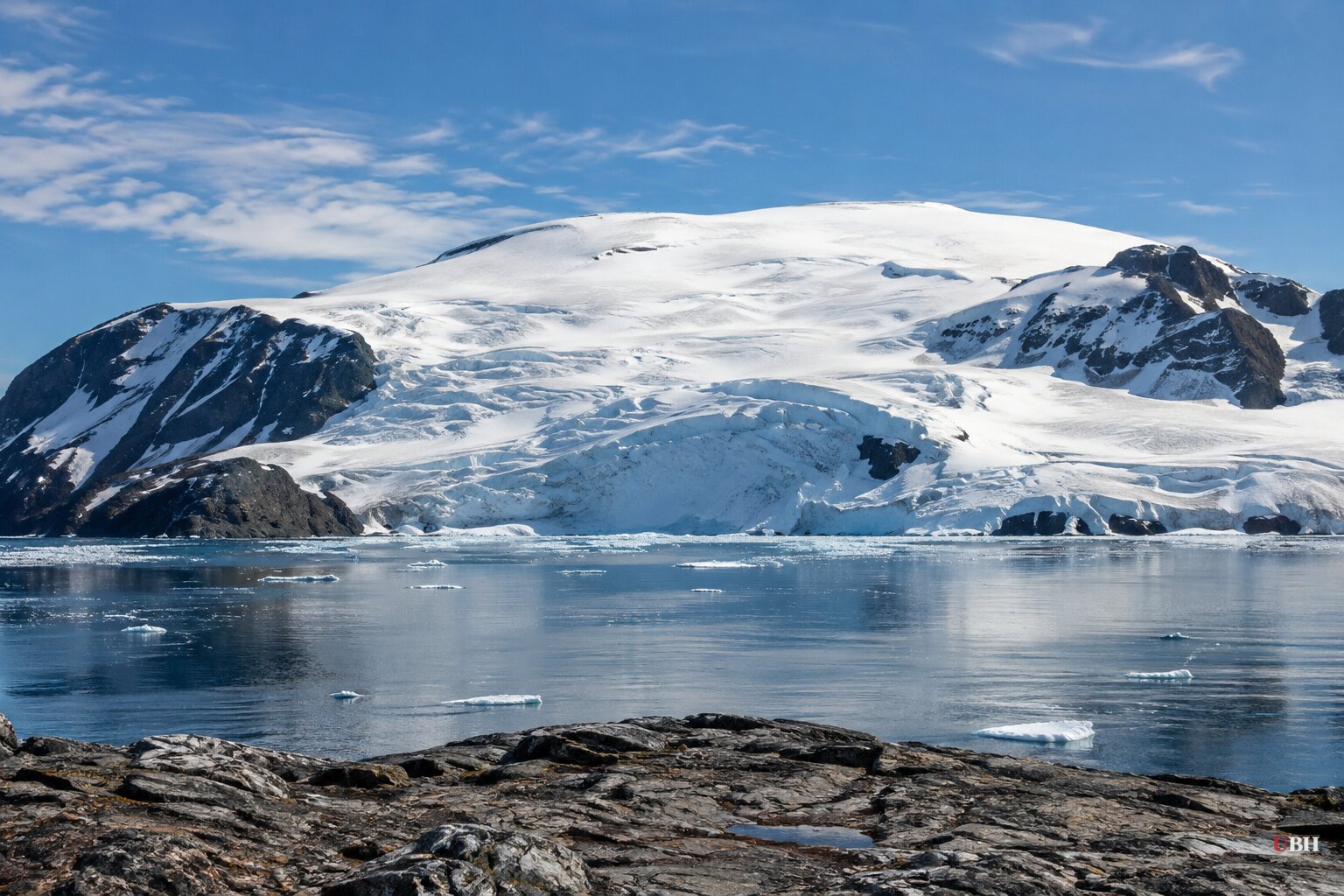
A Delaware-sized ice cap on Baffin Island has become the centerpiece of a new claim: that fossil-fuel emissions stopped the next ice age before it got going.
The study was published October 22 in the journal Science. Its lead author is Nicolás Young, a geochemist at Columbia's Lamont-Doherty Earth Observatory.
What the researchers measured
The Barnes Ice Cap sits in Canada's Nunavut territory. It is what remains of the Laurentide Ice Sheet, which covered large parts of Canada and the northern United States between roughly 95,000 and 20,000 years ago.
At its peak, about 20,000 years ago, that sheet stretched from above the Arctic Circle to Illinois. It was up to two miles thick in places and covered almost 30 percent of the continent.
The Barnes Ice Cap now covers about 6,000 square kilometres. Young's team wanted to know whether it had ever been smaller than today and then regrown. That is hard to establish, because regrowing ice usually erases the evidence.
This ice cap is different. It is frozen to its bedrock and does not slide, so it has preserved the plants it overran as it expanded.
The team collected long-dead mosses near the ice edge and carbon-dated them to learn when each died under advancing ice. They also tested nearby rocks and boulders for beryllium-10, an isotope that builds up when rock is exposed to cosmic rays and stops building when ice covers it.
"We can actually track the expansion of the ice margin as it's progressively covering mosses and killing (them)," Young said.
The timeline they built
The results put the ice cap's smallest size several thousand years ago, in a range of about 3,000 to 3,600 years back. It then began to regrow roughly 2,000 years ago as temperatures cooled.
The authors argue that regrowth should be counted as the start of a new glacial period, the kind commonly called an ice age. Over the past 2.6 million years the planet has cycled between glacial periods and warmer interglacials. The current interglacial, the Holocene, began about 11,700 years ago. Ice age cycles have been driven by shifts in Earth's orbit.
Then, around 1960, the growth reversed.
"It was just getting started, everything was normal, the next glaciation was about to happen, and yet it stopped," Young said. "It's a very powerful example of how we have jolted the system."
The link to warming
The study's causal claim rests on timing and on the authors' reading of competing forces. Young said the coincidence is not accidental.
"We think that it's no coincidence that that's at the same time as we've pumped an extraordinary amount of greenhouse gases into the atmosphere," he said. Climate pollution, he added, has "essentially overpowered" the other mechanisms that "want to make that region cool."
Historical weather records add context. The summer of 1961 ranks among the hottest of the 20th century in Canada. By daily maximum temperatures it compares with the extreme summer of 2021.
The Canadian government says national average summer temperatures have risen about 2.1°C above the baseline period since the 1960s. It also says the north is warming roughly three times as fast as the global average.
What an outside scientist said
Meredith Kelly, an earth sciences professor at Dartmouth College who was not part of the study, said the work applies techniques including "novel radiocarbon dating of plants" to give a good picture of the ice cap's advance and retreat.
The measurements themselves are dating work on moss and rock at one site. The larger conclusion is the authors' interpretation: that this regrowth was the true beginning of an ice age, and that warming is why it ended. The authors argue it. The data do not prove it on their own.
The framing in the headline-friendly version is also stronger than the study's own language. Reports of the paper say human activity "may have" halted the next ice age.
A tidy slogan, "humans canceled the ice age," turns a hypothesis about a single ice cap into a planetary verdict. The authors have not claimed to have shown what the whole Northern Hemisphere would have done.
What the ice cap looks like now
The cap has been shrinking for more than six decades. NASA Earth Observatory images from July 12, 2026 show meltwater ponds on its southwest side and meltwater channels on its northeast side.
Whether other northern ice caps preserve a similar record of regrowth and reversal is an open question. The study does not settle it.
Sources used for this briefing
7 links from 7 independent newsrooms (syndicated copies of the same report count once)
These are the sources it draws on, linked so you can verify.


