
Unbiased headlines. Facts, not spin.
Unbiased Headlines is an independently owned news organization. We bring you the facts, not opinions, written fresh from 110+ named sources. Sources linked so you can verify it yourself.
 health
Notable (5/10)
New York Assisted-Dying Clinic Charges Up to $12,000, Says 15 Patients Have Died Since August
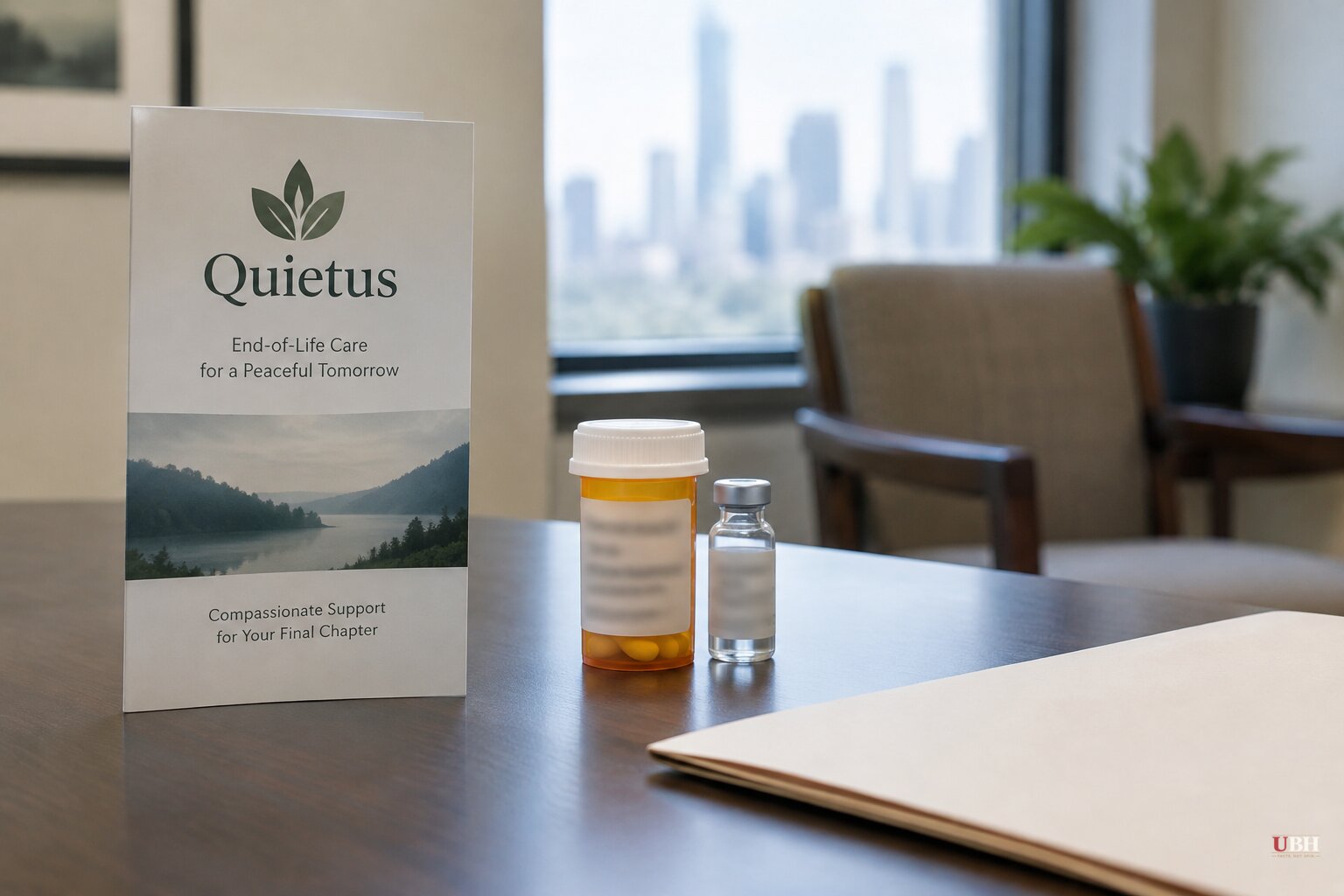
A boutique clinic in New York is charging terminally ill patients up to $12,000 to die under a law that took effect in August.
The clinic is called Quietus. It was launched in August, the same month New York's Medical Aid in Dying Law went into force, by David Atkins, a former hospice worker who spent years in Buddhist temples in South Korea.
What Quietus charges
Atkins told the Daily Mail the service costs $11,000, with another $1,000 for the lethal drugs. Private insurance, Medicare and Medicaid do not cover assisted dying, so patients and families pay out of pocket.
Quietus serves the New York City metropolitan area, the Hudson Valley, and Westchester and Nassau counties. Doctors visit patients at home, stay while they take the drugs, pronounce them dead and notify hospice afterward.
By Atkins' own count, 15 people have died after going through the clinic. Another 40 to 50 have been referred or reached out directly. More than half of the inquiries involve patients with ALS, he said.
The prices elsewhere are far lower. A New Mexico provider, Rights of Passage, advertises $2,500. Windsor Family Practice in Ventura, California, charges $3,000.
What the law requires
Under the New York law, only adults with a terminal illness and six months or less to live can request the drugs. They must undergo a mental health evaluation and administer the drugs themselves.
Atkins said the at-home presence of a doctor matters because the drugs, often mixed into apple juice, must be swallowed within about two minutes, and some patients cannot swallow at all. Patients typically lose consciousness within minutes and die within an hour. Some have taken many hours, and in rare cases days, according to Atkins.
The price dispute
Atkins defends the $12,000 figure as fair. He said he has discounted heavily for families who could not pay, with some paying a token $50 in total and others half the going rate.
"The goal is that those who can afford this will balance out those who cannot afford it, so I think it's a very reasonable price to charge when you consider the level of service that we're providing," he told the Daily Mail.
He also said Quietus has turned away patients who were not terminally ill and referred them for mental health help.
Jessica Rodgers of the Patients' Rights Action Fund, which opposes assisted suicide, sees it differently. "It's sadly no surprise to see kill-me clinics popping up in New York, because most doctors don't want to touch assisted suicide with a ten-foot pole," she told the Daily Mail. She accused some providers of setting up practices "to make lucrative profits off of scared patients."
Rodgers did not name Quietus specifically as doing so in the material quoted, and no regulator or court has made any finding of misconduct against the clinic. No investigation has been announced.
How many people are using the law
The number of New Yorkers who have used the law is unclear. Columbia University estimates that about 20 patients may have received prescriptions in the first month. That is an estimate, not a count.
Atkins' figure of 15 deaths is his own, and it has not been independently verified.
Canada as the comparison
Opponents of assisted dying point to Canada as the warning. Government figures show 16,499 Canadians received medical assistance in dying in 2024, or 5.1% of all deaths. Canada legalized the practice in 2016 and no longer requires patients to be terminally ill.
That difference is central to the New York debate. New York's six-month terminal requirement is narrower than Canada's rules. Opponents have long argued that eligibility tends to expand over time. Supporters of the New York law have not been quoted on that point in the reporting on Quietus.
One Canadian case has drawn attention among critics. Family members of Brigitte Stegemann, an 83-year-old Ontario woman, allege she was euthanized this summer under Canada's MAID program without giving final consent. They say she had previously declined it because it conflicted with her Christian faith. Those are the family's allegations, and the details have not been tested in any proceeding cited here.
What is still open
The law is new and the data is thin. The key question is whether New York collects and publishes figures on how many patients use the law, who provides the drugs, and what they charge. Right now the only numbers on Quietus come from the man who runs it.
The cost question is separate from the moral one. A law that leaves patients paying $12,000 out of pocket, with no insurance coverage and no price oversight, has built a market. Whether that market needs rules is something New York lawmakers have not yet addressed in anything cited here.
Sources used for this briefing
5 links from 3 independent newsrooms (syndicated copies of the same report count once)
These are the sources it draws on, linked so you can verify.


