
Unbiased headlines. Facts, not spin.
Unbiased Headlines is an independently owned news organization. We bring you the facts, not opinions, written fresh from 110+ named sources. Sources linked so you can verify it yourself.
 health
Low Interest (4/10)
Event date: October 22, 2026 ·
Liver Transplant Candidates Whose Frailty Scores Improved 0.4 Points Had About Half the Risk of Waitlist Death, Study Finds
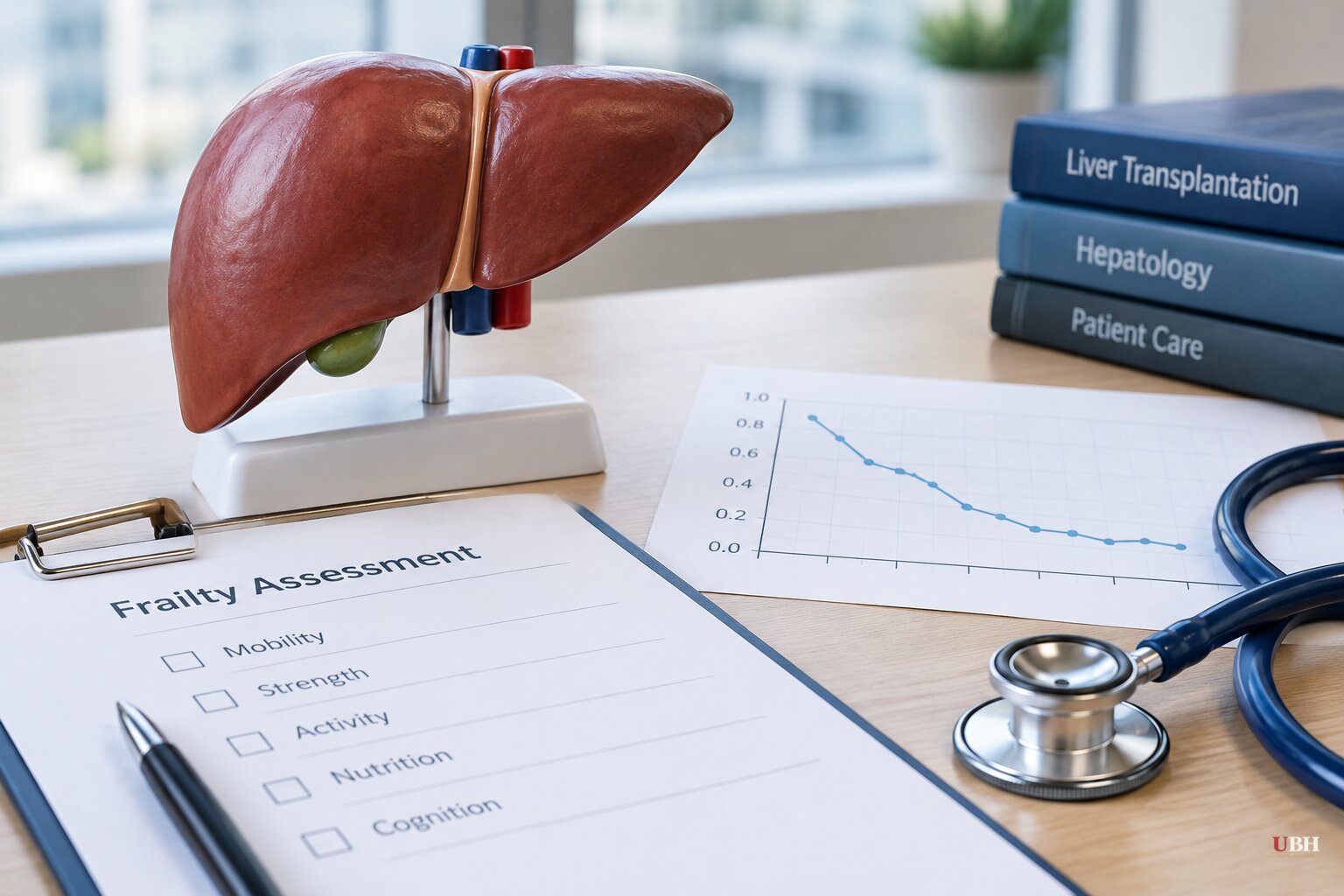
About 100,000 people in the United States are waiting for a transplant, according to the United Network of Organ Sharing. Wait times run from a few months to several years. New research suggests that how fit a patient gets during that wait may affect whether they survive it.
A study published Oct. 21 in Clinical Gastroenterology and Hepatology, from Northwestern Medicine and the University of Pittsburgh, looked at liver transplant candidates in a personalized program called prehabilitation. Patients whose frailty scores improved by at least 0.4 points had about a 50% lower risk of dying before transplant.
What the researchers did
The team followed nearly 1,300 adults evaluated for liver transplantation between 2018 and 2022 at the University of Pittsburgh's transplant center. Of those, 355 returned for at least two follow-up visits. The researchers counted them as program participants.
Upon referral, patients were tested for strength and nutritional needs. They left that first visit with an at-home exercise plan. Follow-up appointments every four to 12 weeks adjusted the plan.
Dr. Andres Duarte-Rojo, the study's senior author and a transplant hepatologist at Northwestern, worked with a physical therapist and a dietitian to set each patient's fitness and nutrition goals.
Progress was measured with the Liver Frailty Index. It combines three tests: grip strength, repeated chair stands, and the ability to hold three balance positions. Lower scores mean less frailty.
The numbers
About 64% of the participants improved their scores. Nearly two-thirds of those who attended at least three visits lowered their score by an average of nearly 0.4 points.
After adjusting for age, disease severity and baseline frailty, patients who improved by 0.4 points or more had roughly half the risk of dying on the waitlist.
Duarte-Rojo said the 0.4 benchmark could serve as a clinical goal for transplant centers worldwide.
"It doesn't matter how severe their disease is," Duarte-Rojo said. "If they exercise and do what we ask them to do, they see a major improvement in their fitness and reduce their mortality risk before transplantation."
He also said the frailest patients often improve the most.
Not a gym program
The exercise is gentle by design. "There are precautions, of course," Duarte-Rojo said. "You don't send these patients to the gym to lift 100 pounds. You have to start low and progress slowly."
Steven McGowan, a 62-year-old retiree from the Chicago area who is awaiting both a kidney and a liver transplant, started the Northwestern program in January. "I was very frail when I went in," he said. "I started getting stronger pretty quickly. I'm honestly surprised how much I'm doing. I'm walking three to four miles a day now."
A fight with the medical establishment
Duarte-Rojo said he has spent 20 years studying fitness programs for patients with advanced liver disease. He said he has met resistance.
"Some authorities in the field have long told me, 'You're crazy, they're going to bleed, they're going to have more encephalopathy, they're going to get sicker, they're going to get injured,'" he said. "And we proved through many field studies that is exactly the other way around."
The concern those authorities raised was whether very sick patients with advanced liver disease could exercise safely. The safety question here rests on Duarte-Rojo's account of his earlier field studies.
Limits of the findings
This study shows an association between improved frailty and lower mortality. It does not prove the exercise caused the survival benefit.
The participants were defined as patients who came back for follow-up visits. People who keep showing up may differ from those who do not. They may be more motivated, or have more support at home.
All patients came from one transplant center, which may limit how far the results apply elsewhere.
Reach
According to Duarte-Rojo, only about 10 transplant centers worldwide, including Northwestern and Pittsburgh, offer this kind of personalized prehabilitation. He said the model could also be replicated for patients with cancers and those facing certain surgeries.
"As we are getting older and as we are getting sicker, we need to be more prepared to take care of our bodies," he said.
The open question is whether the result holds at other centers. Until then, the 0.4-point target is a benchmark Duarte-Rojo is proposing, not an established standard of care.
Sources used for this briefing
6 links from 6 independent newsrooms (syndicated copies of the same report count once)
These are the sources it draws on, linked so you can verify.


