
Original briefings. Zero spin.
Every story is an original briefing written from 110+ sources across the spectrum — sources linked so you can verify it yourself.
 energy
Notable (6/10)
Event date: September 7, 2026
energy
Notable (6/10)
Event date: September 7, 2026
Study Finds Thawing Permafrost, Not Quake Size, Explains Jan Mayen's Record Rockslide
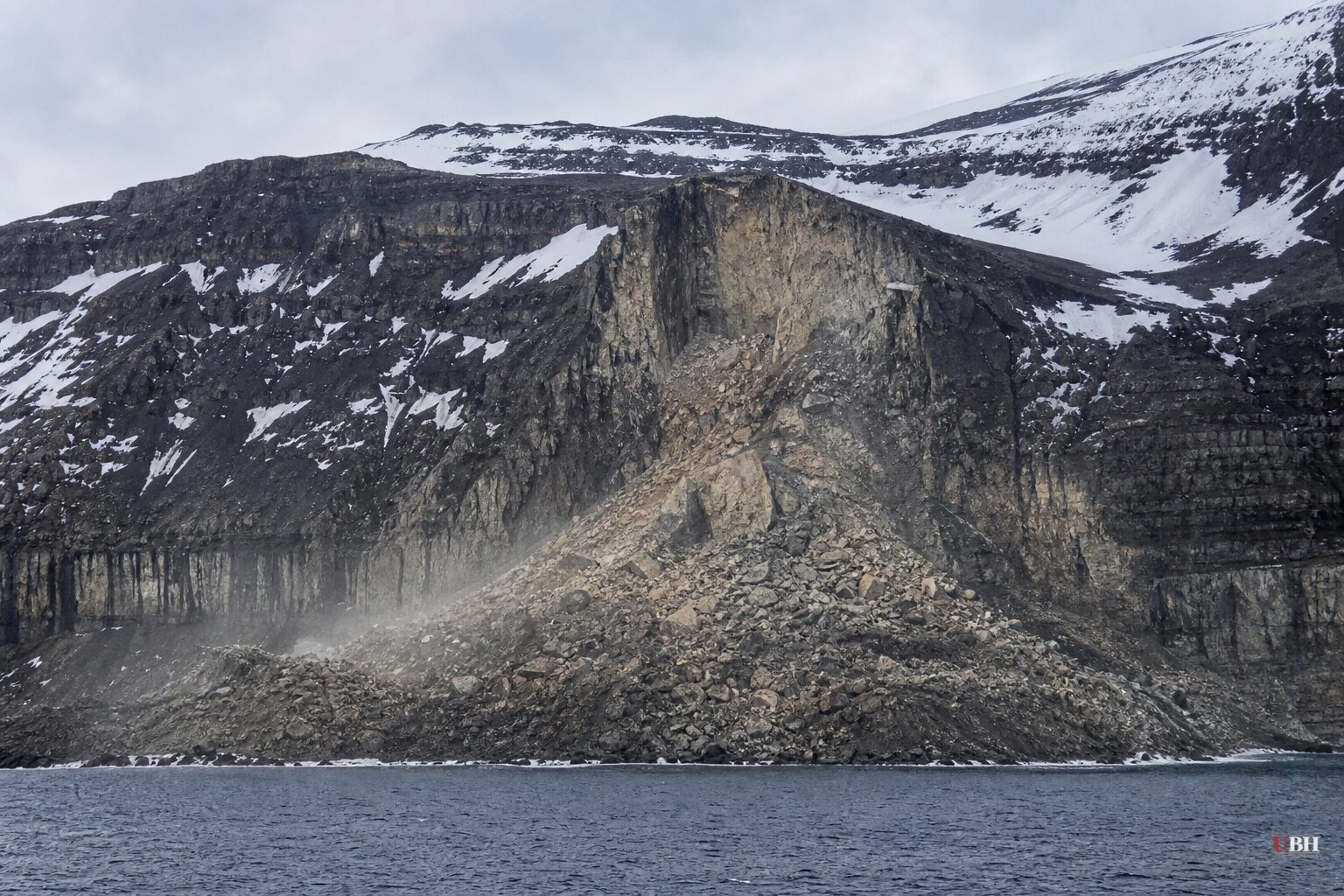
An ordinary quake, an unprecedented result
On March 10, 2025, at 02:33 UTC, a magnitude-6.5 earthquake ruptured roughly 40 kilometers along the Jan Mayen transform fault, a seismically active zone where the island sits at the junction of that fault and the Mid-Atlantic Ridge, according to Tech Times. Within minutes, a slope above the Kjerulf Glacier gave way, sending between 0.81 and 1.17 million cubic meters of volcanic rock and ice down toward the coast, according to Phys.org and Eurasia Review. The rockslide started around 800 meters above sea level and traveled 2.3 kilometers before reaching the shoreline, according to BigGo Finance.
The debris field spread almost to the coast, about 7 kilometers from the epicenter, piling into hummocky mounds geologists call molards, according to Earth.com. A neighboring glacier, the Weyprecht, showed separate earthquake-induced ice calving on the other side of the island, according to Phys.org.
None of that would be remarkable on its own. Jan Mayen shakes often. What made researchers take notice, according to Eurasia Review, is that 40 years of satellite monitoring show no comparable quake-triggered avalanche on the island despite its long seismic history.
The GEOMAR team's explanation
The study, published in the Proceedings of the National Academy of Sciences on Monday, September 7, 2026, was led by Dr. Guilherme W. S. de Melo, a postdoctoral researcher in the Marine Geodynamics unit at GEOMAR Helmholtz Centre for Ocean Research Kiel, working with the Geological Survey of Norway and other institutions, according to BigGo Finance and Phys.org.
"This 2025 earthquake is a striking example of cascading natural hazards," de Melo said, according to Phys.org and Eurasia Review. "Our study documents, for the first time, an earthquake-triggered rock avalanche on Jan Mayen island. The volcanic slope may have become increasingly unstable due to permafrost degradation."
The team's argument is straightforward. Permafrost is frozen ground that binds fractured rock, according to Phys.org, "much like cement binds concrete." When it thaws, that binding weakens. Shaking that a slope could once absorb now strips it bare instead.
To build the case, researchers combined local and regional seismic data, high-resolution satellite imagery, infrasound recordings, and long-term air-temperature and climate records, according to Earth.com. BigGo Finance reports the team also found evidence of repeated small-scale slope collapses before the earthquake and an increasing number of unusually hot summer days on the island, both consistent with a slope that had been destabilizing for years before the quake finally set it off.
What the study does and doesn't claim
BigGo Finance draws a distinction the other outlets touch on but don't spell out as directly: "the earthquake itself was unrelated to climate change," the outlet reports, describing it as a straightforward product of plate tectonics along the Mid-Atlantic Ridge and the Jan Mayen transform fault. What the researchers say changed is not whether an earthquake happens, but how much damage the same-sized earthquake can do once the ground beneath it has been weakened by decades of warming.
For readers wary of climate research overreaching into causal claims it can't support, this distinction matters. A magnitude-6.5 earthquake striking a permafrost-degraded slope is not evidence that warming causes more or bigger earthquakes. It's a claim about consequence, not trigger, and the study's own authors keep that line intact.
The evidentiary structure here is a single, well-instrumented case study, not a controlled experiment. The team's case rests on the absence of any comparable event in 40 years of satellite records, on-site geological evidence of prior small collapses, and modeled correlation with temperature trends. That's a serious, multi-instrument body of evidence for one island. It is not, by itself, proof that every permafrost slope in the Arctic behaves the same way.
A pattern beyond Jan Mayen
The researchers argue the mechanism isn't unique to this island. BigGo Finance reports the team assesses the Jan Mayen event as sharing a cascading-disaster mechanism with a 2025 ice-rock collapse on the Nepal-China border, suggesting the same permafrost-weakening dynamic could apply well beyond the Arctic, wherever frozen ground has historically stabilized steep terrain.
The practical question the study leaves open is how many other seismically active, permafrost-underlain slopes across the Arctic and high-altitude regions are quietly approaching the same threshold Jan Mayen crossed in March 2025. The researchers call for reassessing disaster-risk models in these regions, according to BigGo Finance, but no specific inventory of at-risk slopes or expanded monitoring program has yet been announced.
Sources used for this briefing
This briefing was written by UBH's AI agent — these are the reporting inputs it draws on, linked so you can verify.


