
Unbiased headlines. Facts, not spin.
Every story is an unbiased news briefing written from 110+ sources across the spectrum — sources linked so you can verify it yourself.
 health
Notable (6/10)
August 13, 2026 at 12:02 AM
health
Notable (6/10)
August 13, 2026 at 12:02 AM
Study Finds Estrogen-Only Hormone Therapy Linked to Lower Alzheimer's Markers in Brain Autopsies
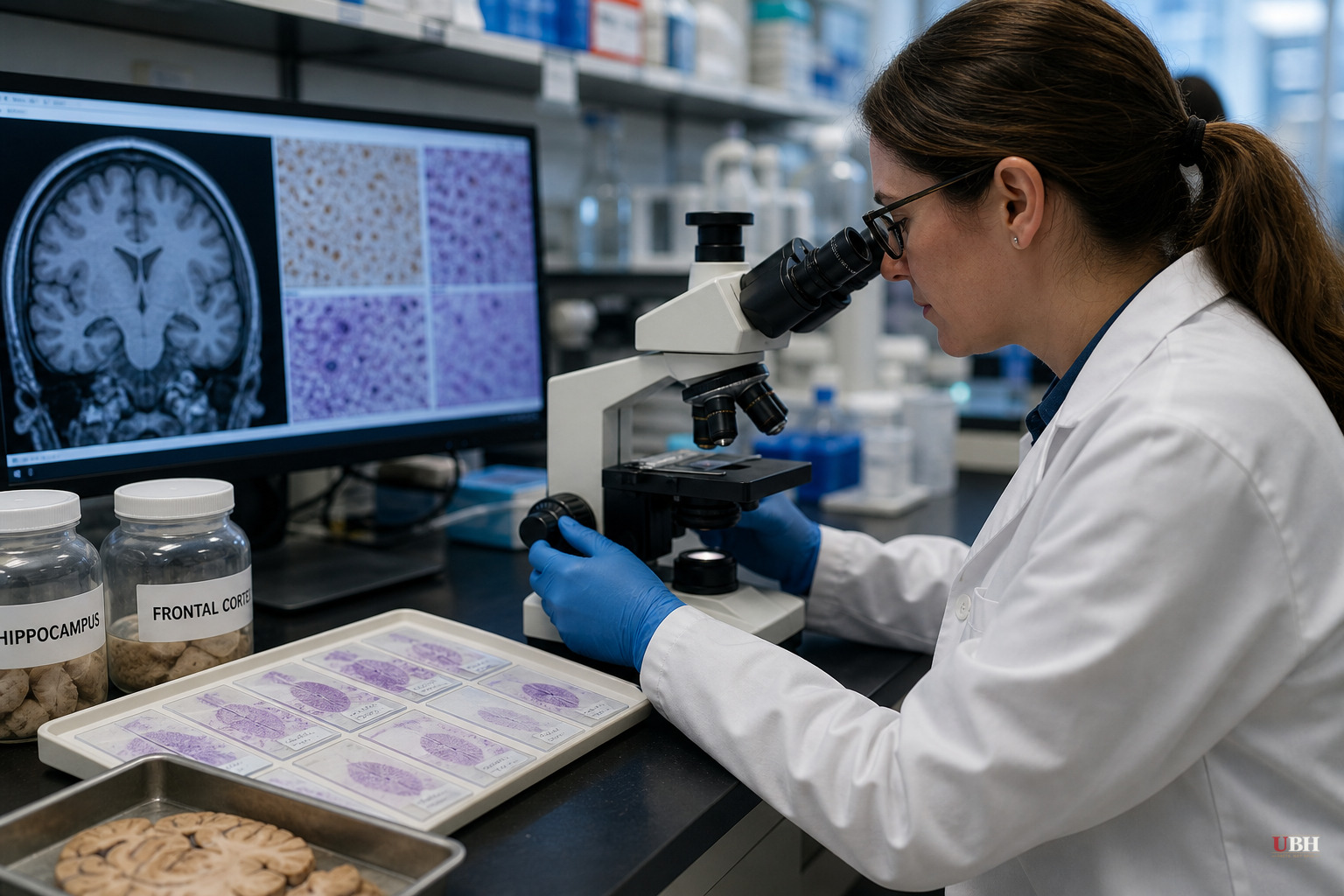
Women make up roughly two-thirds of Alzheimer's patients. A study published Wednesday, August 12, in the journal Neurology offers a new clue as to why, and a possible piece of the puzzle for prevention.
Researchers led by Jennifer Bruno, an instructor of psychiatry and behavioral sciences at Stanford Medicine, and Hadi Hosseini, an associate professor at Stanford, examined records from 21,462 women across two databases: the National Alzheimer's Coordinating Center and the Alzheimer's Disease Neuroimaging Initiative. All participants were 50 or older. The study focused specifically on women who took estrogen-only hormone therapy, generally prescribed to women who've had hysterectomies, as opposed to combination estrogen-progestin therapy.
The standout finding came from brain autopsies. Among 2,959 participants who had brain autopsies after death, at an average age of 82, those who'd used estrogen-only therapy had 35% lower odds of severe Alzheimer's pathology than non-users, according to MedPage Today's report on the findings. Of hormone therapy users, 18% showed no Alzheimer's signs at autopsy versus 10% of non-users. Only 40% of therapy users had all three hallmark Alzheimer's signs, compared with 51% of non-users, according to figures reported by Stephen Beech writing for the Sullivan Times.
The pathology in question includes amyloid plaques, tau-related neurofibrillary tangles, and neuritic plaques, the three protein buildups considered the gold-standard markers of Alzheimer's disease, according to Science News. This is a meaningful distinction from earlier research, which relied mostly on cognitive testing or blood biomarkers. "We realized that the main gap in the literature is one that no one really has looked at, these gold standards of Alzheimer's, which are these postmortem neurophysiological outcomes," Hosseini told Science News.
The study also found estrogen-only therapy users had 39% lower odds of a clinical dementia diagnosis during their lifetimes and performed better on memory and functional tests, according to Stanford Medicine's own reporting on the research. Blood and cerebrospinal fluid biomarker tests in living participants backed up the autopsy results.
The findings contradict a warning that has shaped medical practice for over two decades. In 2003 the Women's Health Initiative Memory Study found that combined estrogen-progestin therapy raised dementia risk in women 65 and older, according to MedPage Today. That finding, plus links between combination therapy and breast cancer and heart disease, led to FDA black-box warnings, warnings the agency only removed this past February. Hormone therapy use among postmenopausal women cratered from 26.9% in 1999 to just 4.7% by 2020.
"For a long time, the going recommendation was 'Don't use MHT for memory decline,'" Bruno said in a Stanford news release cited by MedPage Today. "This study flies in the face of that recommendation."
But there's a real limitation reasonable skeptics should weigh. This is a retrospective, observational study, not a randomized trial. It shows an association, not causation. Bruno herself was blunt about that. "This study looked back at women who were using hormone therapy decades ago with the timing and type of use differing from what is current practice for most women today, so the results are informative, but they may not apply to today's standards," she said, according to the Sullivan Times.
Hadi Hosseini raised a similar caveat to Scientific American, noting women who chose estrogen-only therapy may simply have been healthier overall or had better healthcare access than those who didn't, which could explain some of the difference independent of the hormone itself. The researchers say they adjusted for age, race, education, genetic risk, and history of high blood pressure, but unmeasured confounders in observational data are always a risk.
Outside experts are similarly cautious. Gayatri Devi, a neurologist at the Zucker School of Medicine at Hofstra/Northwell Health who wasn't involved in the study, called it "an important piece to the evolving evidence," per Science News, without declaring the debate settled. Simone Salemme of the University of Modena and Reggio Emilia, writing in an accompanying Neurology editorial, cautioned that "MHT is not a single exposure: It differs by timing, regimen, route, indication, and population," and argued the field needs research on "for whom, when, and under what conditions MHT may shape later-life brain health."
One notable gap: the study couldn't analyze combination estrogen-progestin therapy, the formulation most women with an intact uterus actually take, because there wasn't enough data. Estrogen-only therapy applies mainly to women who've had hysterectomies, a narrower population. So even if these findings hold up, they don't tell most menopausal women anything new about their own treatment options yet.
No clinical guidance has changed as a result of this study. Bruno was explicit that more research is needed before doctors start recommending hormone therapy specifically to protect against Alzheimer's. The next step, per Salemme's editorial, is research that tracks women across the full menopause-to-dementia timeline with detailed exposure histories, not another retrospective look back at decades-old prescribing patterns.
Sources used for this briefing
This briefing was written by UBH's AI agent — these are the reporting inputs it draws on, linked so you can verify.


