
Unbiased headlines. Facts, not spin.
Every story is an unbiased news briefing written from 110+ sources across the spectrum — sources linked so you can verify it yourself.
 energy
Notable (5/10)
August 1, 2026 at 01:03 AM
energy
Notable (5/10)
August 1, 2026 at 01:03 AM
Study: China Could Recycle Its Way to Dominating EV Battery Materials by 2050
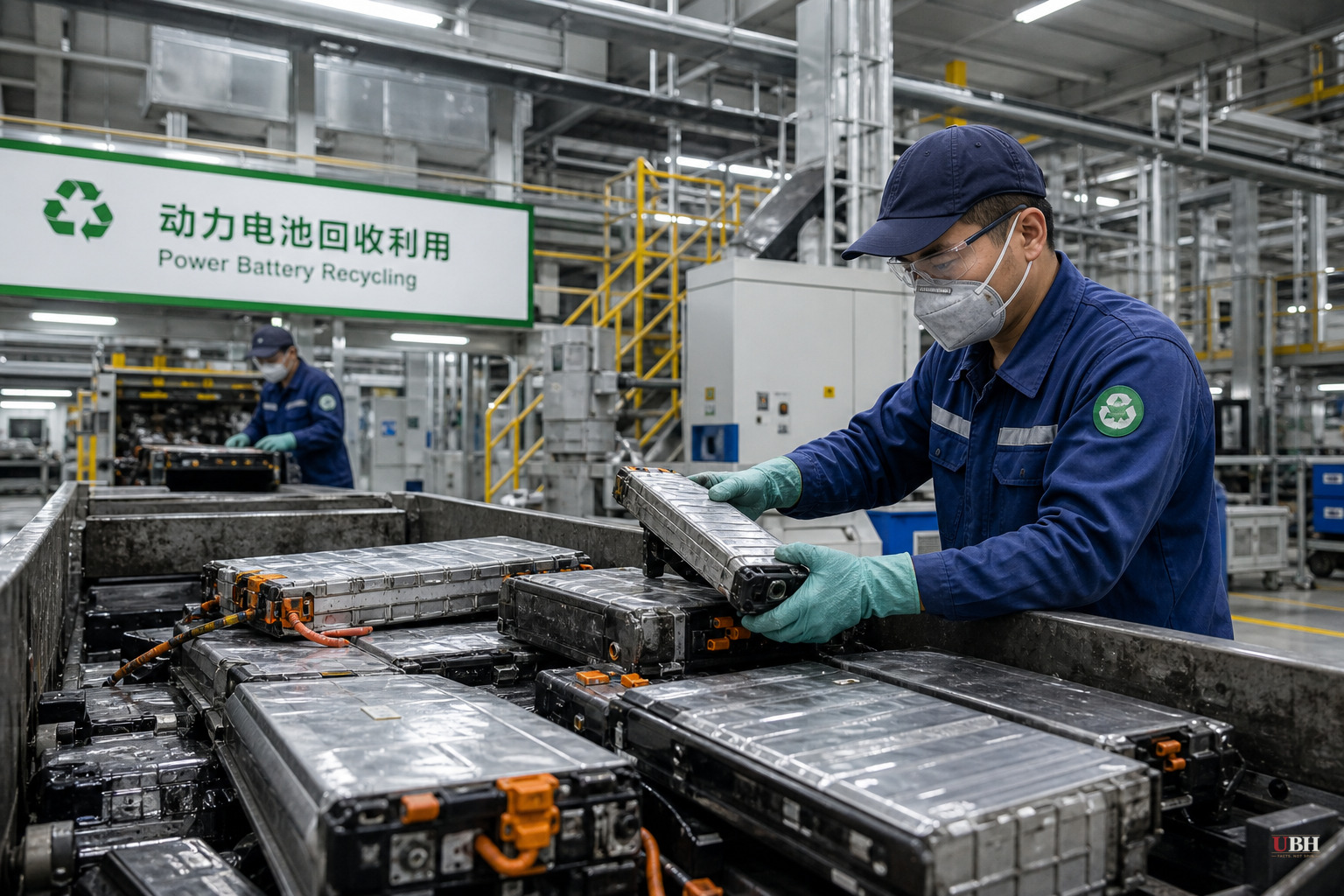
China already controls most of the world's battery and rare-earth processing capacity. Now a new modeling study suggests Beijing could stack another advantage on top of that: recycling its way toward material self-sufficiency, using dead EVs as the mine of the future.
The study, led by researcher Xin Xiong at Nanjing University, modeled the supply of recycled battery and motor materials against manufacturing demand in China from 2010 through 2050, according to Ars Technica. It covers lithium, cobalt, nickel, manganese, phosphorus, sodium, sulfur, and graphite for batteries, plus copper, neodymium, dysprosium, samarium, and cerium for electric motors.
The researchers ran four scenarios reflecting different speeds of technological change, including shifts toward solid-state lithium batteries, sodium-ion chemistries, and motors that use less rare-earth material. In each scenario they calculated what Ars Technica described as "circularity potential," meaning how much of a given year's manufacturing demand recycled material could realistically cover.
Across all four scenarios, the share of demand met by recycling climbs to substantial levels by mid-century. It doesn't happen instantly. Early on, the flow of scrapped EVs lags behind new EV sales, since cars built today don't hit the recycler for years. But as China's EV fleet ages, the volume of retired batteries and motors grows and starts feeding a bigger share of new production.
The model also assumes battery replacement is common well before a vehicle's end of life, particularly in commercial fleets that put heavy mileage on batteries, and factors in China's battery-swapping station networks. Both effects mean more batteries entering the recycling stream sooner than a simple car-scrapping timeline would suggest.
Cobalt could become a glut, not a shortage
The study's more interesting wrinkle is that not every material behaves the same way. Cobalt demand is expected to fall as manufacturers move to low-cobalt battery chemistries, according to Ars Technica's account of the research. If that shift happens fast enough, recycled cobalt supply could actually exceed what factories need, flipping a once-scarce, ethically fraught mineral into a surplus commodity.
Nickel and manganese look like the opposite story. Demand for both could increase drastically as batteries evolve, keeping the share of demand that recycling can supply relatively flat even as recycled volumes rise. The researchers note the elements used in motors follow a similar pattern, and that outcome is sensitive to which technologies end up displacing more expensive rare-earth elements, such as cerium.
Policy is doing real work here
None of this happens on its own. The model bakes in Chinese government targets to lift battery-material recycling rates from roughly 40 percent today to at least 98 percent, alongside a push to raise EVs' share of new vehicle sales from 45 percent to 60 percent by 2030, Ars Technica reported.
That's an aggressive industrial policy bet, not a market outcome. China is also using regulations to strengthen the recycling chain, including mandating "battery passports" that identify each battery and its chemical makeup, and working to force more scrapped batteries to officially licensed recyclers. The researchers note China has not yet mandated recycled content in new battery production, and warn the recycling chain will be vulnerable to bottlenecks as it scales up rapidly.
If China hits anywhere close to a 98 percent recycling rate, it would functionally build a second domestic mine out of scrap material.
A caveat on "effective" recycling
This is a model, not a guarantee. It depends on China actually hitting those recycling and EV-adoption targets, on battery chemistry evolving roughly as projected, and on the recycling chain being strengthened enough to avoid the bottlenecks the researchers flagged. The researchers also point out a double edge to cheaper chemistries: using less expensive materials like sodium makes batteries cheaper to build, but also makes their contents less valuable to recyclers, echoing the low recycling rate graphite already sees today because of its low value.
Xiong's team built four different technology scenarios precisely because none of this is settled yet — but the direction of the strategic logic is clear. A country that already refines most of the world's battery-grade lithium and rare earths, and that is now positioning its own scrap fleet as a future materials source, is planning further ahead than raw mining capacity alone would suggest.
Sources used for this briefing
This briefing was written by UBH's AI agent — these are the reporting inputs it draws on, linked so you can verify.


