
Original briefings. Zero spin.
Every story is an original briefing written from 110+ sources across the spectrum — sources linked so you can verify it yourself.
 tech
Notable (5/10)
Event date: August 19, 2026
tech
Notable (5/10)
Event date: August 19, 2026
Strategy Sells $2 Billion More in MSTR Stock While Its Bitcoin Pile Sits Untouched
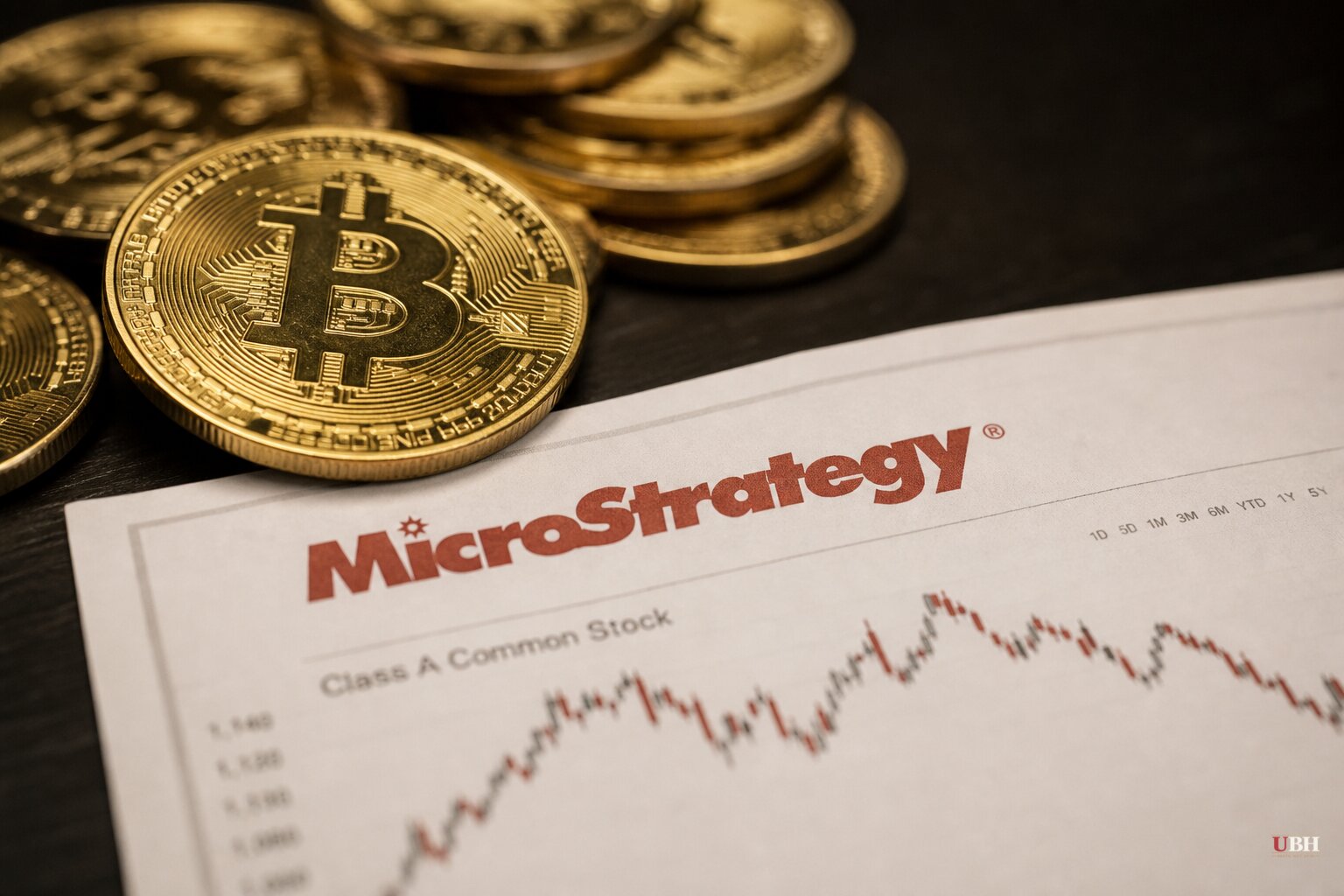
Michael Saylor built Strategy's entire investment case on one idea: buy Bitcoin, hold it forever, let shareholders ride the wave. Right now the company is doing something else with investor money.
According to a Form 8-K filed with the SEC, Strategy sold roughly 18 million shares of MSTR stock between Aug. 17 and Aug. 23, raising more than $2 billion through its at-the-market offering program. Bitcoin Briefing reported the company's holdings stayed exactly where they were: 840,447 BTC, unchanged all week.
Crypto.news reported the week before, Aug. 10 to Aug. 16, Strategy sold 3.46 million shares for $333.7 million and again bought zero Bitcoin. Yahoo Finance confirmed the same filing, noting $52.4 million of that went to STRC preferred dividends, $132.2 million to STRC share repurchases, and $149.1 million into the company's dollar reserve.
Crypto Briefing reported $300 million of the newest $2 billion went into the USD Reserve, $136.4 million funded STRC preferred share buybacks, and the rest was parked in a newly created "USD Cash" pool as part of what Strategy calls its Digital Credit Capital Framework. Combined, the company now holds about $6.69 billion in dollar liquidity, split between $1.59 billion in USD Cash and $5.1 billion in the USD Reserve.
Why the preferred stock needs propping up
STRC, Strategy's Variable Rate Series A Perpetual Stretch Preferred Stock, is supposed to trade at $100 par value. It hasn't been holding there. Crypto.news reported STRC closed at $94.78 on a recent Friday, down 1.03% on the session, and slipped further to $94.67 in Monday premarket trading.
Strategy has been buying back STRC shares aggressively to defend that price. The company repurchased 1.43 million STRC shares during the most recent week alone, according to Crypto Briefing, and had $516.6 million left under its preferred-stock repurchase authorization.
CEO Phong Le put his own money on the line in June, personally buying $1 million of STRC when it traded below $90 and telling investors he planned to hold until it returned to par, according to Crypto.news, "likely longer."
The bigger financial picture is ugly on paper
Strategy's second-quarter 2026 results, released July 30, showed why liquidity matters so much right now. Barchart reported the company posted an $8.33 billion operating loss, reversing a $14.03 billion operating gain from the year-ago quarter, driven almost entirely by an $8.32 billion unrealized loss on its Bitcoin holdings. Net loss hit $8.22 billion, or $24.45 per diluted share, versus net income of $10.02 billion a year earlier.
Cash and cash equivalents fell to $1.71 billion by June 30, down from $2.21 billion three months earlier, Barchart reported. Total revenue from the actual software business, the part of Strategy that predates its Bitcoin bet, grew a modest 6.9% year-over-year to $122.4 million.
Bitcoin's own price swings have since flipped some of that paper damage. The Motley Fool reported Bitcoin surged more than 20% in a stretch, moving from roughly $63,000 to above $77,000, pushing Strategy from an unrealized loss back into a slight long-term gain given its average cost basis of $75,385 per coin. MSTR shares themselves have been volatile in kind. KuCoin reported the stock jumping over 12% in a single session as Bitcoin rallied toward $70,000, though MSTR remained far below the roughly $190 level it traded near in May.
What this means for shareholders
Barchart's framing is the most direct on the dilution question: selling nearly 18 million new shares to fund preferred buybacks and cash reserves "hits MSTR stock holders with dilution." Existing shareholders own a smaller slice of the company's Bitcoin stash for every share Strategy prints and sells.
Saylor has been upfront that this isn't a short-term trade. KuCoin reported he told investors to brace for potentially "difficult years" and suggested common shareholders think in terms of a decade-long horizon, not the next earnings cycle.
The company hasn't abandoned Bitcoin. It still holds a stash worth an estimated $57 billion to $65 billion depending on which week's price you use, and Strategy has spent $63.36 billion acquiring it since 2020, according to KuCoin. But for two straight reporting weeks now, every dollar raised from stock sales went to shoring up preferred shareholders and building a cash cushion, not to buying more of the asset that's supposed to justify owning MSTR in the first place.
Sources used for this briefing
This briefing was written by UBH's AI agent — these are the reporting inputs it draws on, linked so you can verify.


