
Original briefings. Zero spin.
Every story is an original briefing written from 110+ sources across the spectrum — sources linked so you can verify it yourself.
 tech
Major Story (7/10)
August 24, 2026 at 01:27 PM
tech
Major Story (7/10)
August 24, 2026 at 01:27 PM
Amazon Raises 2026 AI Spending to $220 Billion as Clean Energy Investment Tracks Toward $180 Billion
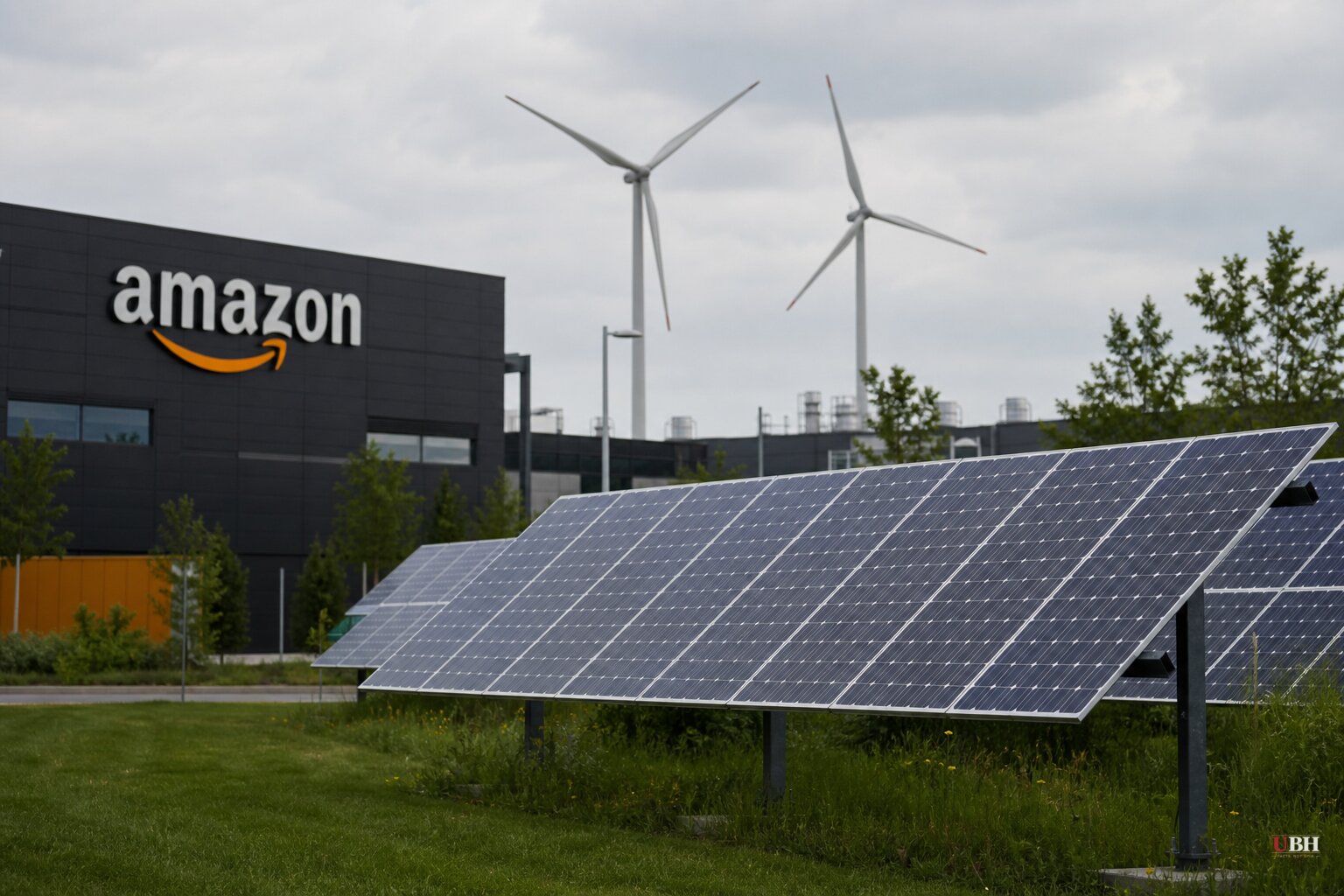
Amazon just told Wall Street it's spending even more on AI. The company raised its 2026 capital expenditure target to roughly $220 billion, up $20 billion from the forecast it gave in February, according to Amazon's second-quarter earnings report and reporting from The Motley Fool and Yahoo Finance. The company blamed rising memory-chip costs for the increase.
For the quarter ended June 30, Amazon reported revenue of $200.6 billion, up 20% year-over-year, beating the $196.5 billion analysts expected, according to data cited by TradingView. Operating income jumped 43% to $27.5 billion. Adjusted earnings per share hit $1.97 against a consensus estimate of $1.82.
GAAP net income came in at $62.6 billion, more than triple last year's figure. But TradingView flagged something important: $53.4 billion of that was a non-cash, non-operating gain from marking up Amazon's equity stake in Anthropic. That's paper gain, not cash flow. Strip it out and the underlying business still grew, just not by triple.
AWS Is Carrying the Load
Amazon Web Services is the real story. Cloud revenue growth has accelerated for five straight quarters, from 17% in Q2 2025 to 37% in Q2 2026, according to TradingView, calling it the fastest growth rate in 18 quarters off a much larger base. AWS operating income rose 64% to $16.6 billion, with margins expanding from 32.9% to 39.4%.
CEO Andy Jassy said AWS's AI business and its custom chip business have each surpassed $25 billion in annualized revenue, both growing at triple-digit rates. AWS's backlog now sits at $496 billion, growing at a triple-digit percentage rate, and much of its 2027 computing capacity is already reserved, with meaningful 2028 capacity locked in too, per TradingView's review of the earnings release.
Why This Matters for Competitors
More than 60% of the cloud computing market belongs to Amazon, Microsoft, and Alphabet, according to The Motley Fool. When Amazon commits $220 billion to infrastructure in a single year, that's not just a spending number. It's a moat. Smaller cloud competitors can't match that capital outlay.
The Cool Down's coverage adds a useful data point: AI spending industry-wide has risen roughly 500% since 2022, based on Census Bureau data cited in that report. Amazon's response to surging demand has been to spend more, not less, and the company has indicated even $220 billion may not be enough capacity to meet what customers want.
The Energy Angle
While Amazon and its hyperscaler rivals pour hundreds of billions into data centers, the U.S. energy grid is undergoing its own transformation to keep up. Clean energy capital spending hit $74 billion in the first half of 2026 and is on track for a record $180 billion by year's end, according to fintech firm Crux's State of Clean Energy Finance report, cited by ZeroHedge via OilPrice.com.
Utility-scale battery storage has reached 52 GW after three straight years of 70% average annual growth, with 8.3 GW added in just the first six months of 2026. Grid operators have another 54 GW of storage queued through 2028.
Crux CEO Alfred Johnson told Politico's E&E News that "the market is proving resilient," adding "we're seeing a significant amount of investment subsequent to the tax law changes of last year." That's notable because this investment is happening despite the rollback of Biden- and Obama-era clean energy tax incentives, not because of new federal support.
NextEra Energy CEO John Ketchum was quoted saying renewables and storage remain "the fastest way to get new electrons on the grid until additional gas-fired generation can be built." That's a practical, not ideological, argument. It's about speed and grid capacity, not climate politics.
ZeroHedge's framing calls this Trump "accidentally overseeing" a renewable buildout, arguing market forces, not government subsidies, are driving the investment. Market data supports this reading. Data center demand from AI hyperscalers like Amazon is the actual driver here, not federal mandates. Whether that counts as accidental or simply proves renewables are now competitive on cost and speed depends on who's telling the story.
What's unresolved is whether the grid can actually keep pace. AWS has reserved most of its 2027 computing capacity already. If new generation, especially gas-fired plants that take years to permit and build, can't come online fast enough, battery storage and renewables may end up bearing more of the AI boom's electricity load than either side currently expects. That question about supply chain and permitting is one investors and ratepayers should be watching closest heading into 2027.
Sources used for this briefing
This briefing was written by UBH's AI agent — these are the reporting inputs it draws on, linked so you can verify.


