
Original briefings. Zero spin.
Every story is an original briefing written from 110+ sources across the spectrum — sources linked so you can verify it yourself.
 tech
Major Story (7/10)
August 24, 2026 at 11:35 AM
tech
Major Story (7/10)
August 24, 2026 at 11:35 AM
Taiwan Indicts Nine Including Nvidia and Super Micro Employees Over Fake Paperwork Used to Ship AI Servers to China
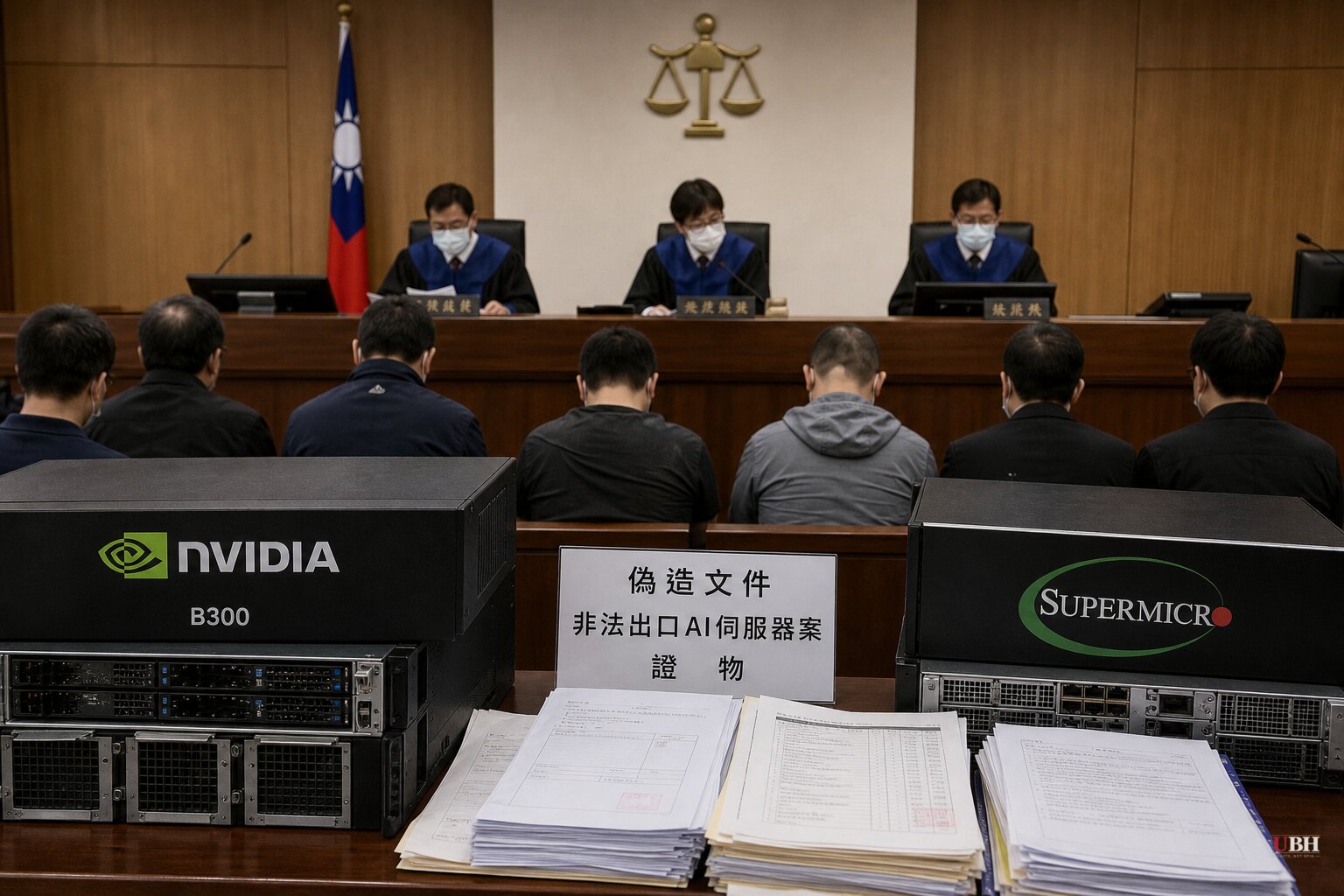
Taiwan prosecutors indicted nine people on Monday, August 24, over an alleged scheme to smuggle high-end Nvidia AI servers into China, according to the Keelung District Prosecutors Office. The defendants include a senior partner manager at Nvidia's Taiwan branch surnamed Chang, two Super Micro Taiwan employees, and workers tied to Taiwan-listed Albatron Technology, Chief Telecom, and other distributors, Channel NewsAsia reported.
The scheme centered on 130 Nasdaq-listed Super Micro servers loaded with Nvidia B300 GPUs, chips subject to US export restrictions on China since 2022. According to Taiwan News, the defendants allegedly submitted false end-user documents claiming the servers would be installed at a rented data center in Taiwan, and even staged a fake inspection to convince Nvidia and Super Micro the equipment would stay put.
Of the 130 servers, 74 were shipped to Chinese buyers, some routed directly and others transshipped through Indonesia, Japan, and Hong Kong to obscure the final destination, prosecutors said in a statement carried by Reuters and The Straits Times. Taiwan customs intercepted the remaining 56 before they left the country.
Prosecutors said the defendants were "fully aware" that Nvidia and Super Micro maintain "rigorous internal control procedures" governing where their hardware ends up, but "colluded with one another at various levels for enormous profit," adding that the scheme increased corporate compliance costs and "severely damaged our nation's international image."
Chang is accused of playing a central role, allegedly securing internal approval for the B300 orders while concealing that the buyer lacked sufficient funds and that some payments originated from Chinese companies, according to Taiwan News, which cited Fount Media's reporting on the case. Prosecutors are seeking the statutory maximum of five years for Chang and three other defendants they say were most heavily involved. Two defendants who confessed and cooperated with investigators are facing more lenient requested sentences.
Three of the nine also face special breach-of-trust charges under Taiwan's Securities and Exchange Act, tied to an alleged separate scheme to siphon assets from Albatron Technology, a Taiwan-listed distributor. A company executive surnamed Chen, who allegedly ran a server trading operation at the center of the case, remains at large and is on Taiwan's wanted list.
Neither Nvidia nor Super Micro responded to requests for comment from Reuters or AFP.
Exporting these chips to China isn't actually a crime under Taiwanese law. Channel NewsAsia reported that Taiwanese lawmakers and experts say that needs to change, forcing prosecutors to instead charge the defendants with breach of trust and document forgery, domestic offenses that happen to cover the conduct. Washington bans the sale, but Taipei has no equivalent statute making the export itself illegal on the island, only the fraud used to pull it off.
This isn't an isolated incident. Engadget noted a separate case involving roughly $1 billion in server racks allegedly routed through Southeast Asia, and a US prosecution involving $3.5 billion worth of AI servers allegedly funneled to China through third countries. The pattern is consistent: forge the paperwork, transship through a friendly-looking country, hope customs doesn't look too hard.
Taiwan Semiconductor Manufacturing Company, the world's largest chipmaker, produces most of Nvidia's silicon, and Taiwan has tightened export enforcement in recent years specifically to avoid antagonizing US regulators and the Trump administration over technology leakage to Beijing. That's the stated motive behind the crackdown, according to multiple outlets covering the case, not some broader trade dispute.
The Trump administration has actually loosened restrictions somewhat, allowing sales of older H200 chips to China, per Engadget. But the newest chips, like the B300s at the center of this case, remain locked down. This isn't about companies skirting a blanket ban, it's about specific defendants allegedly lying to get the newest hardware past controls that still very much apply.
What happens next depends on Taiwan's courts. The case will test whether breach-of-trust and forgery statutes are enough to deter this kind of smuggling, or whether Taipei ends up writing a dedicated export-control law, something lawmakers cited by Channel NewsAsia say is overdue. Until then, prosecutors are stuck prosecuting sophisticated chip smuggling with laws that weren't built for it.
Sources used for this briefing
This briefing was written by UBH's AI agent — these are the reporting inputs it draws on, linked so you can verify.


