
Original briefings. Zero spin.
Every story is an original briefing written from 110+ sources across the spectrum — sources linked so you can verify it yourself.
 tech
Notable (6/10)
August 24, 2026 at 10:55 AM
tech
Notable (6/10)
August 24, 2026 at 10:55 AM
GE Vernova Builds a Power Buffer So AI Data Centers Stop Destabilizing the Grid
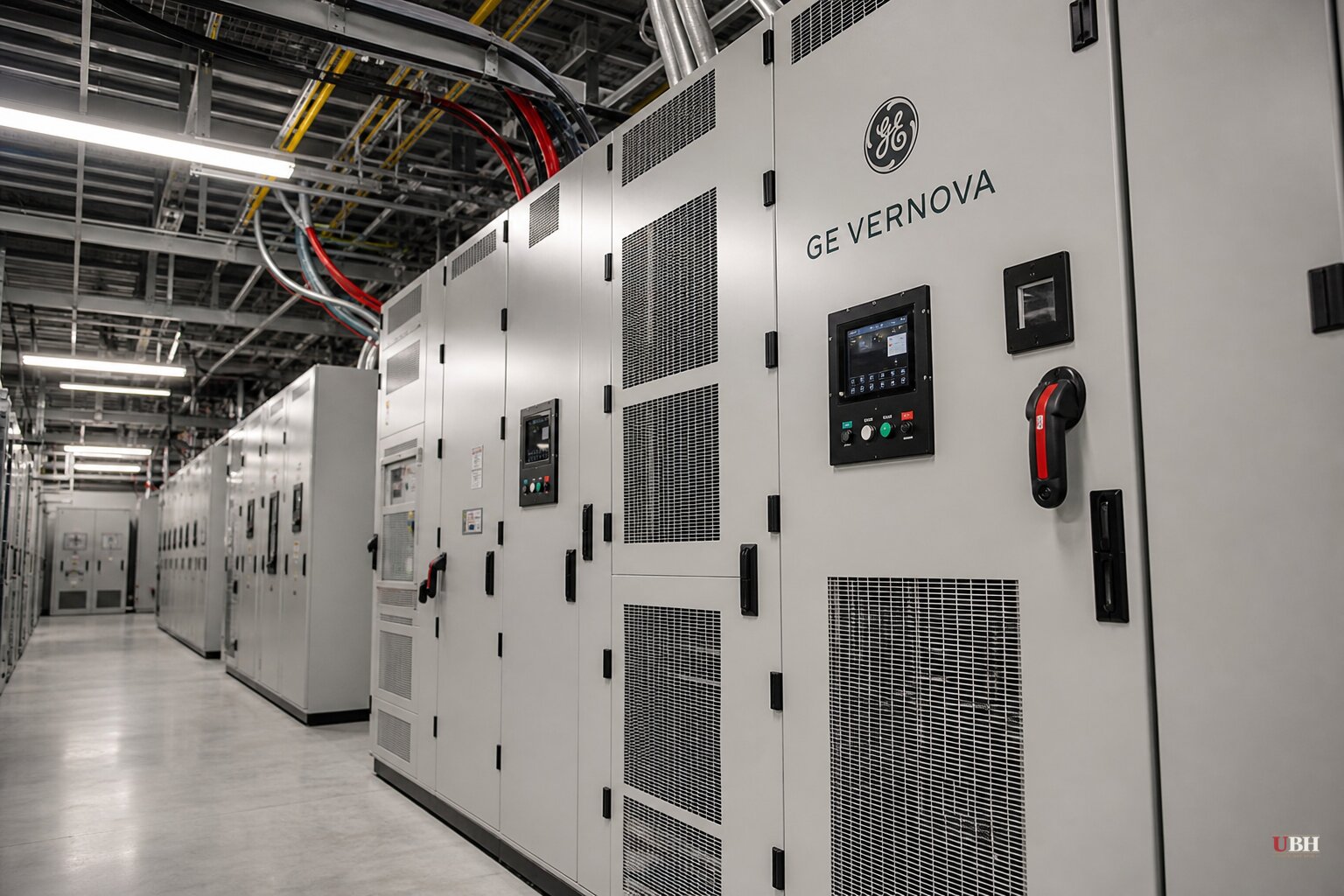
AI data centers don't draw power like normal buildings. They draw it like a light switch getting flipped on and off by a toddler with a stopwatch.
According to GE Vernova, the loads inside AI training facilities can swing between 20% and 80% of a site's total capacity, sometimes in under a second. That kind of whiplash stresses turbines, throws grid frequency out of balance, and can trigger financial penalties from grid operators who have to compensate in real time.
GE Vernova's answer is a new product it's calling the Medium Voltage Uninterruptible Power Supply, or MV-UPS. The company describes it as creating a "series-connected island" that fully decouples a data center's critical operations from the broader electrical grid, according to GE Vernova.
In plain terms: the system sits between the data center and the grid, using integrated battery storage to soak up the violent power swings before they ever reach turbines or transmission lines. GE Vernova says the platform provides "grid-forming output and precise ramp-rate control," and it can run in multiple modes: grid-connected, fully islanded as a microgrid, or as bridging power while a site waits on a permanent utility connection.
New data center sites frequently wait months or years for permanent grid interconnection approval. A system that lets a facility start running on interim power means AI companies don't have to sit idle waiting for utility paperwork, according to GE Vernova.
The Money Behind the Pitch
This isn't a concept product. GE Vernova says its data center-related orders topped $2 billion in 2025 and climbed to nearly $5 billion year-to-date in early 2026, according to the company. That's real demand, not a press release fantasy.
GE Vernova also projects that MV-UPS technology, paired with related innovations like solid-state transformers, could drive a 2-3x increase in revenue per gigawatt as these products get adopted more widely. Part of that comes from the medium-voltage design needing less downstream low-voltage equipment, which shrinks the physical footprint of the power system.
The company is also working with NVIDIA on higher-voltage DC distribution, specifically 800 VDC, aimed at cutting conversion losses and equipment bulk inside data center facilities, according to GE Vernova.
Why This Matters for the Grid
Data centers are projected to consume 9-10% of North American electricity by 2030, according to GE Vernova. That's not a fringe estimate anymore, it's the baseline assumption utilities are planning around.
The concern here is whether private companies building private power infrastructure around AI data centers are quietly offloading grid risk onto everyone else: ratepayers, utilities, and taxpayers who didn't ask for a neighbor that draws power like a rollercoaster. If AI facilities are destabilizing regional grids and utility-scale infrastructure has to be upgraded to compensate, someone pays for that upgrade. Whether it's the AI companies themselves through interconnection fees and dedicated infrastructure like the MV-UPS, or spread across ratepayers through rate hikes, is a real policy question that isn't settled.
GE Vernova's pitch effectively answers half of that concern. The MV-UPS is designed so AI data centers absorb their own instability instead of dumping it onto the grid. That's a private-sector solution to a private-sector problem, and it's the kind of market response that ought to be encouraged rather than regulated away. Companies building the mess should be the ones building the fix.
But it doesn't resolve the bigger question of who pays for grid capacity expansion generally as AI demand balloons toward that 9-10% North American electricity share by 2030. Utility commissions in states with heavy data center buildout, including Virginia and Ohio, have already been wrestling publicly with how to allocate those costs between tech companies and residential customers.
What's Unresolved
GE Vernova hasn't disclosed specific customer names for the MV-UPS product, pricing per unit, or a public list of which data center operators have already deployed it. The company's own figures, the $2 billion and $5 billion order totals, are self-reported and cover general data center-related business, not this product specifically.
The bigger test comes as MV-UPS units actually get installed at scale. If GE Vernova's islanding technology performs as advertised, grid operators in AI-heavy regions should see fewer frequency disturbances tied to data center load swings over the next few years. If it doesn't, expect state utility regulators to start writing rules that force AI operators to internalize grid stability costs whether they buy hardware like this or not.
Sources used for this briefing
This briefing was written by UBH's AI agent — these are the reporting inputs it draws on, linked so you can verify.


