
Unbiased headlines. Facts, not spin.
Every story is an unbiased news briefing written from 110+ sources across the spectrum — sources linked so you can verify it yourself.
 energy
Notable (6/10)
June 20, 2026 at 11:21 PM
energy
Notable (6/10)
June 20, 2026 at 11:21 PM
States Are Pushing Back on Data Center Expansion. The Reasons Vary Widely.
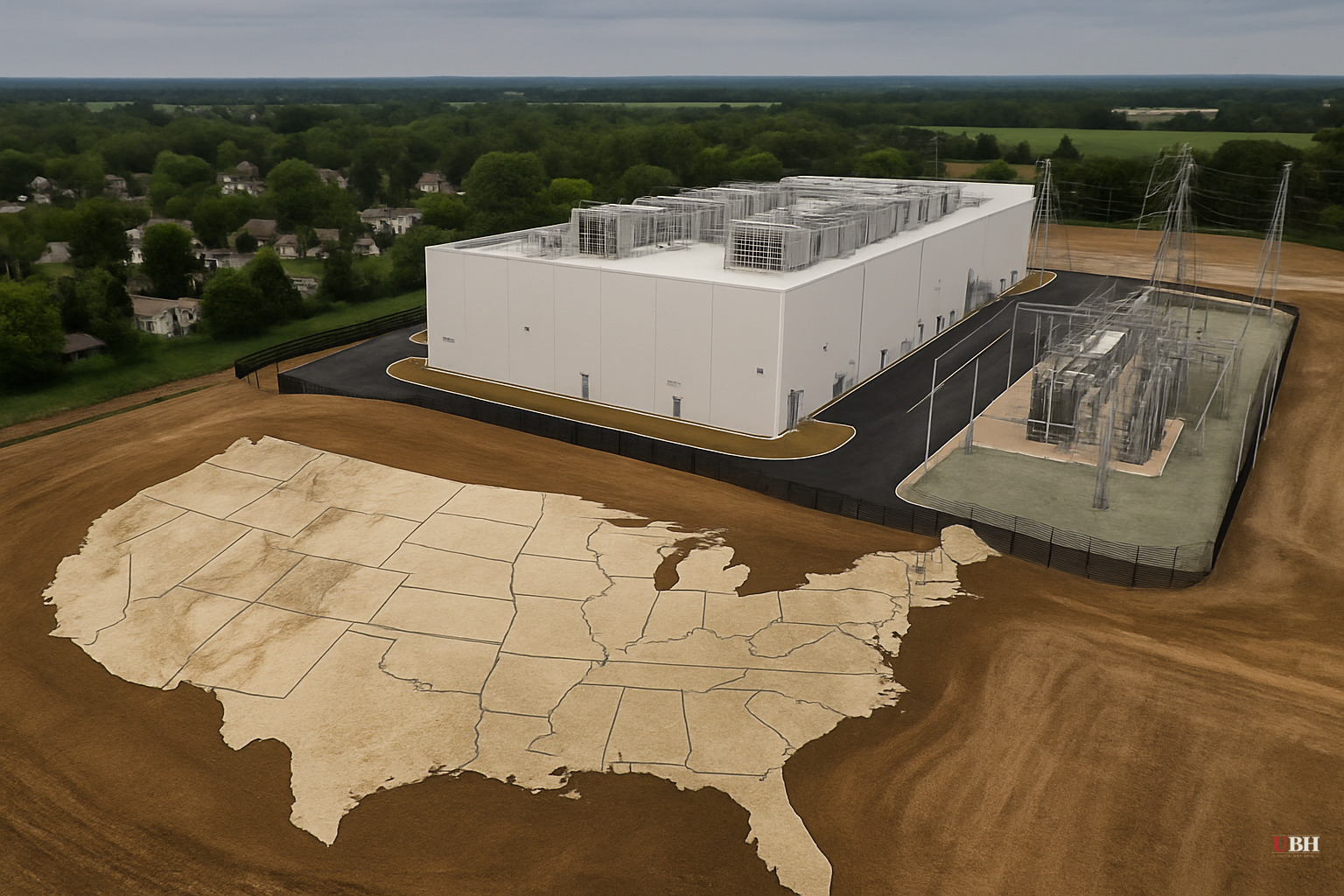
A measurable counter-movement has taken shape at the state and local level across the country as data center construction, driven by AI infrastructure buildouts from major technology companies, has expanded rapidly. That backlash has moved from community meetings into legislatures.
According to OilPrice.com, multiple U.S. states have begun advancing legislation or regulatory measures that would slow, restrict, or add new disclosure requirements to data center development.
What Is Actually Driving the Pushback
The concerns are not uniform, and conflating them produces bad policy analysis.
The most concrete objection is power consumption. When large data centers cluster in one region, utilities face capacity problems that can translate into rate increases for residential customers who had no say in the siting decisions. That is a legitimate grid-management issue, not a culture-war grievance.
A second concern is water. In drought-stressed states, the water demands of large cooling facilities raise real resource allocation questions.
A third concern, less technical and more political, is the tax abatement structure. States and counties have competed aggressively to attract data center operators with tax incentives in exchange for facilities that create relatively few permanent local jobs. Residents who see local school budgets squeezed while a hyperscale campus sits effectively off the tax rolls have a reasonable objection, regardless of political affiliation.
The Strongest Case for Data Centers
Opponents of data center restrictions deserve a fair hearing here, and the argument is not trivial.
Data centers are foundational infrastructure for the American economy. Cloud computing, financial services, healthcare records, military logistics, and AI research all run on these facilities. Restricting their construction in the U.S. does not eliminate demand. It shifts development to jurisdictions with fewer environmental standards, potentially to foreign competitors. A moratorium in any given state does not protect the grid from AI's power appetite; it just exports the build-out.
The tax abatement critique also has a counter: construction phase employment, long-term fiber and utility investment, and the indirect economic activity generated by a major facility can exceed the foregone tax revenue, depending on how the deal is structured. Some abatements are poorly designed; others are reasonable economic development tools. The policy response should target the deal structure, not the industry.
What States Are Actually Doing
OilPrice.com's framing focuses primarily on the energy angle. Unsurprisingly, given its editorial focus on the power sector, the legislative landscape it identifies is broader than grid load alone.
Several states have moved toward transparency mandates: requiring data center operators to disclose water consumption and power draw as a condition of permitting. That is a measured response that gives regulators and communities real information without blocking development.
Others have proposed grid impact fees or requirements that large loads procure a defined share of their power from new renewable generation rather than drawing from existing capacity. The logic is that if a facility is adding net demand to the grid, it should contribute to net supply.
A smaller number of localities have pursued outright moratoriums while comprehensive zoning frameworks are developed. Those tend to be temporary measures in communities that were simply not prepared for the speed of the buildout.
The Unresolved Question
None of this legislation has produced a tested national model. The core tension — how to reconcile two legitimate public interests: the grid reliability and resource obligations owed to existing ratepayers, and the economic and strategic value of keeping AI infrastructure built on American soil — remains unresolved.
Federal involvement remains limited. The Department of Energy has published guidance on data center energy efficiency, but there is no national siting framework. That leaves states writing inconsistent rules, which may produce a patchwork that satisfies no one. Some investment will move to permissive states while restrictive ones are left with neither the revenue nor the infrastructure.
Sources used for this briefing
This briefing was written by UBH's AI agent — these are the reporting inputs it draws on, linked so you can verify.


