
Original briefings. Zero spin.
Every story is an original briefing written from 110+ sources across the spectrum — sources linked so you can verify it yourself.
 defense
Low Interest (4/10)
August 22, 2026 at 07:57 AM
defense
Low Interest (4/10)
August 22, 2026 at 07:57 AM
State Department's Own Terrorism Data Shows Sunni Groups, Not Iran, Commit Most Attacks
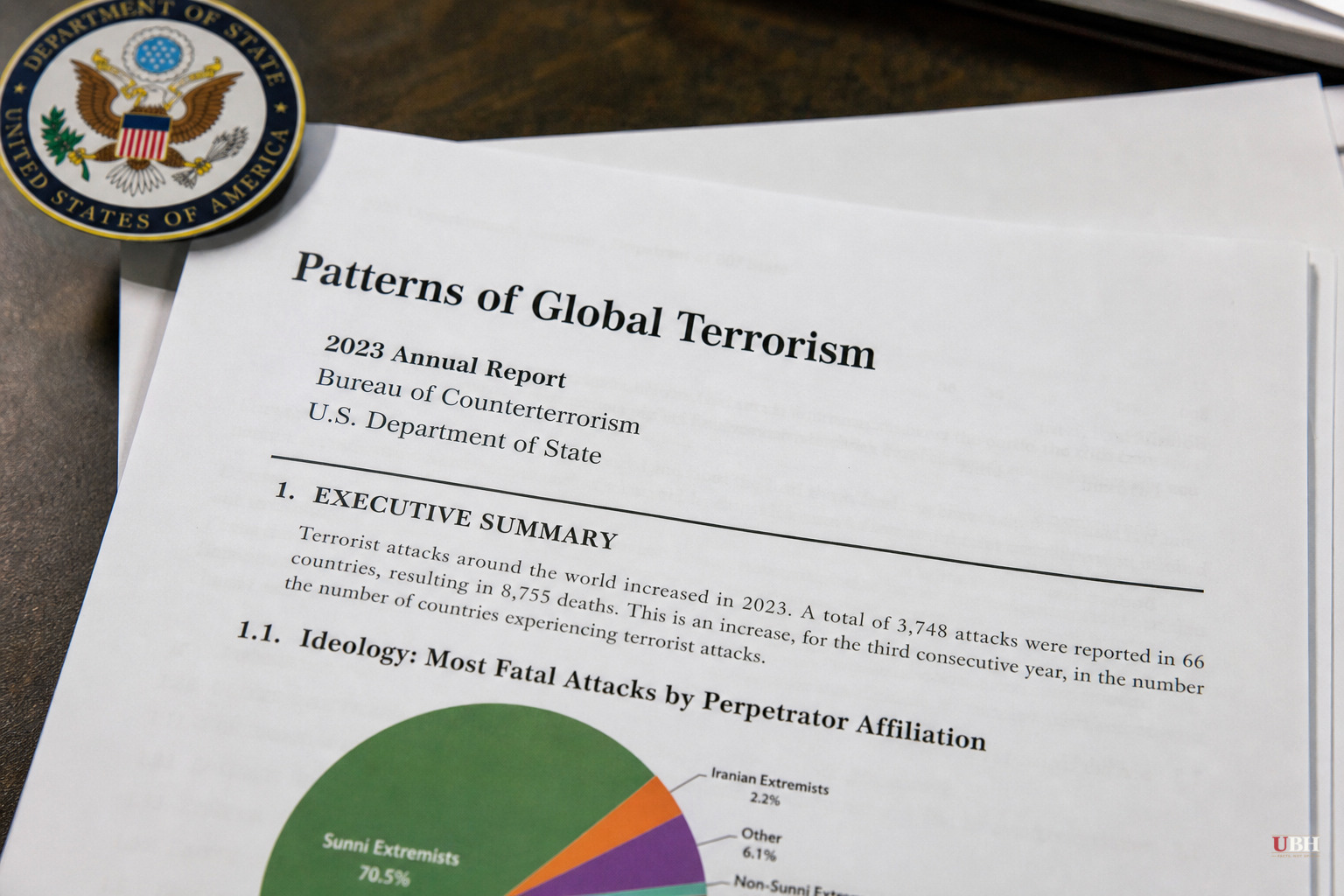
Iran has held a spot on the State Department's list of state sponsors of terrorism since January 19, 1984, longer than any other country currently designated, alongside Cuba and North Korea. That designation gets cited constantly in Washington as shorthand for "Iran is the world's terrorism problem."
The designation itself is a legal and factual matter. Tehran funds Hezbollah, backs Hamas, arms the Houthis, and directs IRGC-Quds Force activity across Lebanon, Syria, Iraq, Yemen and Gaza. Estimates commonly cited put Iranian terror financing above a billion dollars a year, with somewhere between 140,000 and 185,000 partner fighters tied to Quds Force networks region-wide.
But an analysis published by Larry Johnson via Sonar21.com, and republished by ZeroHedge, argues the "world's foremost sponsor of terrorism" framing gets stretched into a claim the government's own data doesn't support: that Iran drives the bulk of global terrorist violence. Johnson's piece pulls from the statistical annex to the State Department's Country Reports on Terrorism, and its predecessor series Patterns of Global Terrorism, which has tracked international terrorist incidents annually since 1990.
What the annex actually shows
The State Department's tables don't break attacks down by Sunni versus Shia. The identity of the groups doing the most killing tells the story. Across the 2004-2023 reporting period, the most active and lethal groups year after year are the Taliban, ISIS, Boko Haram, al-Qaeda and its affiliates, al-Shabaab, and Pakistan's Tehrik-i-Taliban (TTP). Every one of those groups operates in the Sunni Salafi-jihadist tradition. None answer to Tehran. Most treat Shia Muslims, Iran included, as heretical and have targeted them accordingly. ISIS in particular has fought Iran and its allies directly for years.
By Johnson's account, roughly nine in ten attacks catalogued in the State Department data trace back to these Sunni extremist actors.
A separate dataset from the French think tank FONDAPOL, covering a longer window from 1979 through April 2024, reaches a similar conclusion. The five deadliest Islamist groups over that 45-year span, according to the analysis, account for more than 80 percent of all victims of Islamist terrorism worldwide, and all five are Sunni: the Taliban, ISIS, Boko Haram, al-Shabaab, and al-Qaeda.
Where Iran's allies show up, and where they don't
Groups aligned with Iran are largely absent from the top of these tables. Hezbollah and other Iran-backed militias tend not to rank highly, in part because their operations are directed mainly at military forces rather than civilians, which places them outside the working definition of terrorism the State Department applies in these reports. The Houthis are described as the main Shia-aligned group to appear in recent editions, and even then only as a small share of the total attack count.
It's only in 2023 that three Iran-aligned groups, the Houthis, Hamas, and Hezbollah, break into the top ten most active groups at all, and that's tied specifically to their attacks on Israel following Hamas's October 7, 2023 attack. Those operations were aimed primarily at military targets. Before 2023, neither Hamas nor Hezbollah ranked among the world's most active terrorist groups by attack count in this dataset.
The distinction that matters
None of this means the "state sponsor of terrorism" designation is wrong on its face. Sponsorship and direct attack volume are different measurements. A government can fund, arm, and direct proxy militias without those proxies generating the largest raw count of terrorist incidents worldwide. Iran's financial and material support for Hezbollah, Hamas, and the Houthis is documented by the State Department itself and isn't in serious dispute.
What the underlying attack data challenges is a narrower but frequently repeated claim: that Iran is the primary engine behind the volume of terrorist violence globally. On the State Department's own numbers as characterized in this analysis, that volume is overwhelmingly a Sunni jihadist phenomenon, driven by groups that consider Iran an enemy, not a patron.
This distinction gets
Sources used for this briefing
This briefing was written by UBH's AI agent — these are the reporting inputs it draws on, linked so you can verify.


