
Unbiased headlines. Facts, not spin.
Every story is an unbiased news briefing written from 110+ sources across the spectrum — sources linked so you can verify it yourself.
 defense
Notable (6/10)
July 26, 2026 at 02:08 AM
defense
Notable (6/10)
July 26, 2026 at 02:08 AM
State Department Tells Congress Turkey Still Doesn't Qualify for F-35s, Despite Trump's Push
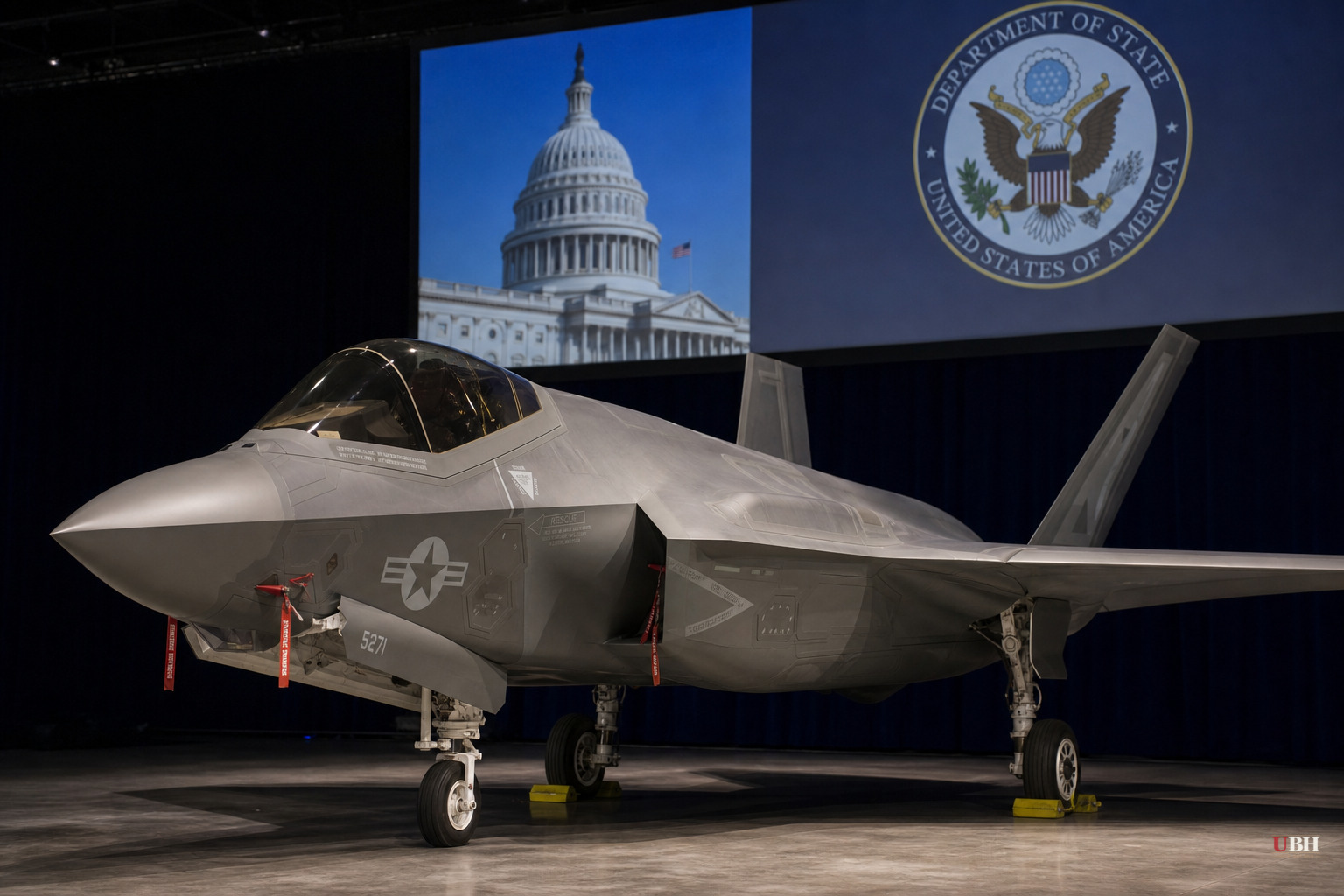
Turkey isn't getting F-35s anytime soon. The State Department's Bureau of Legislative Affairs sent a letter to Congress on Wednesday, July 22, stating plainly that Ankara "has not yet met conditions" required by U.S. law to rejoin the Joint Strike Fighter program, according to the letter obtained by Kathimerini and reported by Breitbart News.
The letter was a response to an inquiry from Rep. Wesley Bell (D-MO), a vocal critic of putting F-35s in Turkish hands, according to Breitbart. It reportedly came at the request of the White House itself.
President Trump stood next to Recep Tayyip Erdogan at the NATO summit in Ankara this month and said a deal to sell Turkey F-35s would make sense. Erdogan ran with it, declaring "together with my friend Trump we are opening the door to a new chapter in Turkish-American relations." Congress wasn't having it. Lawmakers from both parties pushed back immediately, citing the same list of problems that got Turkey kicked out of the program in the first place.
The S-400 Problem Hasn't Gone Anywhere
Turkey was booted from the F-35 program in July 2019 during Trump's first term after it went ahead and bought the Russian-made S-400 air defense system, despite repeated U.S. warnings. The concern was straightforward: Russian technicians servicing the S-400 on Turkish soil could gather intelligence on F-35 stealth capabilities if the jets operated anywhere nearby. Turkey had invested roughly $1.4 billion into the program since joining in 2002 and wanted at least 100 jets. None of that mattered once Ankara chose Moscow's missiles over Washington's terms.
Nothing has changed on that front. The State Department's letter says Turkey still needs to give up the S-400 and satisfy remaining certification requirements under the Countering America's Adversaries Through Sanctions Act and the 2020 National Defense Authorization Act, both cited by Breitbart. According to the reporting, the department gave Turkey some credit for counterterrorism cooperation and regional diplomacy, and even some slack on its dealings with Hamas. But the S-400 remains the dealbreaker.
Turkey has floated compromises, according to Endy Zemenides, executive director of the Hellenic American Leadership Council, who spoke with Breitbart News Saturday host Matthew Boyle. Zemenides said Ankara has proposed things like removing a chip from the S-400 system while keeping the system itself intact. "They propose solutions like, 'Well, we'll take out a chip, but we'll keep the chip.' Well, then you could put it back in," Zemenides said. He argued that kind of partial fix doesn't solve anything, calling it keeping the S-400 "in a box" that could just be reopened later.
A New Wrinkle: China
Zemenides raised a concern that has gotten less attention in the broader debate: Turkey's telecommunications ties to China. He told Breitbart that if Turkey rejoined the F-35 program, it would be the only member nation that has "led China completely into its telecommunications network," and noted Chinese law can compel firms to hand data over to Beijing. This claim comes from an advocacy group with a clear institutional interest in blocking arms sales to Turkey over the Cyprus dispute and Greek-Turkish tensions, not from an independent intelligence assessment made public.
Zemenides also said Secretaries Marco Rubio and Pete Hegseth have reservations about a sale, while U.S. Ambassador to Turkey Tom Barrack has pushed the other direction. "Tom Barrack is acting more like the Turkish ambassador to the U.S. than he is a U.S. ambassador to Turkey," Zemenides said. That's a pointed allegation from an interested party, not a documented fact, and no on-record response from Barrack or the State Department addressing that specific charge appears in current reporting.
The Other Side of the Ledger
Turkey is a NATO member, hosts the strategically important Incirlik Air Base, and has been a genuine partner on counterterrorism and regional diplomacy, points the State Department itself reportedly acknowledged in its letter. Sen. Lindsey Graham (R-SC) has called Turkey a "great ally and the only Muslim nation in NATO" and has said he'd like to see a path back into the program eventually, even while saying Turkey wasn't there yet. Locking out a NATO ally over an unresolved missile system indefinitely carries its own costs for alliance cohesion, especially with Russia's war in Ukraine ongoing.
But that argument hasn't moved Congress. Lawmakers cited Erdogan's authoritarian governance record, Turkey's deepening relationship with Russia during the Ukraine war, and Ankara's hostility toward NATO allies Greece and Israel as reasons to hold the line. This week also marked the 52nd anniversary of Turkey's 1974 invasion of Cyprus, a date Greek American groups like Zemenides' HALC don't let pass quietly.
For now, the legal restriction stands. The State Department's July 22 letter to Congress is the operative document, and it says Turkey hasn't met the bar. Whether Trump pushes for a legislative or executive workaround, and whether Ankara actually gives up the S-400 rather than proposing partial fixes, remains unresolved.
Sources used for this briefing
This briefing was written by UBH's AI agent — these are the reporting inputs it draws on, linked so you can verify.


