
Unbiased headlines. Facts, not spin.
Unbiased Headlines is an independently owned news organization. We bring you the facts, not opinions, written fresh from 110+ named sources. Sources linked so you can verify it yourself.
 politics
Notable (6/10)
politics
Notable (6/10)
State Department Task Force Has Revoked Over 600 Visas in Birth Tourism Crackdown
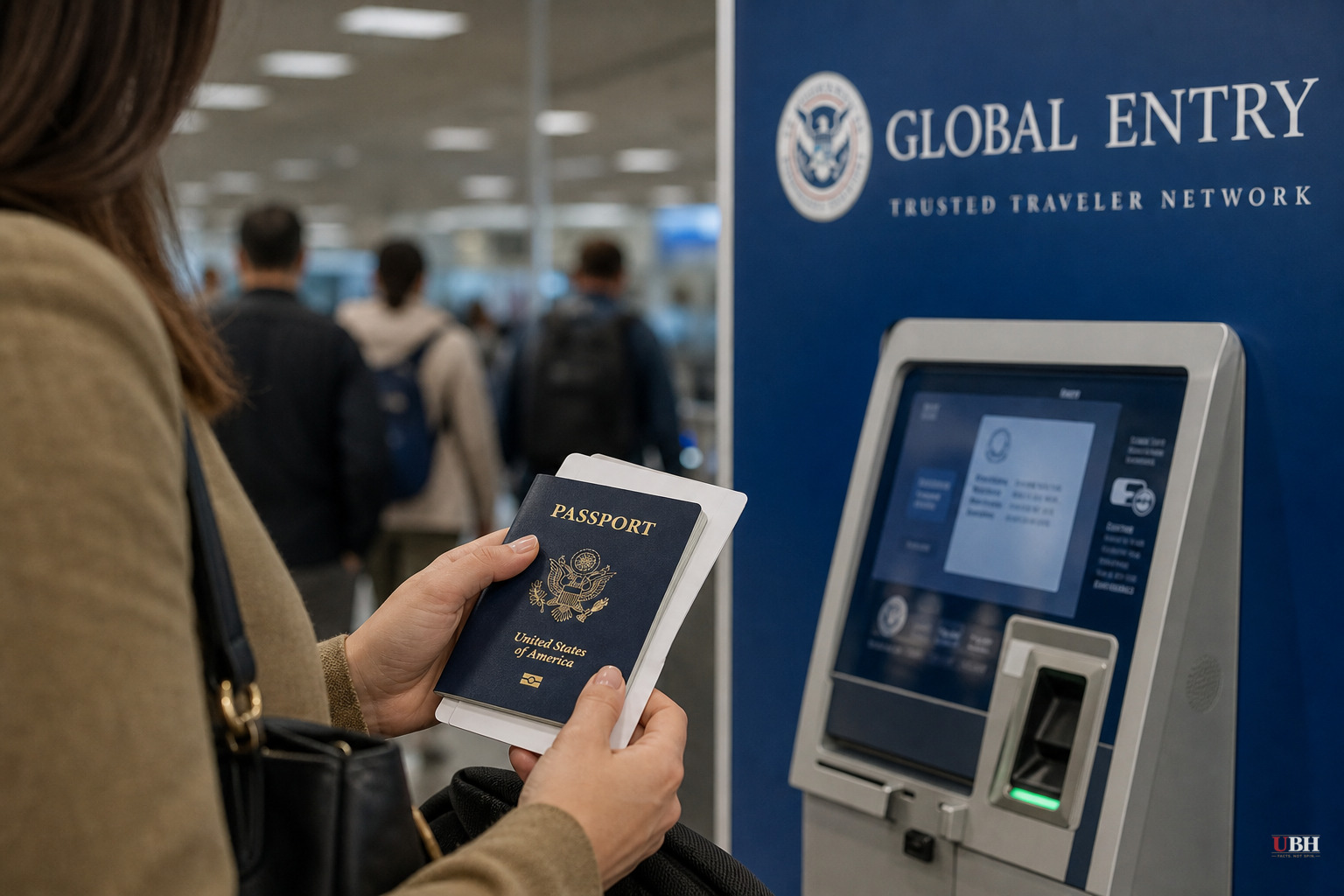
Secretary of State Marco Rubio announced this week that the State Department's Birth Tourism Prevention Task Force has revoked more than 600 visas from foreign nationals in its first month of operation, according to Breitbart News. The task force was created to hunt down organized rings that help foreigners come to the U.S. specifically to give birth and secure citizenship for their children.
Rubio didn't mince words. "American citizenship is not for sale," he said in a post on X, adding that birth tourism rings are "coaching foreigners to defraud the U.S. visa system, arranging travel and housing, and even forging documents."
The task force isn't just yanking visas one at a time. According to the State Department's press release, it's cross-referencing data across federal agencies to identify patterns, dismantle the businesses profiting from birth tourism, and make sure nonimmigrant visa holders are actually using their visas for the purpose they were issued.
This builds on two executive orders President Trump signed earlier in his term. One order lists categories of children born to noncitizens who the administration argues are not entitled to automatic birthright citizenship, citing historical exceptions the Supreme Court recognized in prior rulings. The second order pushes the Secretary of State and Secretary of Homeland Security to specifically shut down birth tourism.
But the broader swing at birthright citizenship already hit a wall. In June, the Supreme Court ruled 6-3 against Trump's attempt to reinterpret the 14th Amendment's citizenship guarantee, according to Breitbart's own reporting. The task force's visa-revocation campaign is operating in the space the courts left open: going after fraud and abuse in the visa system itself, not trying to redefine who counts as a citizen at birth.
Revoking a visa from someone who lied about the purpose of their trip, or who worked with a paid network to falsify documents, is a fraud-enforcement action. Reinterpreting birthright citizenship for babies born on U.S. soil is a constitutional fight the administration already lost at the Supreme Court.
The crackdown lands amid a much wider and more contentious immigration enforcement push that's generating real friction across the country. The American Immigration Council, a nonprofit immigrant-advocacy group, reported this week that mass deportation operations are producing measurable mental health strain on immigrant and mixed-status families. The group cited an estimated 205,000 children who have experienced the detention of a parent or caregiver, and said nearly 17,900 people detained by ICE in Fiscal Year 2026 self-reported as parents of U.S. citizen children, almost double the Fiscal Year 2024 figure.
Those numbers come from an advocacy organization with an explicit position against the administration's enforcement approach, so they should be read as one side's accounting rather than an independent audit. The underlying claim that detentions are separating parents from citizen children at a rising rate is a specific, checkable assertion that deserves scrutiny either way.
Democrats in Congress are pushing back through legislation, not just messaging. Senator Michael Bennet of Colorado, Senator Mazie Hirono of Hawaii, and Representative Judy Chu of California introduced the Protect American Values Act this week, aiming to block federal funding for implementing the administration's finalized "public charge" rule, which is scheduled to take effect September 18, 2026. That rule would make it harder for immigrants who use certain government benefits to get green cards.
Chu argued the rule gives immigration officers "sweeping discretion to deny green card applications based on subjective judgment instead of clear legal standards," because it doesn't specify which benefits count against an applicant. A rule that doesn't define its own terms clearly invites inconsistent enforcement. Whether the finalized rule actually lacks that clarity, or whether Democratic critics are overstating the ambiguity for political effect, isn't resolved by the press release alone.
Meanwhile, the political fallout from enforcement operations is playing out in real elections. The Associated Press reported that Minnesota's Democratic Senate primary this week turned partly on how U.S. Representative Angie Craig handled a monthslong ICE deportation campaign in Minneapolis, one that included the fatal shootings of two protesters, Renee Good and Alex Pretti, before Trump pulled back the operation under pressure. Craig's rival, Lieutenant Governor Peggy Flanagan, hammered her for initially backing tighter enforcement before Craig later said she regretted the vote.
The birth tourism task force and the public charge rule are separate policy tracks, but both are testing the same question: how far the administration can push visa and immigration enforcement without a repeat of the legal setback it took on birthright citizenship in June. The public charge rule's September 18 effective date is the next concrete checkpoint, and legal challenges to it, along with any further legal challenges to the birth tourism enforcement actions, are the next things worth watching.
Sources used for this briefing
4 links from 4 independent newsrooms (syndicated copies of the same report count once)
These are the sources it draws on, linked so you can verify.


