
Unbiased headlines. Facts, not spin.
Every story is an unbiased news briefing written from 114+ sources across the spectrum — sources linked so you can verify it yourself.
 politics
Major Story (8/10)
August 14, 2026 at 02:12 AM
politics
Major Story (8/10)
August 14, 2026 at 02:12 AM
DHS Ran Undercover Operation on Minneapolis ICE Protesters, Court Filings Show
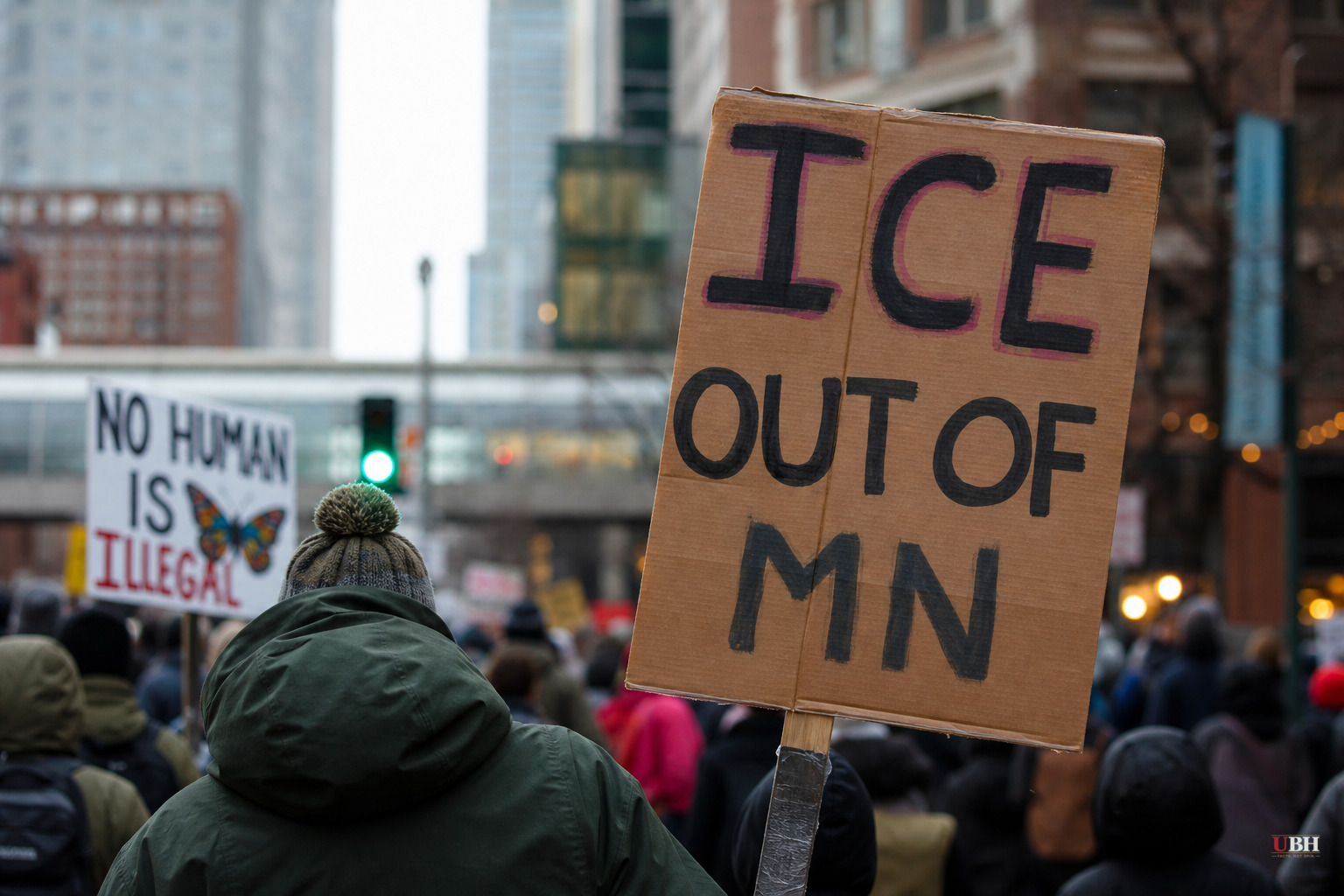
Federal court filings unsealed Thursday show the Department of Homeland Security ran a sprawling surveillance operation against people protesting ICE's immigration enforcement in Minnesota, sending undercover agents into community meetings and church services and pulling financial records on major unions and left-leaning nonprofits.
The documents were submitted as part of the Department of Justice's criminal case against 15 people the government accuses of conspiring to impede ICE agents during what DHS called "Operation Metro Surge," an immigration enforcement push in the Twin Cities region. Attorney Kevin Riach, who represents one of the defendants, filed roughly 30 internal DHS reports in federal court, according to the Guardian.
The surveillance campaign, internally named "Operation Puppet Master," began in January, according to the Guardian. Democracy Docket reports the investigation started four days after Border Patrol agents fatally shot 37-year-old nurse Alex Pretti in Minneapolis, one of two killings, along with that of Renee Good, that fueled a surge in organizing against ICE in the region.
DHS said the operation targeted a "network of conspirators" providing "material support to violent opportunists and agitators," per an internal February report cited by the Guardian. But the documents show agents surveilling activity that looks like ordinary protest organizing: community meetings, encrypted group chats, union halls, libraries, and at least one church, Zion Lutheran, according to Democracy Docket.
DHS says it was hunting people planning violence and property destruction amid real unrest. The defense attorneys say what agents actually recorded was people "exercising their First Amendment right to protest," in the words of the court filing cited by Democracy Docket. Some individuals may have crossed into criminal conduct, while the dragnet swept up a much larger group engaged in constitutionally protected activity. The unresolved question is where DHS drew that line, and the filings suggest it drew it very broadly.
Investigators flagged the AFL-CIO, the Service Employees International Union, the Minneapolis Federation of Educators, the Minnesota Association of Professional Employees, the Democratic Socialists of America, and Showing Up for Racial Justice as connected to the alleged conspiracy, according to the Guardian. None of those organizations have been charged with any crime.
Democracy Docket reports DHS kept up the surveillance for months after the Trump administration ended the Twin Cities immigration surge in February, and that investigators misidentified at least one of the 15 defendants using AI software. Riach told the Guardian he was "shocked at the scope and the apparent lack of investigative discipline involved, but not totally surprised." DHS did not respond to press inquiries and the DOJ declined to comment, according to the Guardian.
This fits a pattern that goes beyond Minnesota. ICE has spent more than $525 million on surveillance technology since the start of Trump's second term, including private contracts to monitor and unmask online critics, according to a Wall Street Journal report cited by Reason. Contractors working for ICE's Office of Professional Responsibility compile daily reports on people flagged as online "threat originators," gathering names, birthdates, workplaces, Social Security numbers, and vehicle registrations, per the Journal's reporting.
DHS told the Journal this is about protecting agents from doxxing and targeting "credible threats of violence." That's a legitimate government interest, and nobody serious argues ICE agents should be doxxed or threatened. But Reason points to a case where ICE sought to unmask a Reddit user who posted things like "ACAB" and "abolish ICE" through an administrative subpoena, later escalating to a grand jury subpoena after the platform notified the user and he fought back. Attorney Lauren Regan told the Journal, "as far as I can tell, all of this is about people saying naughty things about ICE and immigration enforcement."
Those posts are ugly and inflammatory. They are also, under decades of First Amendment case law, protected political speech, not "true threats" in the legal sense unless they express serious intent to commit actual violence. A government subpoena chasing down the identity of someone who posted a slogan is a different animal than an investigation into someone planning an attack, and the documents so far show DHS treating the two as interchangeable.
Coverage from outlets like snjtoday has framed Trump's immigration approach as echoing the restrictionist 1920s, but with one real difference: those quotas went through Congress. What's happening in Minnesota isn't a legislative debate over quotas. It's executive-branch agencies using subpoenas, undercover agents, and AI-driven monitoring against American citizens engaged in protest, without a criminal charge to show for it against the groups named.
The 15-defendant case is still active in federal court, and the surveillance records are now part of that public record because a defense attorney filed them, not because DHS disclosed them voluntarily. No investigation, charge, or finding of wrongdoing has been announced against the AFL-CIO, SEIU, DSA, SURJ, or the other named organizations. The open question is whether a federal judge will address the scope of the surveillance as part of the prosecution, and whether Congress moves to conduct oversight of an operation run entirely through executive agency discretion.
Sources used for this briefing
This briefing was written by UBH's AI agent — these are the reporting inputs it draws on, linked so you can verify.


