
Unbiased headlines. Facts, not spin.
Every story is an unbiased news briefing written from 110+ sources across the spectrum — sources linked so you can verify it yourself.
 defense
Major Story (8/10)
September 18, 2026 at 05:57 AM
defense
Major Story (8/10)
September 18, 2026 at 05:57 AM
State Department Clears $24.3 Billion F-35 Sale to Saudi Arabia, Starting 30-Day Congressional Clock
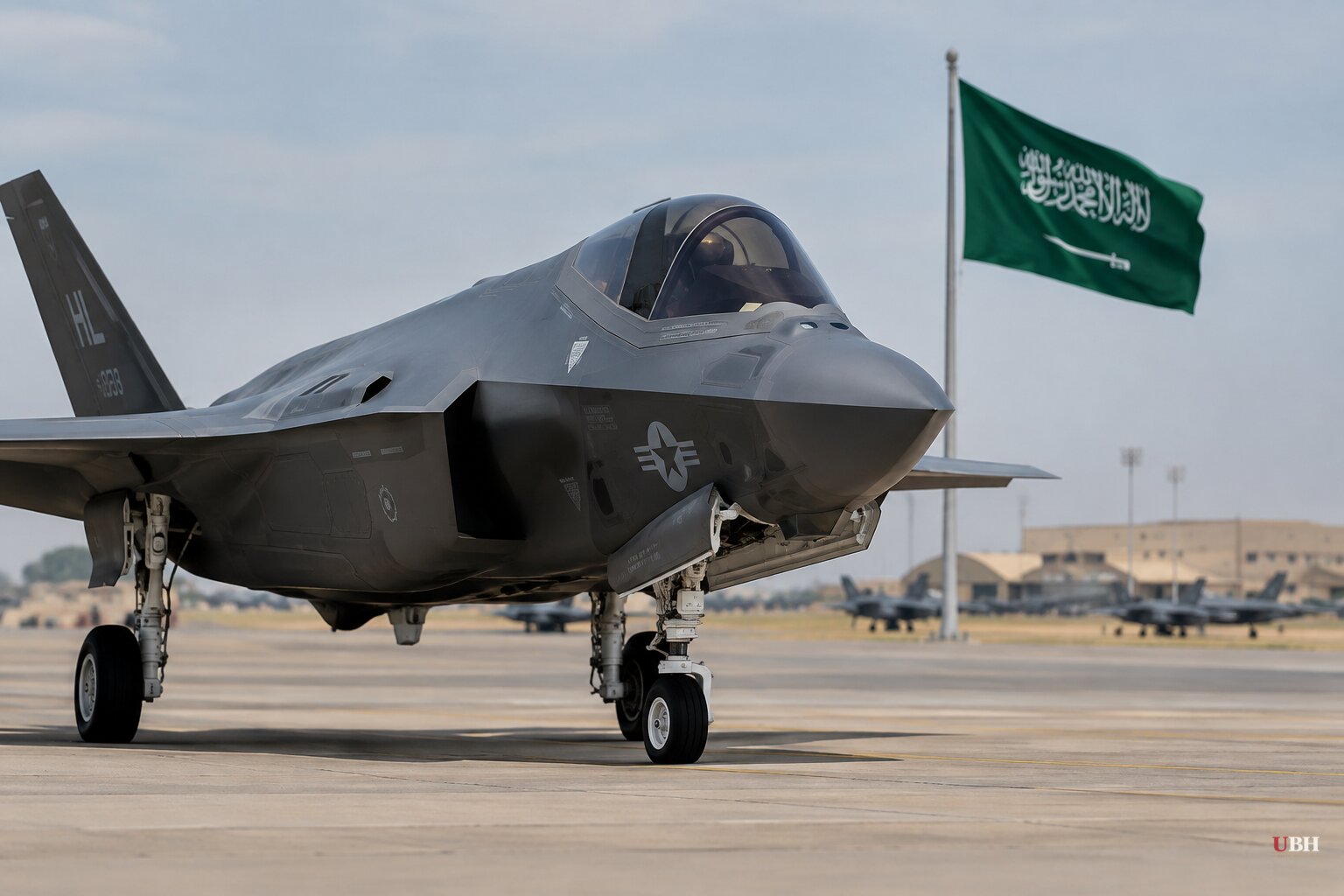
Since Iran's war with Saudi Arabia and the Gulf escalated enough to knock out a major Saudi oil pipeline and draw an Iranian strike on a tanker in the Strait of Hormuz, as reported today, Riyadh has been pushing hard for better weapons. On Thursday, September 17, it got the biggest one yet.
The State Department notified Congress of a proposed Foreign Military Sale of up to 48 F-35A Lightning II jets to Saudi Arabia, along with 49 Pratt & Whitney F135-PW-100 engines, one spare, according to the State Department's own notice. The package is valued at up to $24.3 billion and includes secure communications gear, cryptographic equipment, electronic warfare support, simulators, training and logistics support.
Congress now has 30 days to review the deal and, if it chooses, pass a joint resolution of disapproval to block it, according to Al-Monitor. Trump could veto that resolution, which would then require a two-thirds majority in both chambers to override. Prices and quantities can still shift before a final contract is signed.
Why Saudi Arabia wants it now
Saudi Arabia's air force currently flies a mix of aging F-15s, European Tornados and Eurofighter Typhoons, according to Reuters. The Times of India reported that Yemen's Houthi movement claimed on September 16 to have shot down a Royal Saudi Air Force F-15 over Marib governorate, releasing video of wreckage bearing Saudi markings. Riyadh has not confirmed the loss. If verified, it would be the second US-built F-15 downed by hostile fire and, by the Times of India's count, possibly the fifth Strike Eagle lost in the region this year.
That timing matters, but the deal itself is not a reaction to one shootdown claim. Trump first pledged the F-35 sale to Crown Prince Mohammed bin Salman during a White House meeting in November 2025, as part of a broader Strategic Defense Agreement, according to Al-Monitor and Crypto Briefing. It follows a 2025 arms package worth nearly $142 billion that the White House called the largest defense cooperation agreement it has ever completed, per Reuters.
Israel's edge, and China's shadow
Israel is currently the only country in the Middle East operating the F-35, and US law requires Washington to weigh Israel's "qualitative military edge" before approving advanced arms sales to other regional states, according to Reuters and LiveMint. The State Department's own notice states the sale "will not alter the military balance in the region," language multiple outlets, including NDTV and Politico, flagged as a direct answer to Israeli objections.
Israeli officials have previously raised concerns about handing the jet to Saudi Arabia, and Politico reported the deal will likely draw pushback from Israel, though the US side has indicated any Saudi aircraft would not carry all the capabilities fielded by the Israeli air force. This is a legitimate worry for a longtime treaty-adjacent ally that has staked its regional security posture on staying a technological generation ahead of its neighbors.
The other flashpoint is China. The New York Times reported this week that US intelligence officials warned Beijing could gain access to sensitive F-35 technology through Saudi Arabia's deepening military and tech ties with China, spanning telecoms, AI development and defense cooperation, according to Crypto Briefing. Rep. Raja Krishnamoorthi put it bluntly, warning the sale "could put the crown jewels of American military technology within reach of the Chinese Communist Party," a quote carried by NewsCord's outlet comparison.
There's no evidence in these sources that any technology transfer to China has actually occurred, or that Saudi Arabia has agreed to share F-35 systems with Beijing. The concern, as reported, is about future exposure risk given Riyadh's existing relationships with Chinese firms, not a documented breach. Whether that risk is manageable through the sale's specific technical safeguards is a question Congress will now have 30 days to press the administration on.
One thing largely missing from the day's coverage: the Biden administration had previously floated giving Saudi Arabia F-35s as part of a package tied to Saudi-Israeli normalization, talks that collapsed after the October 7, 2023, Hamas attack on Israel, according to Al-Monitor. Thursday's deal carries no such normalization condition attached to it.
Lockheed Martin, which builds the F-35, called the agreement an example of "shared commitment to enduring security, stability, and long-term cooperation" and said it "looks forward to continued collaboration as the U.S. Congressional review process advances." The Saudi embassy in Washington called it a reflection of "the strength and enduring nature of the Saudi-U.S. strategic partnership," according to Reuters. The 30-day clock is now running, and it's not yet clear whether enough lawmakers on either side of the aisle will move to try to stop it before it expires.
Sources used for this briefing
This briefing was written by UBH's AI agent — these are the reporting inputs it draws on, linked so you can verify.


