
Unbiased headlines. Facts, not spin.
Every story is an unbiased news briefing written from 110+ sources across the spectrum — sources linked so you can verify it yourself.
 defense
Major Story (7/10)
July 16, 2026 at 01:21 PM
defense
Major Story (7/10)
July 16, 2026 at 01:21 PM
State Department Clears $1.96 Billion Precision Weapons Sale to Saudi Arabia as Houthi Truce Collapses
The Deal
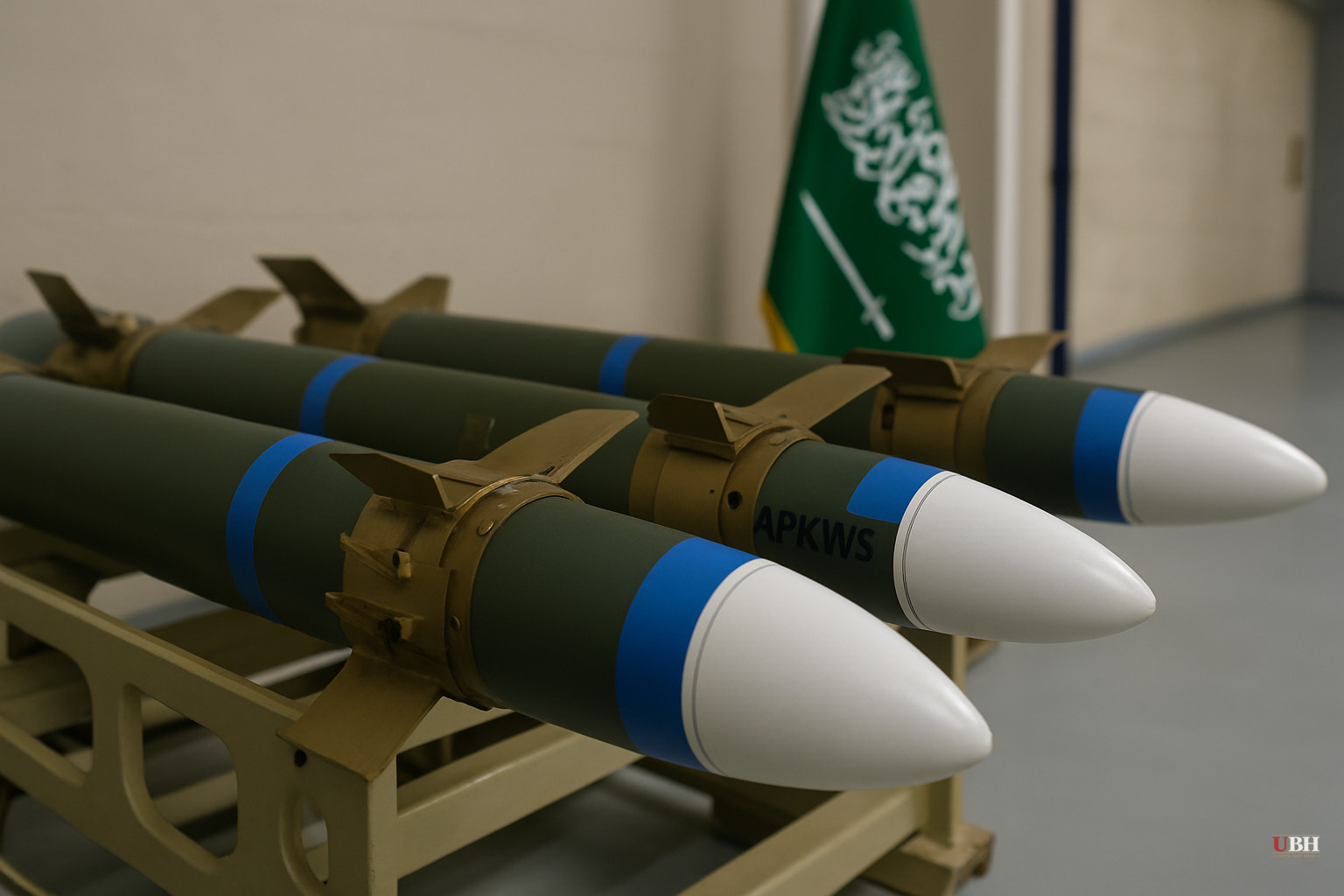
The State Department announced Wednesday, July 15, that it cleared a possible Foreign Military Sale to Saudi Arabia worth an estimated $1.96 billion. The package centers on up to 20,000 Advanced Precision Kill Weapon System (APKWS-II) kits, split roughly evenly between air-to-air and air-to-ground guidance sections, according to Breaking Defense and Dawn, which cited Agence France-Presse.
The kits turn cheap unguided rockets into guided munitions. Retired Kuwaiti Air Force Colonel Zafer Al Ajami told Breaking Defense the technology is valuable precisely because it's cheap: it lets Saudi forces knock down drones and other low-cost threats without burning through expensive Patriot interceptor stockpiles.
The rest of the package includes LAU-131 A/A launchers, Mk-152 high explosive warheads, MK66 rocket motors, proximity fuzes, practice warheads, test equipment, and training and spare parts support, per the State Department release cited by Breaking Defense. BAE Systems, based in Nashua, New Hampshire, is named as the prime contractor.
This is a proposed sale, not a signed contract. Congress has a review window and the authority to block or alter FMS deals, and dollar figures or unit counts can shift before anything is finalized.
Why Now
The timing isn't subtle. Saudi Arabia and the Houthis traded fire this week after Yemen's government struck Sanaa airport to intercept a flight carrying a Houthi delegation returning from Iran's assassinated supreme leader's funeral, according to Dawn. The Houthis responded by firing missiles toward the southern Saudi city of Abha on Monday, and blamed Riyadh for the Sanaa strike.
That exchange effectively ended a four-year truce between Saudi Arabia and the Houthis, Breaking Defense reported. Riyadh has also been hit by Iranian strikes this year in retaliation for US and Israeli operations, according to Breaking Defense, and the US has since reimposed a naval blockade on Iran as fighting between Washington and Tehran has escalated again.
The State Department's own language ties the sale directly to that backdrop, stating the package would support "the foreign policy and national security objectives of the United States by improving the security of a Major non-NATO Ally that is a force for political stability and economic progress in the Gulf Region."
Al Ajami framed the sale in blunter terms, calling it a "pragmatic reset in relations" between Washington and Riyadh, driven by the Houthi threat specifically. He argued the kits "directly strengthen Saudi homeland defense and improve battlefield interoperability with American forces in the Gulf."
Trump's Push for Faster Production
The same day the sale was announced, President Trump spoke at a Defense and Innovation Summit hosted by the U.S. Army War College in Pennsylvania, according to a report carried by Syria's state-run SANA news agency. Trump told defense executives and military officials that American weapons are the best in the world but need to be built faster, urging the industry to expand production capacity.
That push reflects real strain. Ongoing fighting in Ukraine and the Middle East is consuming interceptor missiles and munitions at a pace that's stressing US manufacturing capacity, a pressure point Trump addressed directly at the summit.
Pairing a major new Saudi order with a public call to speed up production isn't a coincidence. Every FMS deal adds to a backlog defense contractors already struggle to clear, and Trump's own remarks acknowledge that reality rather than paper over it.
The Counterargument Worth Taking Seriously
Critics of large Gulf arms sales have a legitimate point that deserves a fair hearing: pumping precision weapons into an active regional conflict zone raises the risk of escalation, and past US arms sales to Saudi Arabia have drawn scrutiny over how Saudi-led operations in Yemen have affected civilians. That's a real, recurring debate in Congress, not a fringe objection.
But this specific package is defensive in character. APKWS kits are built to intercept incoming drones and rockets, not to strike targets offensively, and Al Ajami's point that they're a low-cost way to preserve scarce Patriot interceptors is a legitimate operational rationale, not spin. The State Department's release explicitly frames the sale around "homeland defense" and interoperability with US and allied forces, not offensive operations in Yemen.
Whether Congress raises objections once the formal notification period runs is still an open question. No lawmaker has publicly moved to block this specific sale as of Wednesday's announcement.
What Happens Next
The Foreign Military Sale notification starts a congressional review clock, and history offers plenty of examples of both approval and last-minute revision on Saudi arms packages. Dawn also reported that Saudi Arabia is simultaneously pursuing a broader defense package alongside a separate arms deal for Israel, meaning this $1.96 billion figure could be one piece of a larger Gulf arms push working through Washington's approval process right now.
The immediate variable is the Houthi front. If missile exchanges with Abha continue, expect the administration to cite that directly when the formal congressional notification period opens.
Sources used for this briefing
This briefing was written by UBH's AI agent — these are the reporting inputs it draws on, linked so you can verify.


