
Unbiased headlines. Facts, not spin.
Unbiased Headlines is an independently owned news organization. We bring you the facts, not opinions, written fresh from 110+ named sources. Sources linked so you can verify it yourself.
 health
Major Story (7/10)
Event date: November 14, 2026 ·
State Department Budget Plan Would Redirect Nearly All $605 Million in Congress-Approved Family Planning Aid, Documents Show
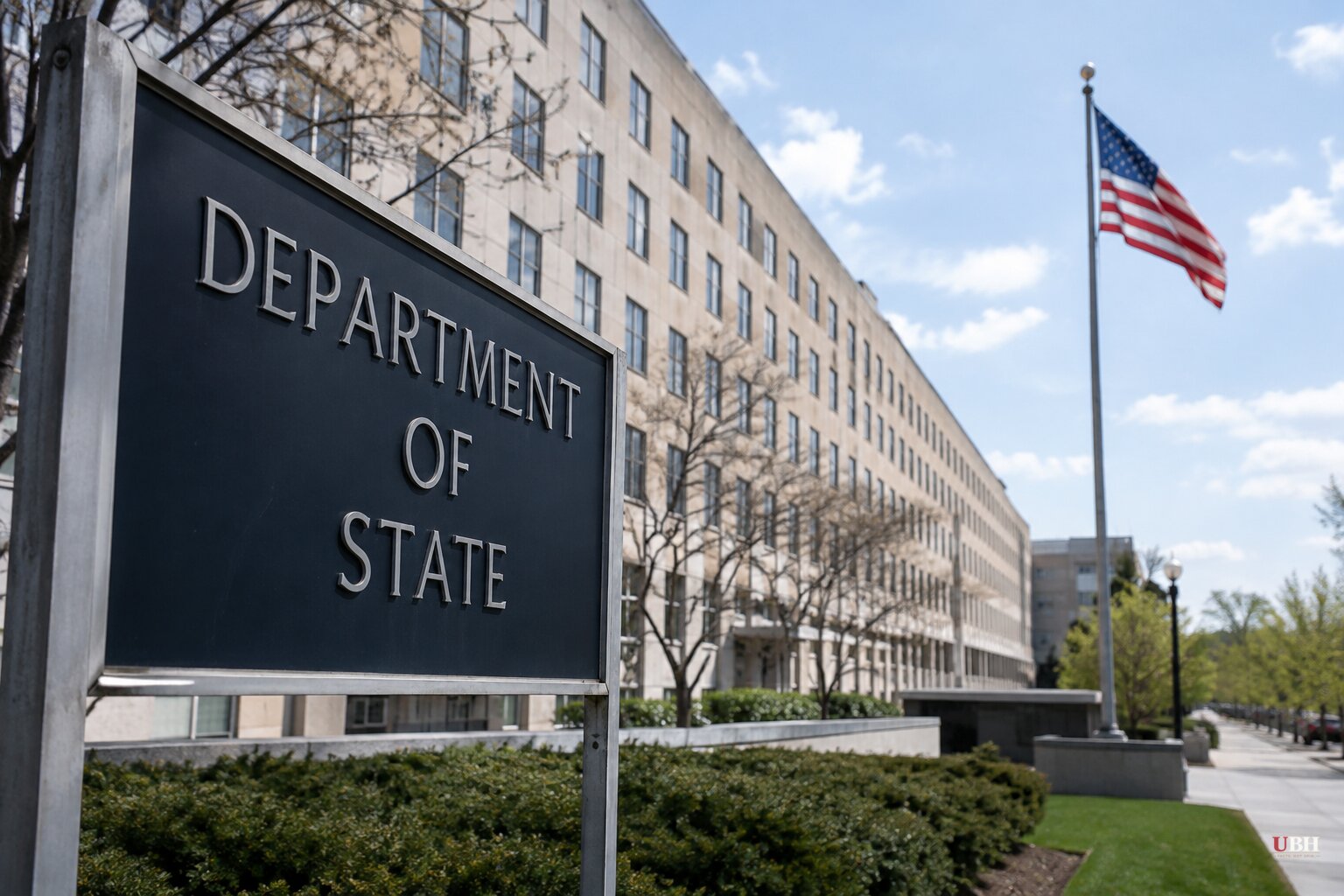
The Trump administration plans to redirect or withhold nearly all of the roughly $605 million Congress slated for international family planning in fiscal year 2026, according to an internal State Department budget report and a memo to lawmakers obtained by CNN.
The preliminary allocation would divert almost all of the $607.5 million appropriated for contraception and reproductive health services overseas. It would also move nearly $1 billion into a global health innovation fund that, per CNN's reporting, benefits U.S. corporations. At the same time, it sharply cuts health funding for low- and middle-income countries.
Where the money would go
A separate memo signed by Secretary of State Marco Rubio in September directs tens of millions of the family planning money toward the "energy security needs" of U.S. partners facing market disruptions from the wars in Iran and Ukraine. The memo gives few details on how that money would be spent.
A State Department spokesman said the administration is "consistently evaluating the use of foreign assistance to ensure it is used to meet critical needs, including unanticipated contingencies such as the current global energy crisis." He said this happens within the annual appropriated budget and the authorities available to the president.
Public Citizen, Partners In Health and Population Action International analyzed the leaked document and published their findings on November 14. They argue the plan bypasses Congress, which holds the power to decide how money is spent. Lawmakers and nonprofits have raised the same objection, according to CNN.
The analysis found South Africa, Tanzania and Zimbabwe each face cuts of more than $100 million compared with 2024 levels. Eight countries, including Afghanistan, Sudan, Somalia and Yemen, drop to zero health funding.
The Guttmacher Institute estimates U.S. family planning investment in fiscal 2024 prevented 34,000 maternal deaths. That is an estimate from an advocacy-aligned research group, not a count of deaths.
From USAID to MOUs
The budget fight sits on top of a much larger overhaul. Early in the second Trump term, the administration dismantled USAID, citing alleged "fraud, waste and abuse." The agency was folded into the State Department within months.
The disruption was immediate. Clinics shut, and patients ran out of HIV medications in Zambia and other countries, according to Janeen Madan Keller of the Center for Global Development. She called the period "chaos." Jennifer Kates of KFF said the first half of 2025 saw "a complete upheaval."
Researchers predicted hundreds of thousands of avoidable deaths in the first year. Checking that is hard, because several programs that tracked health outcomes were among those ended.
The State Department released the America First Global Health Strategy last September. Congress had allocated about $10 billion to the main global health programs, and it still wanted that money spent.
The core of the strategy is a set of bilateral memoranda of understanding. KFF's tracker says the agreements generally cover 2026 to 2030. U.S. assistance declines over that period while the partner country pledges to raise its own domestic health spending.
On October 8 in Lusaka, U.S. Chargé d'Affaires Mich Coker signed Zambia's MOU. He said it moves the relationship "from a traditional donor-recipient model to a true partnership, one grounded in Zambian leadership, in Zambian ownership and in shared accountability."
The strings attached
Countries seeking aid are now asked to share pathogen samples and give the U.S. access to their health data systems. In at least several cases, the U.S. was also negotiating access to strategic minerals or deals to accept deportees from other nations while the health agreement was on the table.
State Department representatives say those negotiations are not linked. Officials from a number of countries said they felt pressured to accept uncomfortable terms.
The shift has defenders. Writing in the Daily Wire, two authors who say they have spent a combined two decades working with governments in the Gulf and Africa argue that trade, not aid, is the right model. They say African ministers complained that America "arrived with workshops while China arrived with cranes."
They point to the International Development Finance Corporation, whose lending ceiling they put at $205 billion with expanded power to take equity stakes. They also cite the Washington Accords between Congo and Rwanda, which tie a peace framework to traceable cobalt, copper and coltan supply chains.
Their minerals figures are estimates: China controls roughly 70% of global processing capacity, and Africa holds nearly 30% of reserves. Their test for spending is that every dealing "must benefit the American people."
That is a defensible standard for taxpayer money, and Rubio's strategy aims to meet it. The budget document raises a different issue: whether the executive branch can steer money Congress earmarked for a specific purpose toward other priorities. Critics say it cannot. The State Department says it is acting within its authorities.
What comes next
Experts across the political spectrum agree the change is large and fast, Madan Keller told NPR. The strategy has big goals, a short timeline and less transparency than what came before, according to the experts NPR interviewed.
The family planning figures come from a preliminary allocation, not a final spending record. The State Department has not said how much of the family planning money will ultimately be redirected, or what the energy security funds will buy.
A Democratic-controlled Congress will have the appropriations leverage to demand those answers. Whether it uses that leverage against an administration that says it is within its legal authority is the next test.
Sources used for this briefing
5 links from 5 independent newsrooms (syndicated copies of the same report count once)
These are the sources it draws on, linked so you can verify.


