
Unbiased headlines. Facts, not spin.
Unbiased Headlines is an independently owned news organization. We bring you the facts, not opinions, written fresh from 110+ named sources. Sources linked so you can verify it yourself.
 defense
Major Story (7/10)
Event date: October 14, 2026 ·
Starshield Speed Cap Still in Place as European Officials Say US Threatened to Cut Ukraine's Intel and Weapons Purchases
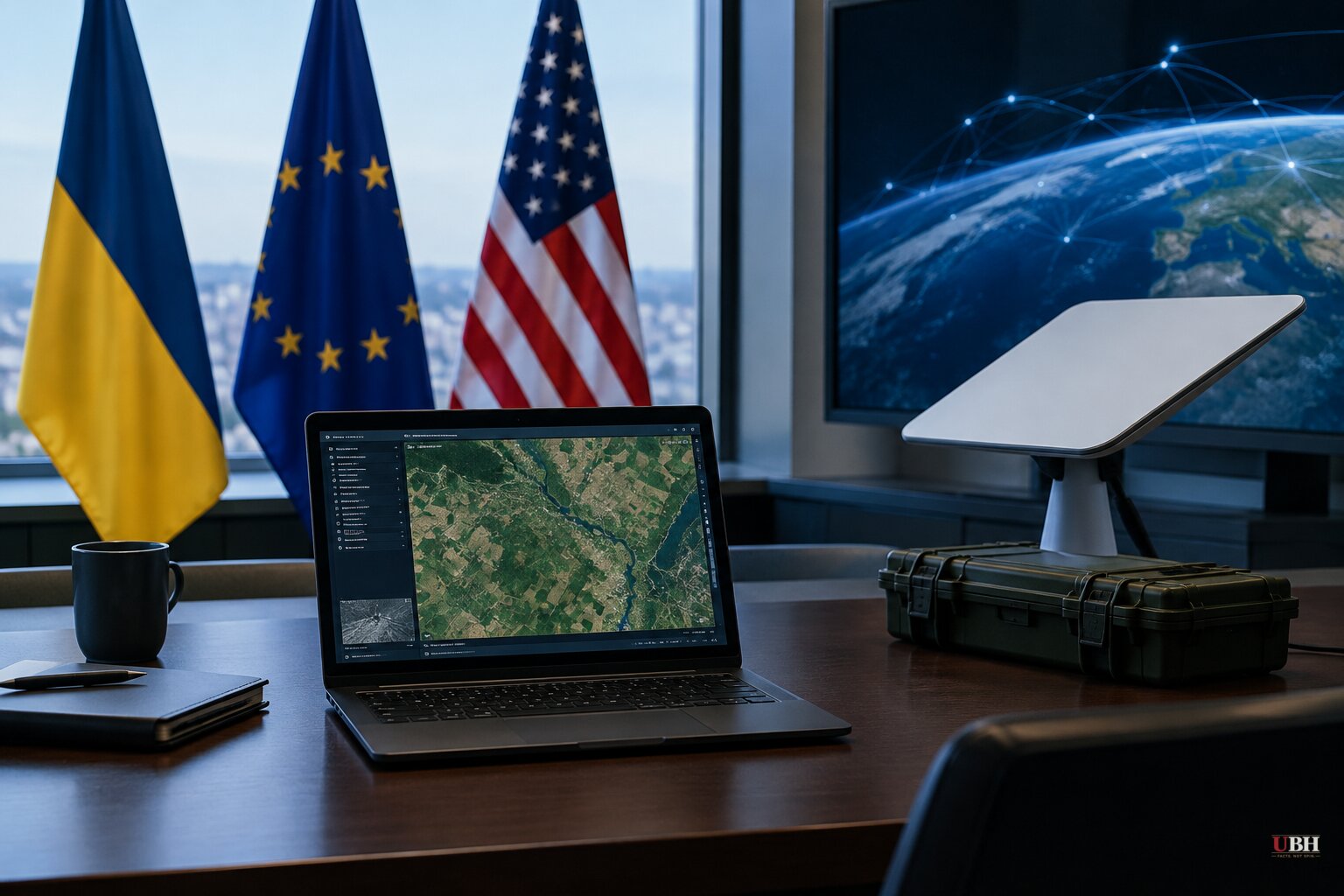
Since Ukraine's military lost full-speed Starshield access overnight on Oct. 13-14, the fight over who is squeezing Kyiv has moved from satellite links to the core of the US-Ukraine relationship.
The cap is still in place. Starlink and Starshield terminals continue to drop connections at higher speeds on parts of the front line, and the restrictions have crippled the interceptor drones Ukraine uses against Russian jet-powered Shaheds, along with the mid-range strike drones it sends at Russian refineries.
Washington's warning over refinery strikes
The State Department and the Pentagon sent warnings over the weekend to officials in Ukraine and Europe, two European officials told CNN. Some of the messages came from the US military directly to Ukrainian commanders.
The message, as those officials describe it: if Kyiv does not halt deep strikes on Russian energy facilities, the US could suspend intelligence sharing and European purchases of US weapons for Ukraine.
A US official told CNN that American negotiators reminded the Ukrainians the US is a strong partner supplying munitions and intelligence, and that Ukraine should not take actions that hurt American consumers. CNN said it had asked the Defense Department, the State Department and the White House for comment.
The stakes are concrete. US intelligence helps Ukraine track Russian ballistic missile launchers and incoming strike paths. The weapons-purchase channel, known as the Prioritized Ukraine Requirements List (PURL), matters most for Patriot interceptors, which Ukraine is already short of.
A NATO official told CNN on Monday that PURL supplies are still flowing. A European official called the threat a "sad day" for Kyiv and its allies. Washington has suspended intelligence sharing before, in March 2025 after the Oval Office blowup between Trump and Zelensky, and restored it after Ukraine accepted a US ceasefire proposal.
Zelensky takes it to Congress
On Monday, Oct. 19, Zelensky briefed Democrats and Republicans from both chambers by videoconference. Democratic Sen. Richard Blumenthal and Republican Sen. Thom Tillis organized the call.
He called it "the most difficult situation since the very beginning of this war." He listed three problems: delayed Patriot deliveries, the Starlink restrictions, and an abrupt end to US warnings about incoming Russian missiles.
Zelensky said Ukraine got no advance notice before three recent attacks and "no explanation" afterward. Kyiv again received no warning before the first wave of Monday's overnight ballistic strike. He also said the Pentagon is refusing to approve transfers of Patriot missiles from Europe to Ukraine, even though they were already paid for through PURL.
"The American side has not given Ukraine any explanation for either of these two problems," Zelensky said in a statement, referring to the satellite limits and the missing warnings.
He said Ukraine had offered a 30-day moratorium on refinery attacks in exchange for Patriot supplies. Neither Washington nor Moscow showed interest, he said. "All of this suggests that some political decision has been made to slow down support for us," Zelensky told the lawmakers.
The diesel dispute
The administration's complaint is about prices. Diesel averages $6.27 a gallon in the US, more than 70% above a year ago, according to AAA, with midterm elections on Nov. 3. Trump has blamed Ukraine's refinery strikes and the war for high diesel prices. Those prices have also been pushed up by the US war with Iran, CNN reported.
Zelensky rejected that in an interview with NPR. He said people know why energy prices rose: "Because of Hormuz," the Strait of Hormuz blockade. He said Trump's move to ease sanctions on Russian diesel will not lower US prices, and that Ukraine will keep striking Russian energy and logistics sites unless Russia stops hitting Ukrainian energy sites.
The sanctions decision came Friday. Trump signed an executive order putting on hold the sweeping Russia sanctions in the Lindsey Graham Act, which he had signed into law last month. The pause came two days before the law's own deadline for implementation. Trump told Congress the pause was in the national interest and gave no further detail.
Blumenthal, who co-drafted the bill, said Trump was turning his back on "the majority of Americans, their representatives in both houses of Congress, and our European allies." A bipartisan group of senators has called on Trump to rescind the diesel sanctions relief, according to NPR. Zelensky called the diesel decision "a weak decision by strong partners."
Trump announced Sunday that Russia and Ukraine had agreed to an "energy ceasefire." Zelensky said he learned of it from Trump's Truth Social post. Kremlin spokesman Dmitry Peskov said only that contacts were ongoing. Russian strikes on Ukrainian energy infrastructure continued.
The cost on the ground
A Russian strike on a park and cafe in Nova Vodolaha, Kharkiv region, on Monday killed six people, three of them children, local authorities said. Fifteen other civilians were wounded, half of them children. Among the dead was an infant girl named Angelina, just over a year old, who was in her stroller. Her mother, Inna, died in the hospital.
Zelensky tied the attack to Washington's easing of pressure on Moscow. "This is how Russia responds to the lifting of sanctions and the easing of pressure," he said.
SpaceX and Elon Musk have not accepted responsibility for the Starshield restrictions, and neither has the White House. Ukrainian officials have said they had no warning. Starshield is paid for by the Pentagon, so the cap on a service the US government funds leaves the question of who ordered it unanswered.
Zelensky said his teams will keep working the issues with US counterparts. Ukraine's lead negotiator, Rustem Umerov, met envoy Jared Kushner on Friday, and Zelensky said Washington is working to arrange a three-way meeting with Trump and Putin. The open question for lawmakers who heard from Zelensky on Monday is whether the intelligence and weapons-purchase threats are acted on before Nov. 3.
Sources used for this briefing
6 links from 6 independent newsrooms (syndicated copies of the same report count once)
These are the sources it draws on, linked so you can verify.


