
Unbiased headlines. Facts, not spin.
Unbiased Headlines is an independently owned news organization. We bring you the facts, not opinions, written fresh from 110+ named sources. Sources linked so you can verify it yourself.
 defense
Major Story (7/10)
Event date: October 18, 2026 ·
Lithuanian officials blame Russia for foiled arson at Starlink equipment site, third attack in four weeks
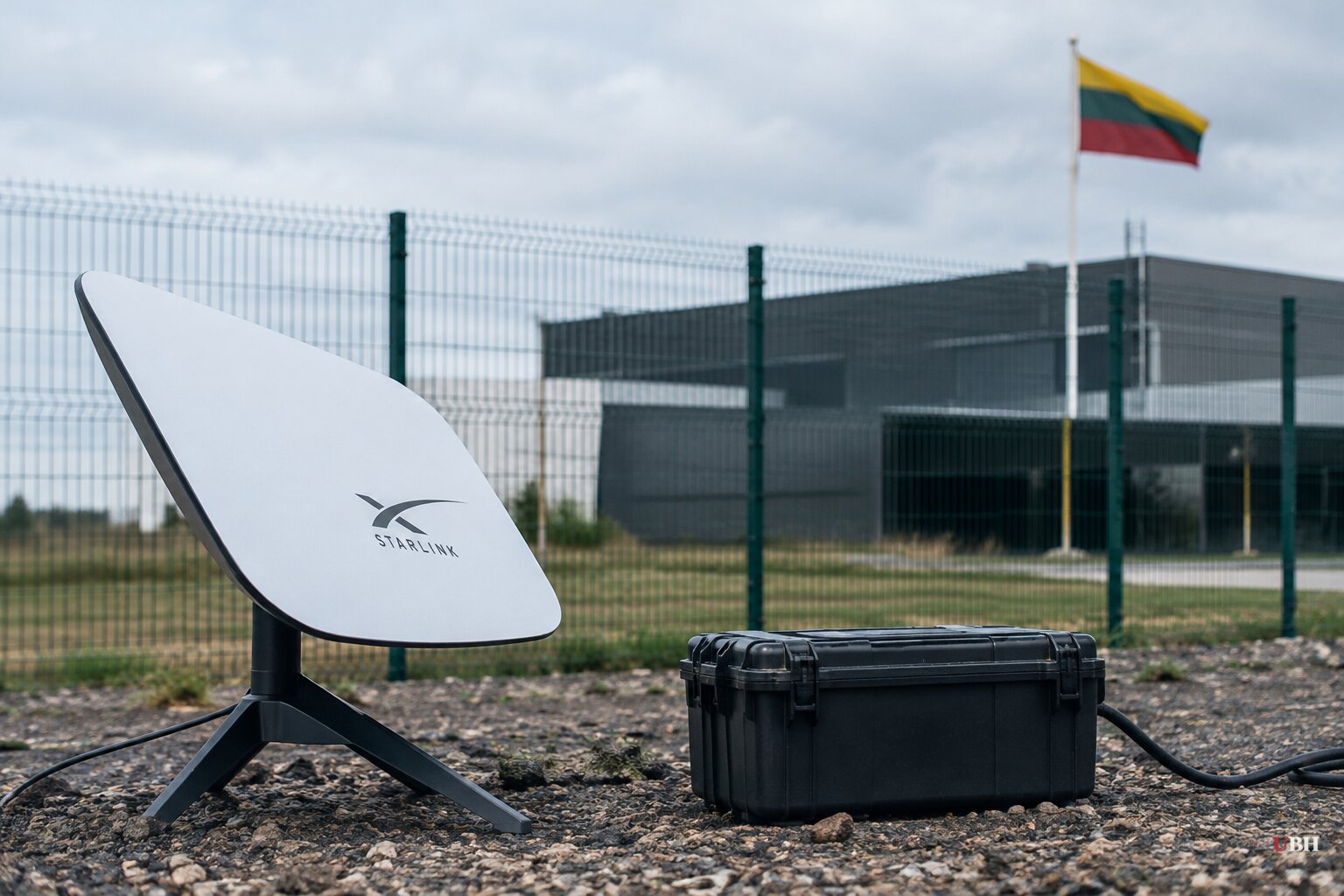
An attempt to set fire to Starlink satellite equipment in Lithuania failed overnight into Sunday, Oct. 18, because security had been reinforced after a warning from the country's security services.
Prime Minister Mindaugas Sinkevičius announced it on Facebook. Intruders arrived at about 2 a.m. and left canisters of flammable liquid, 3 to 10 liters each, at the site, he said. They were trying to burn the antennas and their control unit.
What happened in Vilnius
Vilmantas Vitkauskas, head of Lithuania's National Crisis Management Center, said the target was Starlink equipment at a site that U.S. company SpaceX rents from a Lithuanian company. The Baltic News Service identified the location as the Delska data center in Vilnius.
Sinkevičius said the facility supports nine satellite antennas whose communications Ukraine uses in part.
Police Commissioner General Arūnas Paulauskas said the company's operations were not disrupted and any damage was minimal. No suspects have been detained. A pretrial investigation is open.
Sinkevičius said he believes the identities and number of people involved are known, but he gave no details, citing the investigation.
Lithuania points at Moscow
"It is obvious that this is part of Russia's hybrid war, which includes sabotage activity," Sinkevičius told LRT Radio. He added that the party that commissioned the attack was "likely the Russian side," while acknowledging investigators have not yet established the full circumstances.
Vitkauskas was more specific about the target. "We understand that this was not a routine arson attack but an act of sabotage," he told journalists. The attack is linked to earlier arsons in Poland and Bulgaria, he said. "They are part of Russian attempts to disrupt Starlink and influence the success of Ukrainian operations. Ukraine is the target."
Russia has not publicly responded in the material gathered so far. Newsweek said it asked the Russian Foreign Ministry for comment.
The pattern across three countries
On Sept. 23, unidentified people set fire to power-supply equipment at a Starlink ground station in Wola Krobowska, near Warsaw. The fire did not disable the station.
On Oct. 12, German authorities detained two Turkish citizens suspected of organizing it. Poland's Internal Security Agency said in an Oct. 16 statement that the suspects entered the site masked, poured flammable liquid on the equipment and lit it. The agency also detained a third person, who had separately scouted the station's security and sent photos and video to a handler over Telegram. Polish authorities believe the group acted for Russian intelligence.
Der Spiegel reported that the detained men are tied to a Turkish criminal group called the Daltons, whose alleged leader was detained in Russia in 2024.
In Bulgaria, also on Oct. 12, lawmaker Ivaylo Mirchev reported that two masked people burned 11 of 17 Starlink antennas at a site near Sofia.
That makes three EU countries in about four weeks. Only in Poland have suspects been named or detained so far.
A drone and a political backdrop
The same day brought a separate incident. An unidentified object that apparently entered from Poland crossed northern Lithuania. Defense Minister Robertas Kaunas said NATO jets failed to identify it. Residents in parts of the country were told to take shelter. Debris damaged a passing car, and no injuries were reported.
Possible fragments turned up in the Pasvalys district near the Latvian border. Latvia's military said the object may have blown itself up on a course toward Latvia. Authorities have not said who operated it. Sinkevičius said the sabotage angle must be checked for the drone too.
The arson attempt also lands as Starlink faces fresh scrutiny. Ukrainian officials reported restrictions this week that disrupted some military operations, and Zelensky suggested the disruption was deliberate. The White House and Secretary of State Marco Rubio denied that. Nothing in the Lithuanian officials' statements ties the arson to those restrictions.
Starlink has been central to Ukrainian battlefield communications, drone operations and reconnaissance since the 2022 invasion, particularly where other networks are damaged or jammed.
Polish Prime Minister Donald Tusk warned on Friday, after European Council consultations, that Moscow could escalate hybrid attacks, sabotage and border provocations against Poland and the Baltic states before Christmas. He named transit corridors for fuel, food and dual-use equipment as likely targets.
What comes next
Sinkevičius has called the National Security Commission to meet today, Oct. 19. The agenda covers the arson attempt and the drone, including where the drone came from and where radar first picked it up. Commissioners are also expected to consider giving Lithuanian services additional statutory powers to neutralize drones.
Attribution is still unsettled. Lithuania's leaders have named Russia, and Poland has detained a chain of intermediaries in its own case. But no one in Lithuania is in custody, and the prime minister says the full circumstances are not yet established.
Sources used for this briefing
6 links from 6 independent newsrooms (syndicated copies of the same report count once)
These are the sources it draws on, linked so you can verify.


