
Unbiased headlines. Facts, not spin.
Unbiased Headlines is an independently owned news organization. We bring you the facts, not opinions, written fresh from 110+ named sources. Sources linked so you can verify it yourself.
 defense
Major Story (8/10)
Russian Satellite Cosmos-2612 Closes In on U.S.-Registered ICEYE Radar Satellite, Tracking Data Shows
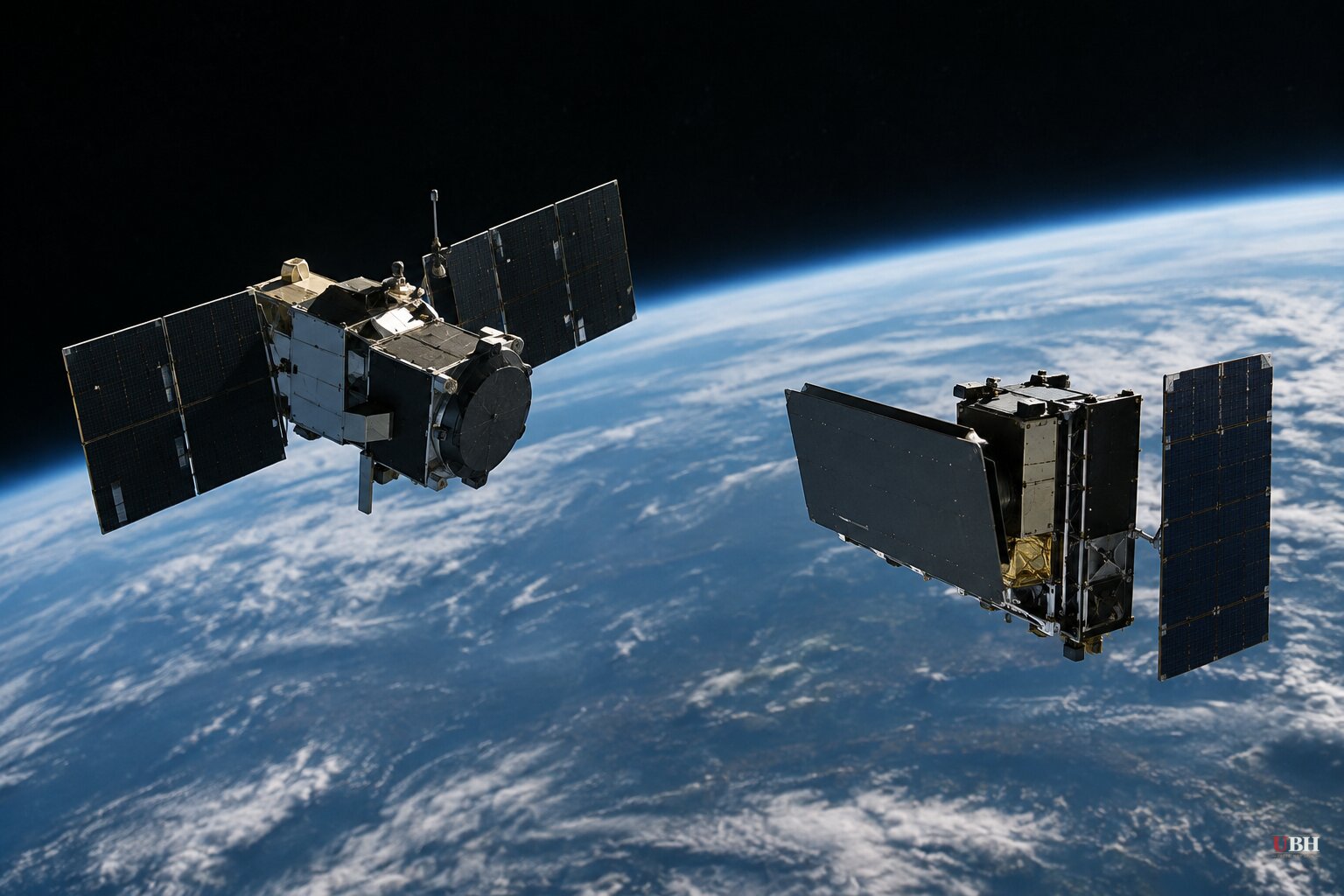
A Russian military satellite spent the weekend of Oct. 17-18 shadowing a commercial radar satellite that belongs to a network supporting Ukraine's military. By most estimates it got within a few hundred meters.
The Russian craft is Cosmos-2612, launched in April. The target is ICEYE-X36, a synthetic aperture radar imaging satellite operated by the Finnish company ICEYE and tied to its U.S. subsidiary, ICEYE US, according to space tracking sites. Both orbit at roughly 550 kilometers.
How close it got
The numbers depend on who is counting and when.
The space intelligence firm LeoLabs said that on Friday, Oct. 16, Cosmos-2612 was roughly three miles from ICEYE-X36. A day earlier the two were more than 200 miles apart. LeoLabs said the movement "appears to be a deliberate approach."
Late on Oct. 17, Marco Langbroek, an astronomer and TU Delft lecturer, put the gap at 1 to 2 kilometers. He expected the satellites to come within meters of each other if their trajectories held.
By shortly after midnight on Oct. 18, estimates had fallen to about 200 meters or less. Bruce McClintock, a retired Air Force brigadier general now at the RAND Corporation, said 150 meters, if accurate, is "exceptionally close" and "unlikely to be operationally routine." Some estimates go as low as 30 meters. Clayton Swope, a senior space fellow at CSIS, described the distance as "bumper-to-bumper."
On Oct. 19, LeoLabs said: "This was not a routine conjunction or 'fly by.' The behavior is consistent with sophisticated rendezvous and proximity operations."
What it cost Russia to get there
This was not a drift. Analysts told Axios that Russia burned fuel and changed the satellite's altitude, orbital plane and speed to line up with its target. Fuel is finite on most spacecraft, so operators rarely spend it without a reason.
Trade press tracking data indicates the closing required a velocity change of about 27.9 meters per second, with burns starting in late September. That detail comes from a single tracking account and has not been independently confirmed.
Aaron Brynildson, a space law professor at the University of Mississippi, said no strict legal limit exists on how close satellites may fly. By custom, he said, countries generally stay beyond about six miles.
Victoria Samson of the Secure World Foundation said she doesn't believe any previous close approach between two satellites has been uncoordinated.
Not the first time
This is not the opening move. In May, several Russian satellites began maneuvering around ICEYE-X36, according to commercial tracking data. The U.S. Space Force said then that the Cosmos satellites were positioned close to a "Western commercial radar satellite used by Ukraine for imagery intelligence."
A Ukrainian official told Axios the military works with ICEYE and uses its capabilities, but said it was unclear whether this particular satellite supports Ukraine. The official said the military was not aware of the latest movements, though it was told of similar maneuvers this spring and summer. In January, ICEYE announced an agreement with "a customer within the Ministry of Defence of Ukraine" to expand cooperation on space-based intelligence.
Intent is the dispute
Nobody outside Russia's military knows what Cosmos-2612 is for, and analysts disagree.
Samson said the maneuver is not inherently aggressive, but the war context changes how it reads. "Russia and Ukraine are literally at war with each other," she said. She also listed what Russia could be attempting: to "interfere with" the satellite's broadcasting, to jam it, to listen to what it is listening to, to intimidate it, "or even possibly to physically harm it."
Greg Gillinger of Integrity ISR called it "a purposeful engagement between Russia and a Western-run satellite that's supporting Ukraine."
Others urge restraint. McClintock said the approach is "a legitimate safety and security concern, but it should not automatically be described as an attack or proof of hostile intent." Douglas Loverro, a former top space policy official at NASA and the Defense Department, said the episode is viewed as "concerning and aggressive with potential hostile intent," but that "cooler heads believe it is signaling on the part of the Russians." He added: "I think the Russians are schooling us on our behavior."
No damage or orbital disruption to either satellite has been reported. LeoLabs said that while intent remains uncertain, the behavior "warrants continued monitoring."
Silence from the principals
The Defense Department declined to comment on Friday and Saturday. ICEYE spokespeople also declined to comment. Russian officials have said nothing publicly.
The tracking data points to a problem that predates this incident. Commercial satellites now carry battlefield intelligence for a U.S.-aligned country at war, and they are not armored, not armed and not covered by any agreed rule on proximity. Whether Washington treats a hostile uninvited approach to a U.S.-registered satellite as an incident requiring a response is a question no U.S. official has answered.
The next data point is whether Cosmos-2612 holds position, closes further or breaks away. LeoLabs says it is still tracking.
Sources used for this briefing
7 links from 7 independent newsrooms (syndicated copies of the same report count once)
These are the sources it draws on, linked so you can verify.


