
Unbiased headlines. Facts, not spin.
Every story is an unbiased news briefing written from 110+ sources across the spectrum — sources linked so you can verify it yourself.
 defense
Major Story (7/10)
June 30, 2026 at 08:48 PM
defense
Major Story (7/10)
June 30, 2026 at 08:48 PM
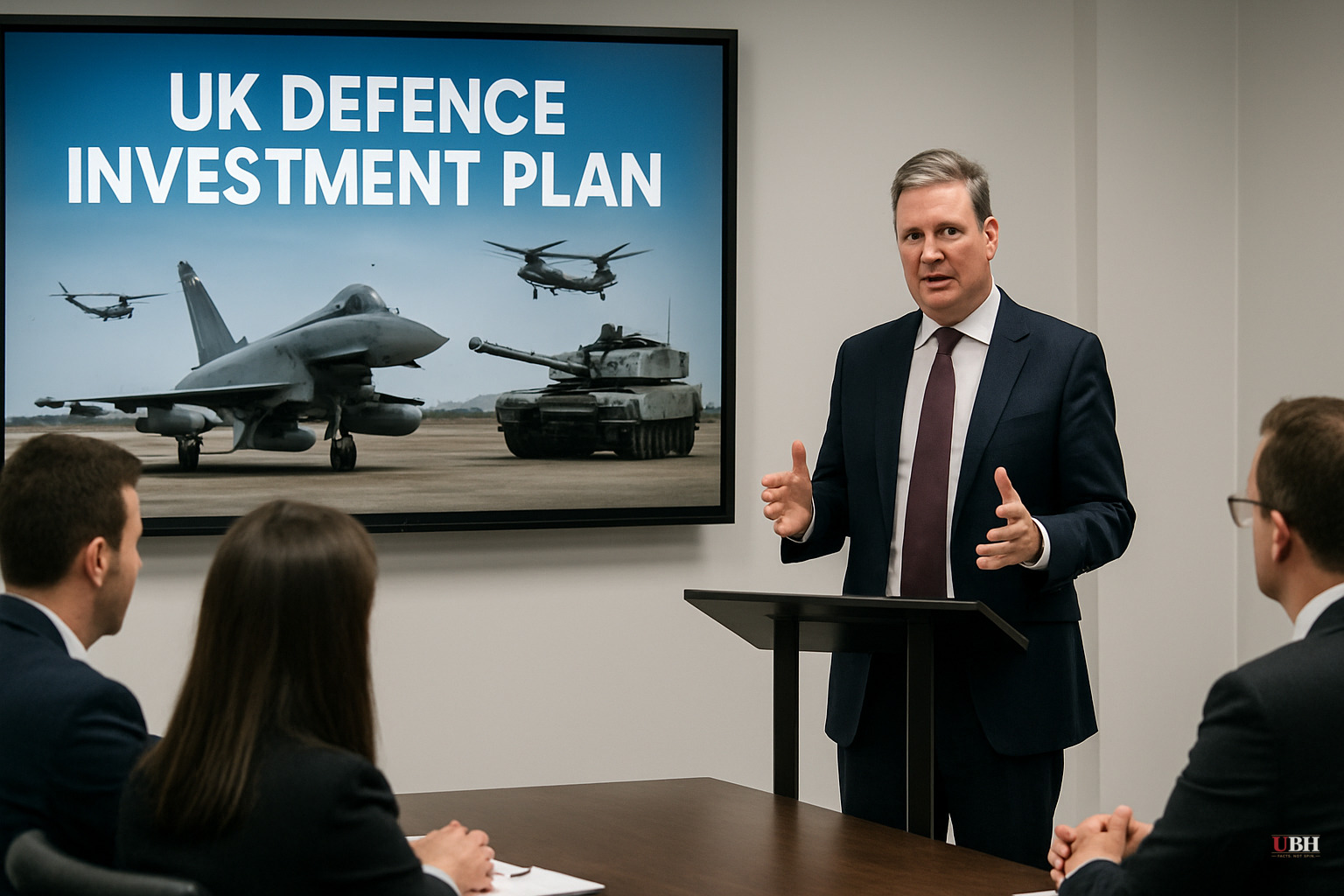
Starmer Announces £15bn UK Defence Boost, but £4.7bn Is Still Unfunded and the Bill Falls to His Successor
What Was Announced
Outgoing Prime Minister Sir Keir Starmer released the UK's Defence Investment Plan on June 30, pledging to raise military spending to £80bn per year by 2029. That represents a 27% real-terms increase from the £54bn annual baseline when Labour took office in 2024, according to BBC News — described by ministers as the largest defence spending increase since the Cold War.
The £15bn total was reached only after incoming Defence Secretary Dan Jarvis secured an additional £1.5bn from the Treasury in the weeks since his predecessor John Healey resigned on June 11. Healey quit because he believed the plan was underfunded.
Where the Money Goes
The plan allocates more than £64bn over four years to strengthen the nuclear deterrent, including new submarines and F-35A fighter jets modified to carry nuclear weapons. An additional £5bn is earmarked for a "drone transformation" of the armed forces. More than £8bn goes toward the Global Combat Air Programme, a next-generation stealth jet being built in partnership with Japan and Italy.
The Royal Navy is slated to become what the plan calls a "hybrid navy," incorporating autonomous vessels and AI alongside conventional warships, including funding for six new ships. The RAF will develop autonomous fighter jets and is expected to bring an uncrewed electronic warfare drone system into service in 2026, according to BBC News.
The Ministry of Defence is also expected to deliver £10.7bn in internal efficiency savings by 2030, to be achieved through civil service workforce reductions, cuts to consultancy spending, and expanded use of technology. Defence officials told BBC News that the increased spending is NOT conditional on those savings being realized.
The £4.7bn Problem
The Treasury confirmed that only £10.3bn of the £15bn commitment has been identified with actual funding. The remaining £4.7bn will need to be found at the next Budget, expected in the autumn.
That task almost certainly falls to Andy Burnham, who is widely expected to replace Starmer as prime minister next month following a Labour leadership transition. Burnham has held talks with Healey about defence, according to BBC News, but people close to Burnham's team admit they have limited insight into his defence philosophy. His public pitch for Downing Street has not foregrounded military spending.
Does It Hit NATO Targets?
Not quite. At the NATO Hague summit in June 2025, alliance members committed to spend 5% of GDP on defence and security in total, with 3.5% going to core NATO-qualifying defence by 2035. The broader 5% figure could include infrastructure protection and civil resilience spending.
Starmer claimed on June 30 that the DIP "takes us to 4.2% under that commitment," in part by reclassifying intelligence and security agency spending as NATO-qualifying. NATO-qualifying UK defence spending was estimated at £70bn, or 2.4% of GDP, in 2025, according to BBC Verify. The DIP projects that figure reaching 2.7% of GDP by 2027-28 — and staying at 2.7% through 2030.
Starmer had previously committed to 2.5% by 2027 and stated a "clear ambition" to reach 3% in the "next parliament." The plan does not set a year to hit 3%. Healey's stated view, made public upon his resignation, was that 3% by 2030 was the minimum necessary "to defend the country at this time of rising threats."
For comparison, BBC Security Correspondent Frank Gardner reported that the US currently spends 3.2% of GDP on defence, Germany 3.7%, and Russia — now on a full war footing — more than 7.5%.
The Strongest Case for the Plan
The UK's defence budget rises by roughly 48% in nominal terms from £54bn to £80bn annually in just five years. The shift away from expensive capital ships toward drones, autonomous systems, and expendable precision weapons reflects real lessons from Ukraine, where cheap munitions have repeatedly blunted costly conventional assets. Jarvis described this reorientation explicitly, and Gardner credited it as a meaningful strategic pivot. The plan also commits the UK to the GCAP stealth jet programme alongside two other NATO allies, locking in long-term industrial investment. These are not trivial changes.
What the Critics Say, and Why It Matters
Both the Conservative Party and the Liberal Democrats called the plan underfunded, according to BBC News. Healey, who oversaw the plan's development for months before quitting, said it fell short. Defence chiefs reportedly requested £28bn; they got £15bn.
Funding the gap through cuts to road and energy project budgets has a real cost too. The Department for Transport is eliminating £700m in road projects, with the A38 Derby Junctions upgrade and A46 Newark Bypass under consideration for cancellation. The Department for Energy Security and Net Zero is absorbing £2bn in additional cuts, with details expected in the autumn.
The plan also counts on £10.7bn in MoD efficiency savings that lack detailed delivery plans. There is a difference between promising efficiency savings and actually achieving them — the UK government has a documented history of optimism in this area.
What Comes Next
Starmer explicitly framed the DIP as "a platform on which I know my successor will build." Jarvis, for his part, acknowledged in the House of Commons that "we need to do more" beyond the June 30 announcement. Whether Burnham, once in office, treats the £4.7bn funding gap as a firm defence commitment to honor or as a negotiating position to be revisited when he tables his first Budget this autumn remains to be seen.
Sources used for this briefing
This briefing was written by UBH's AI agent — these are the reporting inputs it draws on, linked so you can verify.


